Categories
Science
5392 articles
Science
Salt crystals could hold clues to life beneath Enceladus's ice - Phys.org
The ocean beneath Saturn's moon Enceladus lies under kilometers of ice, but some of its contents do reach the surface. Jets near the south pole spray out water vapor and icy particles, offering a way to investigate the hidden ocean without drilling down to it.
Phys.org·

Science
On this day in space! Oct. 17, 2016: Private Antares rocket returns to flight after catastrophic launch explosion - Space
The successful Antares launch restored U.S. cargo ship redundancy for NASA space station crews.
Space·

Science
Our curated list of star projectors to turn your home into a planetarium - Space
Want a star projector that isn't just mood lighting? We have rounded up six scientifically accurate models that are sure to excite and educate.
Space·
Science
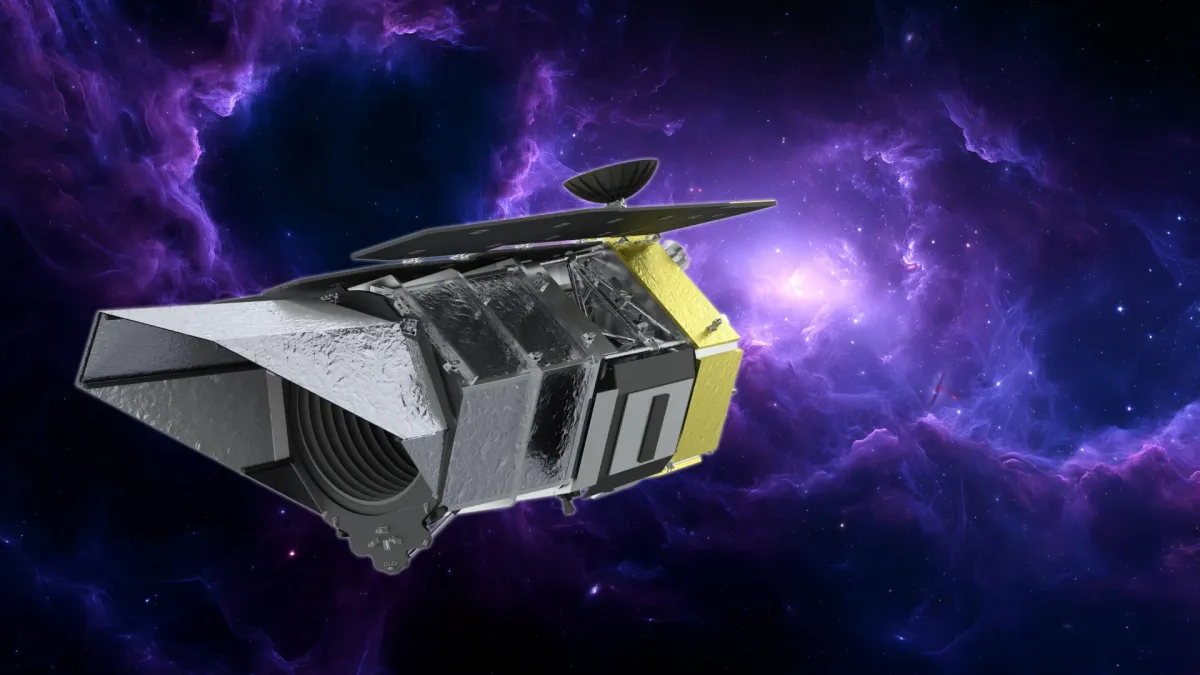
NASA’s Roman Space Telescope exceeds expectations by nearly 30% - Science Daily
NASA's Nancy Grace Roman Space Telescope is performing even better than scientists anticipated after engineers completed an extensive series of tests and precision adjustments. The work has brought the observatory's powerful instruments into exceptionally sharp focus, with its main camera system now delivering image quality nearly 30% better than predicted. The achievement marks an important step toward the telescope's ambitious mission to investigate dark matter, dark energy, and other mysteries of the universe. Even the smallest improvements in optical precision could help Roman capture clearer images during its sweeping surveys of the cosmos.
Science Daily·
Science
Lone, starless cloud may be a 'dark' galaxy - Phys.org
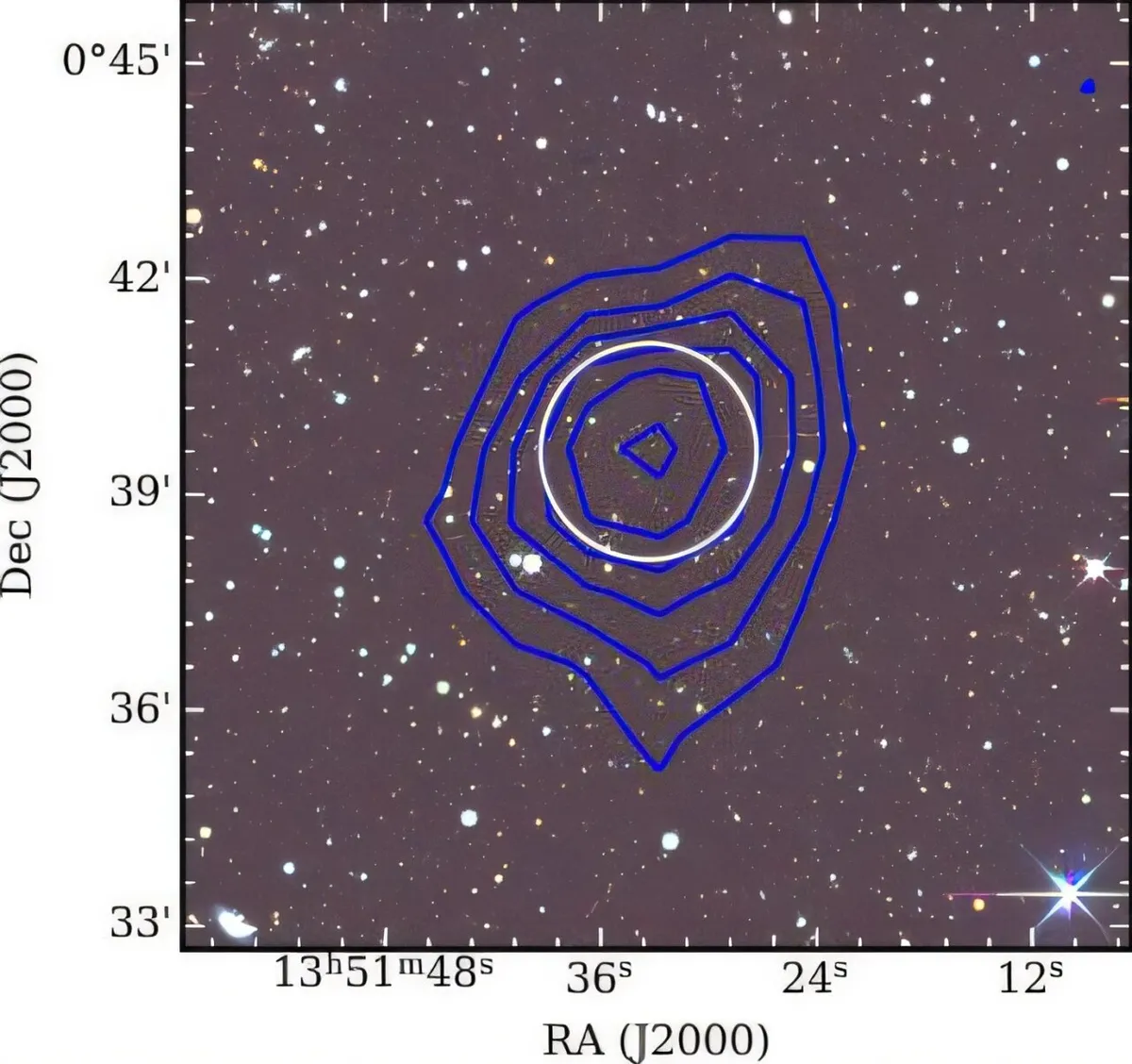
H I column-density map of J1351+0039 from the FAST observation shown in blue contours overlaid on the DESI RGB (g,r,z) image. Credit: Jin-Long Xu et al., arXiv (2026). DOI: 10.48550/arXiv.2609.29852 Astronomers using China's FAST radio telescope have discovered a compact cloud of hydrogen with no visible stars or galaxy around it. This could be one of the strongest candidates yet for an isolated "dark galaxy," containing nearly 500,000 times the sun's mass in neutral hydrogen. The discovery paper was posted to the arXiv preprint server on Sept. 24.
Phys.org·
Science
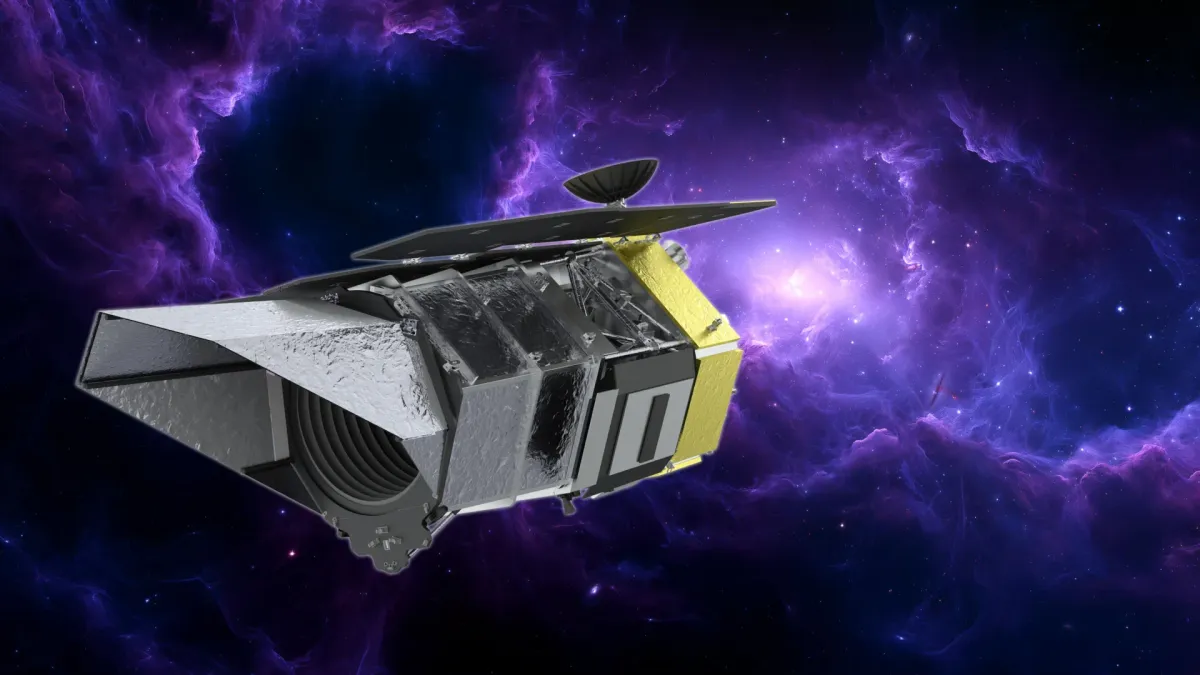
NASA’s Roman Space Telescope exceeds expectations by nearly 30% - Science Daily
NASA's Nancy Grace Roman Space Telescope is performing even better than scientists anticipated after engineers completed an extensive series of tests and precision adjustments. The work has brought the observatory's powerful instruments into exceptionally sharp focus, with its main camera system now delivering image quality nearly 30% better than predicted. The achievement marks an important step toward the telescope's ambitious mission to investigate dark matter, dark energy, and other mysteries of the universe. Even the smallest improvements in optical precision could help Roman capture clearer images during its sweeping surveys of the cosmos.
Science Daily·

Science
Scientists cut open a dead seal and sieved the contents of its intestines. What they found was shocking - BBC Wildlife Magazine
Two and a half months before writing this, a young adult grey seal washed up on a beach in Kent, says Liam Drew. Two days ago, it was removed from a freezer at London’s Natural History Museum and, today, I’m going to watch it being dissected. I’m currently wondering what exactly I’ll witness and looking at everyone on the Tube while thinking: ‘I bet you don’t have a date with a dead seal.’ My only guide is an email saying the museum’s staff will inspect the seal’s forelimbs and collect any parasites and plastic the animal contains.
BBC Wildlife Magazine·

Science
This bird flies thousands of miles, but its wings have a catch - Science Daily
A bird that migrates thousands of miles has revealed a surprising secret about how wings work. Scientists have discovered that European nightjars sacrifice flight efficiency for agility and use an unexpected wingbeat technique previously associated mainly with bats and insects. The European nightjar (Caprimulgus europaeus) is a nighttime hunter that makes an extraordinary annual migration between Europe and southern Africa. Yet the wings that carry it across vast distances must also perform a very different task: helping the bird catch insects while flying slowly and making sharp turns.
Science Daily·

Science
This bird flies thousands of miles, but its wings have a catch - Science Daily
A bird that migrates thousands of miles has revealed a surprising secret about how wings work. Scientists have discovered that European nightjars sacrifice flight efficiency for agility and use an unexpected wingbeat technique previously associated mainly with bats and insects. The European nightjar (Caprimulgus europaeus) is a nighttime hunter that makes an extraordinary annual migration between Europe and southern Africa. Yet the wings that carry it across vast distances must also perform a very different task: helping the bird catch insects while flying slowly and making sharp turns.
Science Daily·

Science
Red-sensitive pigments in mantis shrimp eyes act as reversible light switches - Phys.org
With about 30 visual pigments, compared to just three in humans, mantis shrimp possess a visual system that remains a mystery. Researchers from ULiège and Humboldt University in Berlin have, for the first time, analyzed these pigments one by one and discovered that some detect red light that very few animals can perceive. This finding, published in Science Advances, has potential applications in optogenetics. Vision is one of the most sophisticated sensory systems; it relies on proteins (opsins) that capture light and convert the signal into an electrical message that the brain can interpret. When combined with retinal, a small, universal molecule derived from vitamin A, opsins form the visual pigments (rhodopsins) that absorb light in the photoreceptors of the retina. In humans, three cone pigments are sufficient for color perception.
Phys.org·
Science
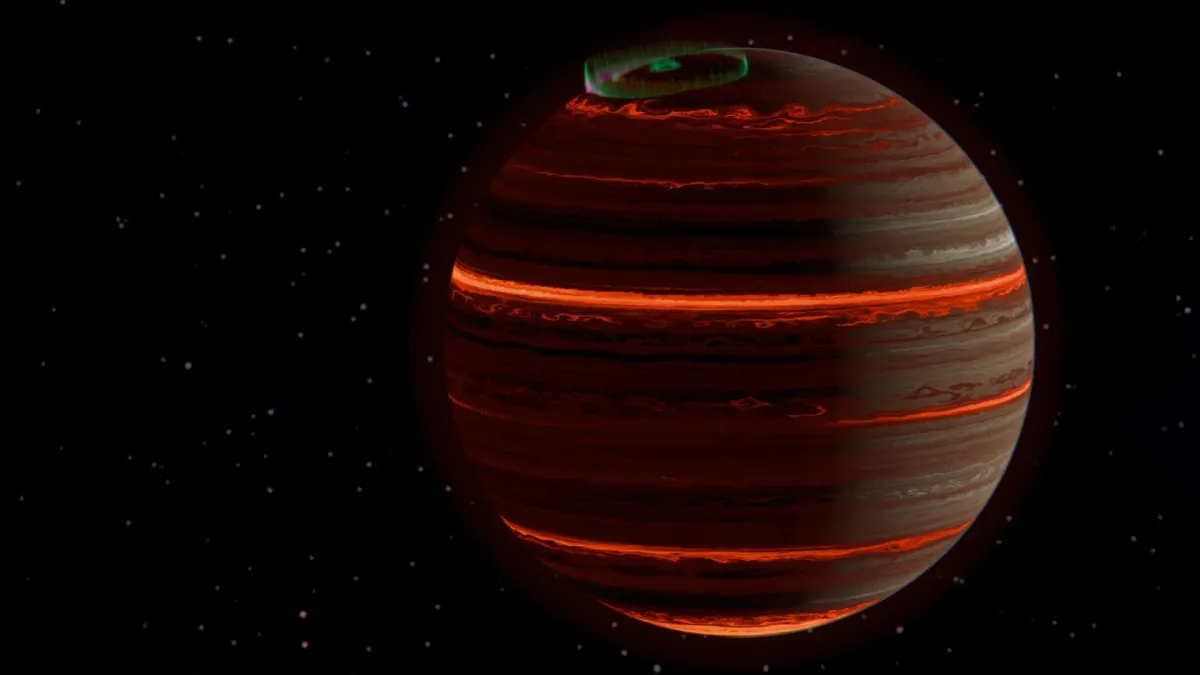
NASA’s Webb reveals the wild weather of a mysterious world 20 light-years away - Science Daily
Scientists have discovered a powerful new way to decode the weather on distant worlds, revealing surprisingly organized patterns hidden within the turbulent atmosphere of a mysterious object 20 light-years from Earth. Researchers at Trinity College Dublin used observations from NASA's James Webb Space Telescope to investigate SIMP 0136, a brown dwarf previously associated with phenomena resembling the northern lights. They found that its complex weather is largely governed by just two factors: changes in temperature and the vertical structure of its clouds.
Science Daily·