Paired Fundus and Optical Coherence Tomography Dataset for Neovascular Age-related Macular Degeneration - Nature
We’re sharing this article early to provide faster access to peer-reviewed, accepted research. It is citable and carries a permanent DOI. This version is subject to further edits and will be replaced automatically by the final Version of Record. All legal disclaimers apply.
AbstractAccurate classification of macular neovascularization (MNV) subtypes and reliable prediction of anti-VEGF treatment response are essential for individualized management of neovascular age-related macular degeneration (nAMD), yet existing public AMD-related datasets lack multimodal imaging with fine-grained, longitudinal annotations to support these tasks. Here we present PCO-nAMD, a rigorously curated dataset of Paired color fundus photography (CFP) and optical coherence tomography (OCT) images designed to facilitate multimodal research on MNV subtype classification and treatment response prediction in nAMD.
This article is an excerpt. To read the full content, visit the original source. Nature
Related articles
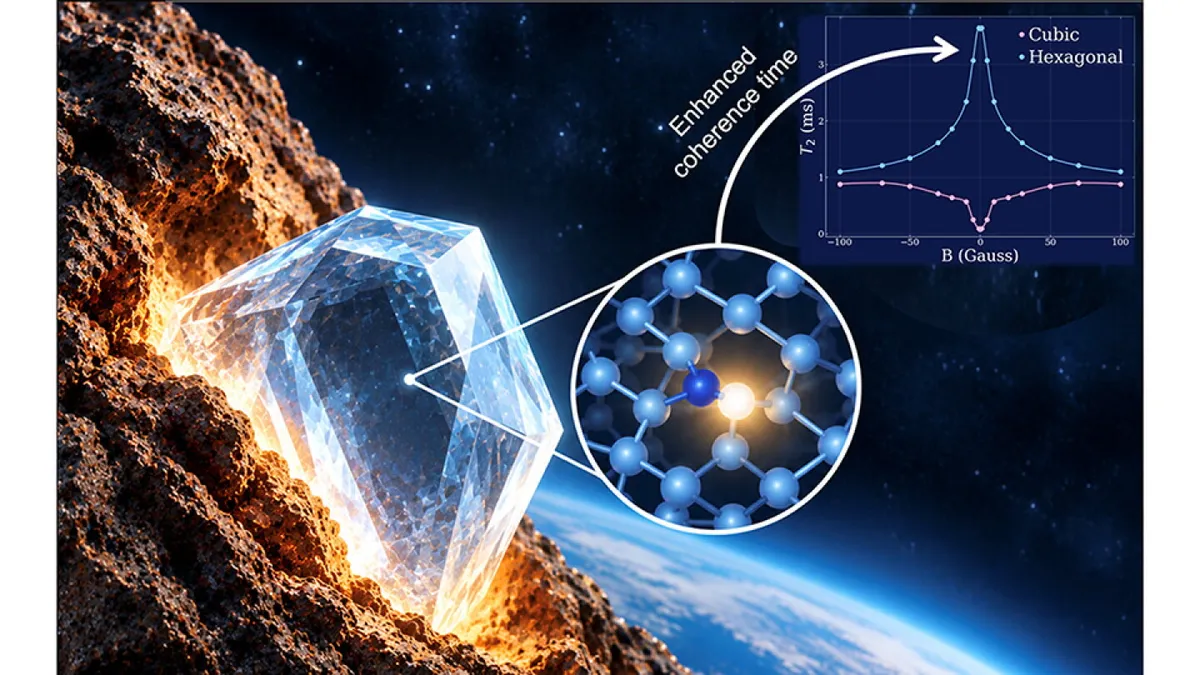
Uncovering long coherence times in the nitrogen vacancy centers of hexagonal diamonds - AIP.ORG
A distinct nitrogen-vacancy configuration in hexagonal diamonds is predicted to have longer coherence times, yet similar electronic properties to vacancy centers in cubic diamonds. Uncovering long coherence times in the nitrogen vacancy centers of hexagonal diamonds lead image
Facts About Computed Tomography (CT) Scans | Radiation and Your Health - Centers for Disease Control and Prevention | CDC (.gov)
Experimental characterization and scaling of flexural rigidity in sewn multilayer structures - Nature
We’re sharing this article early to provide faster access to peer-reviewed, accepted research. It is citable and carries a permanent DOI. This version is subject to further edits and will be replaced automatically by the final Version of Record. All legal disclaimers apply. AbstractSewing is one of the established methods used to fabricate and assemble multilayer insulation (MLI) blankets for aerospace applications, yet the resulting effective flexural behavior remains insufficiently understood. This study investigates the room-temperature, quasi-static flexural behavior of MLI blankets composed of aluminized BoPET radiation shields and polyester net spacers across structural configurations of 2, 6, 12, and 24 layers. A full factorial design was employed to evaluate the influence of the number of layers, stitch density, needle thread tension, and needle foot force. Statistical analyses demonstrated that the number of layers is the dominant factor governing flexural response. Among the sewing parameters, needle thread tension was associated with modifications in bending length, while needle foot force primarily affected local compaction.
0 comments
No comments yet. Be the first to share your thoughts!