BBlogFlow

Categories

Science

5394 articles

Science

NASA’s Webb reveals the wild weather of a mysterious world 20 light-years away - Science Daily

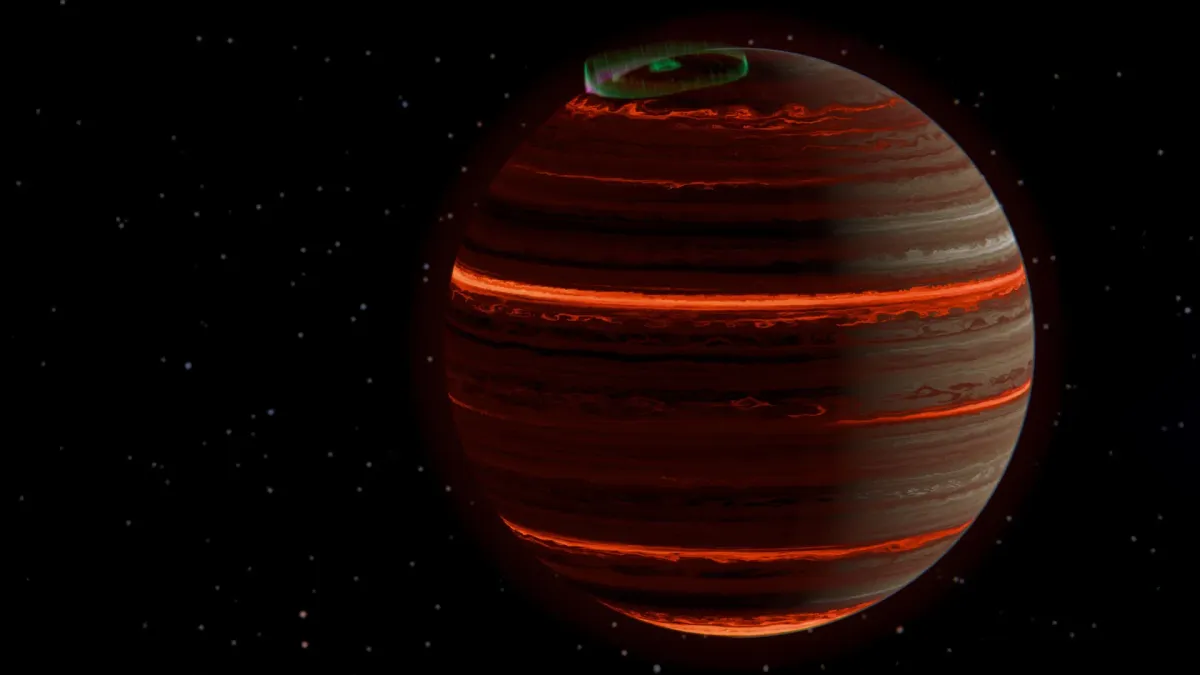
Scientists have discovered a powerful new way to decode the weather on distant worlds, revealing surprisingly organized patterns hidden within the turbulent atmosphere of a mysterious object 20 light-years from Earth. Researchers at Trinity College Dublin used observations from NASA's James Webb Space Telescope to investigate SIMP 0136, a brown dwarf previously associated with phenomena resembling the northern lights. They found that its complex weather is largely governed by just two factors: changes in temperature and the vertical structure of its clouds.

Science Daily·
Science

A dataset of inter-county distances along the real-world highway and railway networks in the contiguous United States - Nature

We’re sharing this article early to provide faster access to peer-reviewed, accepted research. It is citable and carries a permanent DOI. This version is subject to further edits and will be replaced automatically by the final Version of Record. All legal disclaimers apply. AbstractReliable information on transportation mode-specific distances between origin–destination pairs is essential to better understand and plan for freight transportation in the United States. However, such dataset is not available at fine spatial resolution. Here, we develop a data construction crosswalk by integrating geographic information system processing with network-based analysis to transform transportation infrastructure shapefiles into spatial networks and compute shortest-path distances between origin–destination pairs across scales. Through this crosswalk, we generate a dataset of inter-county distances [in miles] across real-world highways and railways in the contiguous United States, comprising over 15.2 million records.

Nature·
Science

SpaceX Dragon Delivers Groundbreaking Science and Solar Arrays to ISS - SciTechDaily

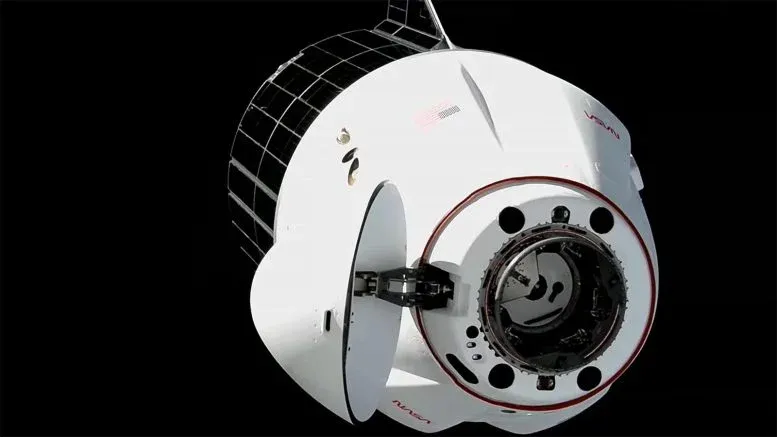
A SpaceX Dragon spacecraft approaches the International Space Station moments before docking to the Harmony module’s space-facing port on October 15, 2026. Credit: NASA+SpaceX has delivered tiny brain models, 3D heart tissue, and artificial retina technology to the space station in a mission that could open new doors for medical research on Earth. SpaceX’s Dragon spacecraft successfully arrived at the International Space Station on October 15, docking at 10:27 a.m. EDT with the space-facing port of the station’s Harmony module. The spacecraft brought more than 6,300 pounds of food, equipment, and other essential supplies for the Expedition 75 crew. The delivery marks SpaceX’s 35th commercial resupply mission to the orbiting laboratory under its contract with NASA. New Solar Arrays and Advanced Medical ResearchAmong the cargo is the final set of International Space Station Roll-Out Solar Arrays (IROSAs), which astronauts are expected to install later this fall. These arrays will expand the station’s ability to generate electricity from sunlight.

SciTechDaily·
Science

Ancient fossils and tools offer first glimpse into Denisovan daily life - Ynetnews

New research reveals Denisovan fossils in southwestern China alongside stone tools and animal bones, offering the first glimpse into how these mysterious ancient humans lived, hunted and used their environmentDr. Yonat Eshchar, Davidson Institute of Science Education|In 2019, a reforestation project was underway in southwestern China, aimed at restoring an area where trees had been cut down. During the work, one of the workers came across an abandoned quarry and discovered a "suspiciously large number" of animal bones. He alerted the authorities, and researchers who arrived to investigate discovered a cave containing more than 60,000 fossils and fossil fragments. Most of the finds were animal bones, as the worker had suspected, but among them were stone tools and human bones. GalleryDenisovan holding a stone tool (Illustration: Liat Peli, using ChatGPT)The layers containing the human bones were dated to approximately 134,000 to 167,000 years ago, but it was unclear which human species they belonged to. At the time, several different human populations lived in East Asia, including Neanderthals, Denisovans and the earlier Homo erectus.

Ynetnews·
Science

Environmental cues shape mucosal enteric glia networks independent of lamina propria innervation - Nature

AcknowledgementsWe thank the Advanced Optical Microscopy Centre at UHasselt, especially the help provided by Sam Duwé, for support with microscopy experiments, which were made possible by FWO (I001222N) and Methusalem UHasselt. Sincere thanks to the UHasselt animal facility for animal husbandry. We also thank Truus van der Have for her help with the experiments, Laura Dusaer for her excellent technical assistance, and the other members of the Enteric Neurobiology Lab for their support and insightful comments on the manuscript. A special thanks to the members of the Enomoto Laboratory, in particular Salsabila Luthfi Sesotyosari, Akimasa Orii and Mukhamad Sunardi for their help with genotyping, preparation of histological samples and microscopy at Kobe University. We would also like to thank Lisa Mayrginther and the other members of the Melotte Lab, for their help with H&E stainings and all the precious suggestions. The schematic images were created in BioRender (Sanchini, G. full license). FundingThis work was supported by the Research Foundation Flanders (FWO: G036320N, W001620N, W004025, K256423N and I001222N) and the Dutch Research Council (NWO VIDI: 016.196.367). A. C.

Nature·
Science

French urban tree dataset with age, dimensions and species - Nature

We’re sharing this article early to provide faster access to peer-reviewed, accepted research. It is citable and carries a permanent DOI. This version is subject to further edits and will be replaced automatically by the final Version of Record. All legal disclaimers apply. AbstractUrban trees deliver ecosystem services and generate environmental pressures that evolve over a lifespan of decades to centuries. Quantifying these effects over time relies on relationships between tree age and dimensions, yet most urban tree datasets record dimensions without age. This dataset presents 464,705 individual urban trees in France, compiled by harmonizing 16 municipal inventories published as open data by local authorities. Each record reports the contributing inventory, harmonized genus and species, the original taxonomic entries, diameter at breast height, height, estimated age, a location category, and coordinates, though completeness varies across records and inventories. Age is derived from planting dates recorded by the data producers rather than inferred from allometric models.

Nature·
Science

Why Mars looks blue in NASA’s unedited curiosity panorama? - The News International

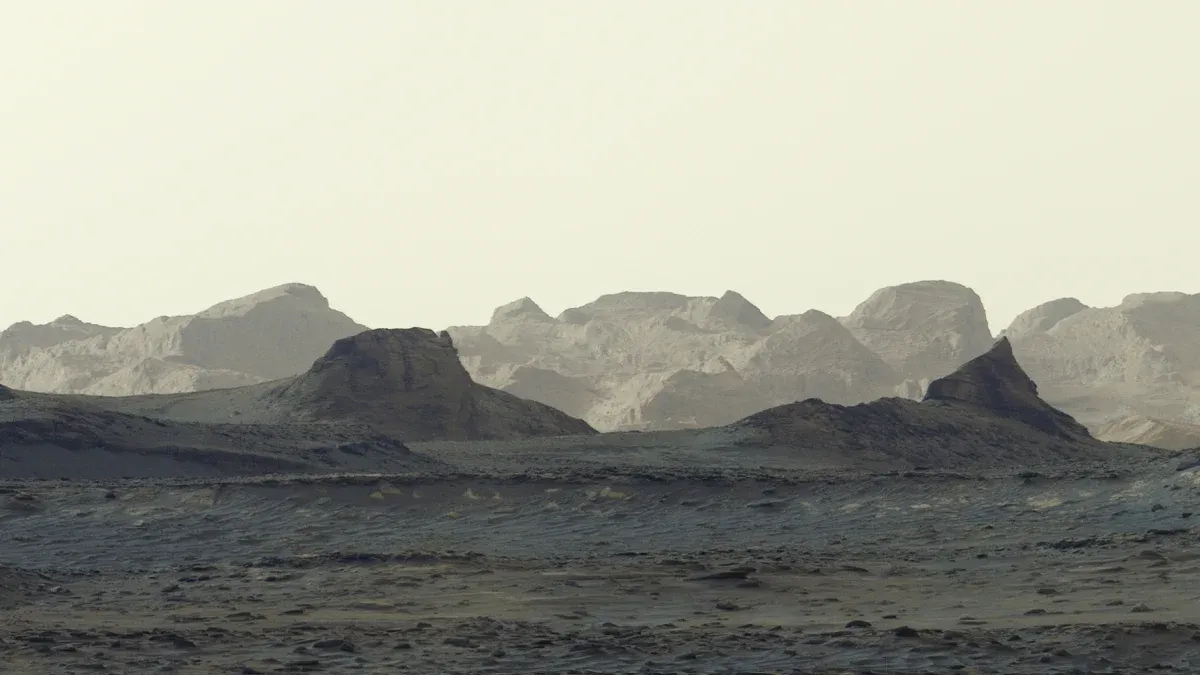
Why Mars looks blue in NASA’s unedited curiosity panorama? Stand beside Curiosity at dawn, and you wouldn't see a red planet or a blue one. You'd see murky light-tan cliffs and almost no colour in the shadows. That makes NASA's new blue Mars panorama a bit of a trick, though not the kind you might suspect. Curiosity captured the scene on August 11 around 8:30 a.m. local Mars time. Its Mastcam took six images, which were stitched together after being sent to Earth. Unlike most Mastcam images, this one skipped the usual white balancing. NASA called that "an artistic choice" that preserves the early morning appearance. It shows wind-carved cliffs called yardangs on Mount Sharp. Martian dust tints everything the sun touches, so mission teams usually correct for it. The goal is to make rocks look as they would in Earth sunlight. Mike Malin, principal investigator for Curiosity's Mastcam, says the dust also hangs in the air, so the light has a colour like the sky near a forest fire. Correcting for it gives geologists a stable reference, says Mark Lemmon of Perseverance's Mastcam-Z team. Without it, everything takes on one dusty cast.

The News International·
Science

Why SpaceX's Starship Falls Sideways Before Flipping Upright To Land - BGR

It would be fair to say that design teams at SpaceX threw a lot of the rulebook out the window when they designed Starship, which is the most powerful rocket ever built. SpaceX's flagship rocket, which is still under developmental testing, was designed for missions that had never been attempted before. Starship is expected to carry payloads and crew to Mars at scale, and this required out-of-the-box thinking. It is for this reason that the Starship vehicle and Super Heavy booster had to be designed using a different approach. One of the most novel parts of any Starship flight is the landing, where the Starship vehicle glides on its belly through the upper parts of the atmosphere after reentry, then flips into an upright position for landing at the last possible moment. This is done to gradually slow it down, to manage reentry temperatures effectively, and to use a flip maneuver to get Starship into an upright position so it can land on the surface of Mars, or to be caught by SpaceX's Mechazilla launch tower arms back on Earth. SpaceX designed this flight profile (and designed Starship around the concept) for a good reason, which was to shed speed passively during reentry and to

BGR·
Science

De novo design of lipopeptides with antimicrobial potency enabled by a chain-as-prompt deep learning framework - Nature

We’re sharing this article early to provide faster access to peer-reviewed, accepted research. It is citable and carries a permanent DOI. This version is subject to further edits and will be replaced automatically by the final Version of Record. All legal disclaimers apply. AbstractAntimicrobial lipopeptides (AMLPs) represent a promising solution to global antibiotic crisis, yet their precision design remains challenging due to the inability of current computational models to account for N-terminal fatty acid modification. Here we develop a deep learning-driven AMLP model for de novo design of AMLPs by integrating a chain-as-prompt mechanism with domain-adaptive transfer learning, effectively bridging the representation gap between peptide sequence and lipid-induced bioactivity. Using the AMLP model, 2657 evolutionarily selected RiPP-derived core peptide sequences from 96,911 bacterial genomes are inspiringly designed for virtual lipidation with seven N-terminal fatty acid chains (C6–C18) followed by predictive screening, generating 6197 candidate sequences.

Nature·
Science

Spatially resolving isomeric trisaccharides on surfaces with Orbitrap-SIMS - Nature

We’re sharing this article early to provide faster access to peer-reviewed, accepted research. It is citable and carries a permanent DOI. This version is subject to further edits and will be replaced automatically by the final Version of Record. All legal disclaimers apply. AbstractMany biologically important molecules are structural isomers that share the same molecular mass yet differ in shape, bonding and function. This creates an ambiguity for mass spectrometry imaging (MSI), where chemically distinct species can be indistinguishable on the mass-to-charge (m/z) scale and therefore cannot be reliably mapped in heterogeneous materials. Here we demonstrate that Orbitrap secondary ion mass spectrometry (OrbiSIMS) can provide an orthogonal contrast that enables both identification and spatial separation of isomeric molecules directly on surfaces. By exploiting structure-dependent secondary-ion dissociation and gas-phase collisional effects during ion transmission, we discriminate isomeric trisaccharides raffinose, maltotriose and melezitose and spatially resolve raffinose and maltotriose in mixtures.

Nature·
Science

Subglacial landforms as proxy for offshore freshened groundwater in formerly glaciated margins - Nature

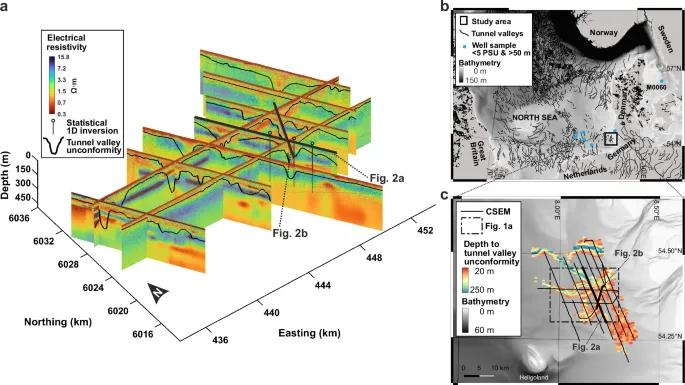
IntroductionOffshore freshened groundwater (OFG) is subsurface porewater with salinity below that of ambient seawater, occurring in sediments and rocks beneath or seaward of the shoreline. The definition refers to a salinity state rather than to a process and this distinction led to a recent proposal to rename the phenomenon Offshore Relatively Fresh Groundwater (ORFG), since "freshened" can be read as implying ongoing change1. OFG has emerged as a significant yet poorly constrained part of the global hydrological cycle, with reservoirs identified along continental margins worldwide2,3. Global water stress is growing, particularly in densely populated coastal regions. OFG is also of broader scientific importance for understanding geohazards, biogeochemical cycling, subseafloor microbiology, and the preservation of archaeological records. There is therefore an urgent need to better constrain the emplacement, stability, and distribution of OFG2,3,4,5,6,7,8,9,10.

Nature·
Science

Controlled nucleation of hopfions with field pulses - Nature

We’re sharing this article early to provide faster access to peer-reviewed, accepted research. It is citable and carries a permanent DOI. This version is subject to further edits and will be replaced automatically by the final Version of Record. All legal disclaimers apply. AbstractWe demonstrate a mechanism for the deterministic nucleation of magnetic hopfions in cylindrical nanopillars via transient magnetic field pulses. By exploiting a chiral magnetic cylinder with engineered surface uniaxial anisotropy, we show that field pulses trigger a non-equilibrium magnetization dynamics. Depending on the pulse amplitude, the system relaxes into distinct topologically protected energy minima, stabilizing either isolated hopfions or coexisting states with other three-dimensional solitons. This approach offers a framework for manipulating 3D topological textures without requiring localized spin-polarized currents, broadening the understanding of three-dimensional nanomagnetism.

Nature·
Science

Microplastic contamination in commercially important marine fishes from the Sohar Coast, Sea of Oman: occurrence, characterization, and polymer composition - Nature

We’re sharing this article early to provide faster access to peer-reviewed, accepted research. It is citable and carries a permanent DOI. This version is subject to further edits and will be replaced automatically by the final Version of Record. All legal disclaimers apply. AbstractMicroplastic (MP) pollution is an increasing concern in marine environments because of its persistence, bioavailability, and potential implications for marine ecosystem health and seafood safety. Despite growing global attention, information on MP contamination in commercially important marine fish from the Sea of Oman remains limited. This study assessed the occurrence, abundance, and characteristics of MPs in four commercially important fish species from the Sohar coast and tested whether MP contamination differed among species and tissues and was associated with habitat group, sex, and biometric characteristics. A total of 120 fish representing Epinephelus areolatus, Lethrinus microdon, Nematalosa arabica, and Rastrelliger kanagurta were examined for MPs in the gastrointestinal tract (GIT) and gills.

Nature·
Science

What color is Mars really? NASA Curiosity photo shows Mars stripped down. - Mashable

Your mental picture of Mars could be wrong. Elisha Sauers writes about space for Mashable, taking deep dives into NASA's moon and Mars missions, chatting up astronauts and history-making discoverers, and jetting above the clouds. Through 17 years of reporting, she's covered a variety of topics, including health, business, and government, with a penchant for public records requests. She previously worked for The Virginian-Pilot in Norfolk, Virginia, and The Capital in Annapolis, Maryland. Her work has earned numerous state awards, including the Virginia Press Association's top honor, Best in Show, and national recognition for narrative storytelling. For each year she has covered space, Sauers has won National Headliner Awards, including first place for her Sex in Space series. Send space tips and story ideas to [email protected] or text 443-684-2489. Follow her on X at @elishasauers.

Mashable·
Science

Integrated bioinformatic analysis identifies distinct neddylation-associated proteasome genes and immune-related features in laryngeal squamous cell carcinoma - Nature

We’re sharing this article early to provide faster access to peer-reviewed, accepted research. It is citable and carries a permanent DOI. This version is subject to further edits and will be replaced automatically by the final Version of Record. All legal disclaimers apply. AbstractNeddylation contributes to cancer progression, but its relationship with proteasome-related genes and the immune microenvironment in laryngeal squamous cell carcinoma (LSCC) remains unclear. We aimed to identify neddylation-associated genes in LSCC and characterize their molecular, metabolic, and immune features. Transcriptomic data from The Cancer Genome Atlas and Gene Expression Omnibus were analyzed using differential expression, functional enrichment, and machine-learning approaches. Key genes were further evaluated by survival, pathway, immune infiltration, and somatic mutation analyses and validated by quantitative real-time PCR (qRT-PCR) in five paired LSCC and adjacent tissues. Seventy-four differentially expressed neddylation-related genes were identified. Four genes, KCTD6, PSMB2, PSMB4, and PSMD2, were selected by both LASSO and SVM-RFE.

Nature·