Why Mars looks blue in NASA’s unedited curiosity panorama? - The News International

Why Mars looks blue in NASA’s unedited curiosity panorama? Stand beside Curiosity at dawn, and you wouldn't see a red planet or a blue one. You'd see murky light-tan cliffs and almost no colour in the shadows. That makes NASA's new blue Mars panorama a bit of a trick, though not the kind you might suspect. Curiosity captured the scene on August 11 around 8:30 a.m. local Mars time. Its Mastcam took six images, which were stitched together after being sent to Earth. Unlike most Mastcam images, this one skipped the usual white balancing.
NASA called that "an artistic choice" that preserves the early morning appearance. It shows wind-carved cliffs called yardangs on Mount Sharp. Martian dust tints everything the sun touches, so mission teams usually correct for it. The goal is to make rocks look as they would in Earth sunlight. Mike Malin, principal investigator for Curiosity's Mastcam, says the dust also hangs in the air, so the light has a colour like the sky near a forest fire. Correcting for it gives geologists a stable reference, says Mark Lemmon of Perseverance's Mastcam-Z team. Without it, everything takes on one dusty cast.
This article is an excerpt. To read the full content, visit the original source. The News International
Related articles
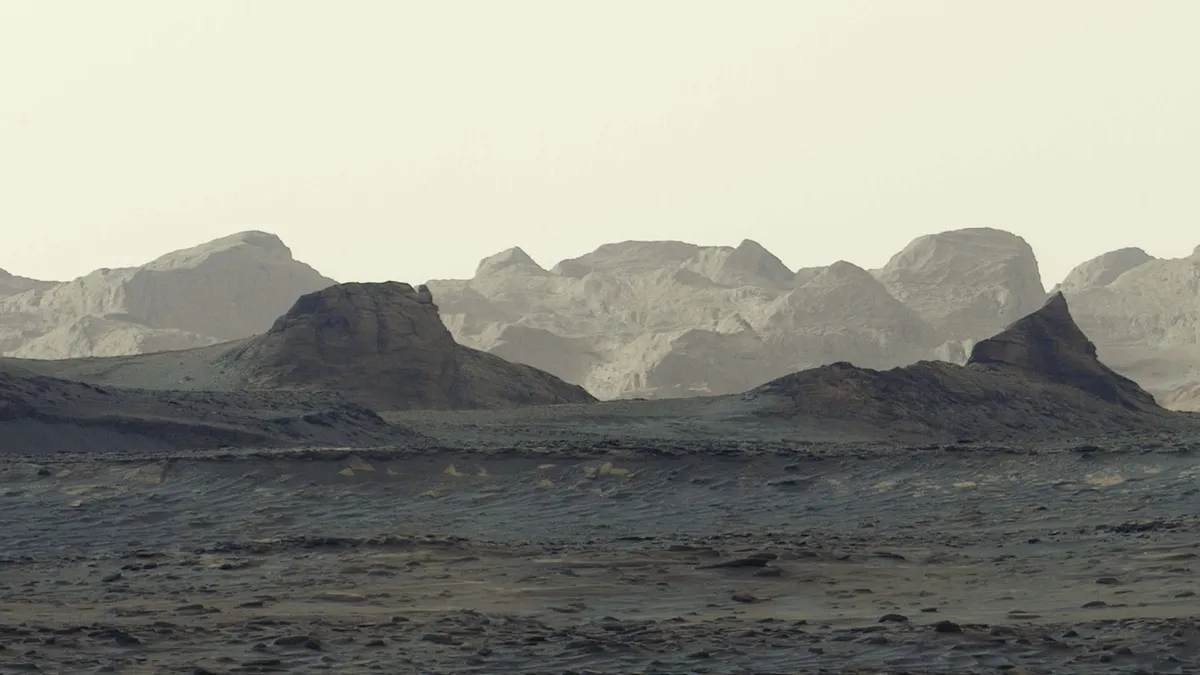
Curiosity rover camera reveals “most detailed view yet” of distant Martian cliffs with fantastic sunrise panorama - Digital Camera World
NASA's rover beamed back a series of shots depicting wind-carved crags on Mars illuminated by golden dawn light, which the space agency made into a panorama
NASA’s Webb Reveals Dynamic Panorama of Star Formation - NASA Science (.gov)
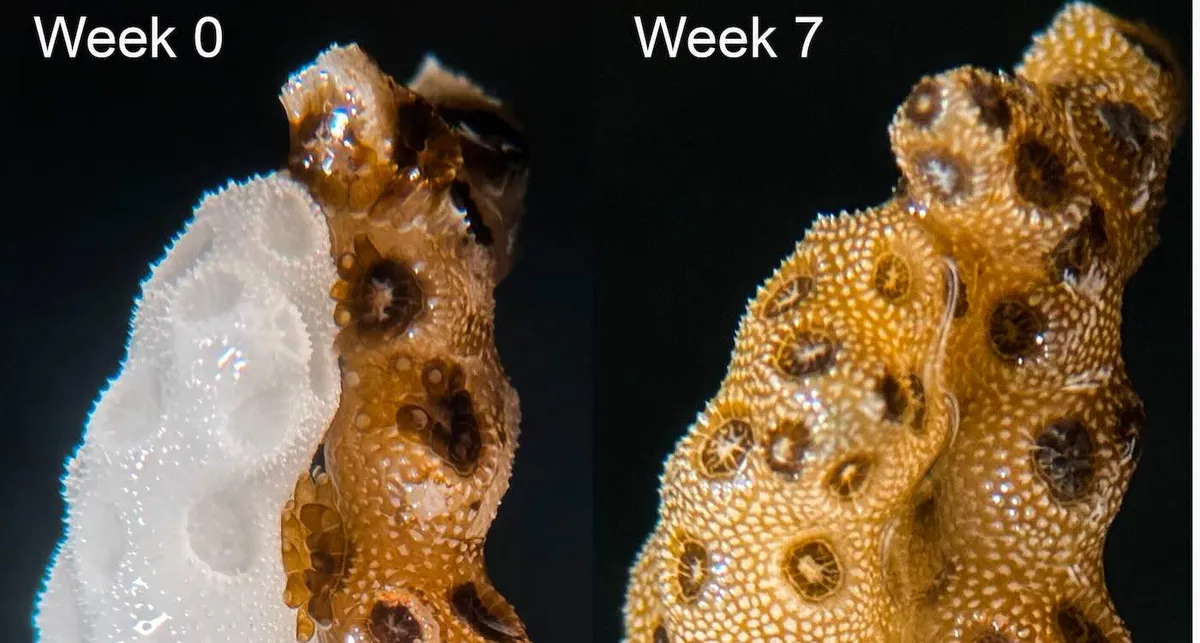
Coral Bleaching Reversed at Record Speed Using New Stanford Method: ‘Not a Lost Cause, at All’ - Good News Network
Coral bleaching restoration at Stanford – by Dan Griffin / GG Films (via SWNS, cropped) Coral bleaching has been reversed at record speed using a new method developed at Stanford University.
Experimental characterization and scaling of flexural rigidity in sewn multilayer structures - Nature
We’re sharing this article early to provide faster access to peer-reviewed, accepted research. It is citable and carries a permanent DOI. This version is subject to further edits and will be replaced automatically by the final Version of Record. All legal disclaimers apply. AbstractSewing is one of the established methods used to fabricate and assemble multilayer insulation (MLI) blankets for aerospace applications, yet the resulting effective flexural behavior remains insufficiently understood. This study investigates the room-temperature, quasi-static flexural behavior of MLI blankets composed of aluminized BoPET radiation shields and polyester net spacers across structural configurations of 2, 6, 12, and 24 layers. A full factorial design was employed to evaluate the influence of the number of layers, stitch density, needle thread tension, and needle foot force. Statistical analyses demonstrated that the number of layers is the dominant factor governing flexural response. Among the sewing parameters, needle thread tension was associated with modifications in bending length, while needle foot force primarily affected local compaction.
0 comments
No comments yet. Be the first to share your thoughts!