UBC Faculty of Applied Science 2026 appointments - UBC Applied Science
This story deserves to be shared
Send it to someone who'd care, or post it on your networks.
This article is an excerpt. To read the full content, visit the original source. UBC Applied Science
Related articles
Earth's core may have been leaking hydrogen for billions of years - Phys.org
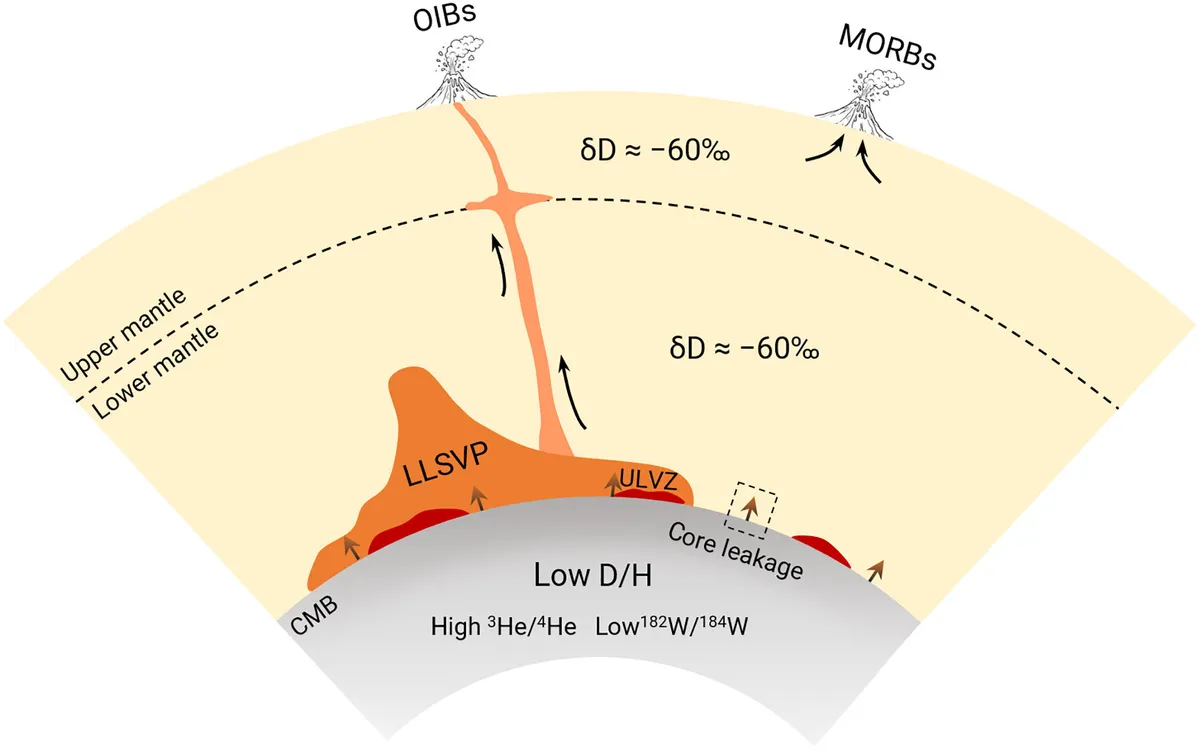
Schematic model for the origin of isotopic anomalies in ocean island basalts. Credit: Science Advances (2026). DOI: 10.1126/sciadv.aei4756 When Earth formed billions of years ago, its metallic core was wrapped in a global ocean of molten rock, which eventually cooled and crystallized to form the mantle. Today, when deep-rooted mantle plumes rise toward the surface and produce volcanic eruptions, the resulting lava can contain hydrogen from deep inside the planet.

Euclid discovers its first new comet 810 million miles from Earth - Phys.org
The European Space Agency's Euclid space telescope has discovered its first previously unknown comet in images taken between Sept. 16 and 24, 2026. The discovery is impressive for a mission that is designed to take deep, steady images of distant galaxies—not to follow fast-moving solar system objects like comets. Furthermore, the quick turnaround between identification and validation demonstrates that Euclid can detect new comets while they are still relatively far from the sun, potentially leading to a suitable target for ESA's future Comet Interceptor mission.
Researchers capture clear images of complex cancer drug building enzyme - News-Medical
A joint research group led by Ryo Tanifuji and Hiroki Oguri from the University of Tokyo and Yoshikazu Tanaka from Tohoku University has successfully visualized SacC, an enzyme that plays a key role in building the complex five-ring core of safracin B. This core structure is shared with trabectedin, a drug used to treat soft tissue sarcoma. While getting a clear picture of the enzyme in its working state is a remarkable achievement in and of itself, the method pioneered during the project might have the widest reach. With its potential applicability to a broad range of related enzymes that produce medically useful compounds, the approach could open new avenues for research into not only optimizing already existing compounds but also creating new ones. The findings were published in the Journal of the American Chemical Society (JACS). The production line for the drug trabectedin starts with the bacterial compound safracin B, which the enzyme SacC assembles within the bacteria. The enzyme carries out a remarkable, seven-step catalytic cascade, stitching together two new carbon-to-carbon bonds and producing a five-ring core scaffold in a single pass.
Oldest animals on Earth found to share a common wormlike ancestor - Phys.org
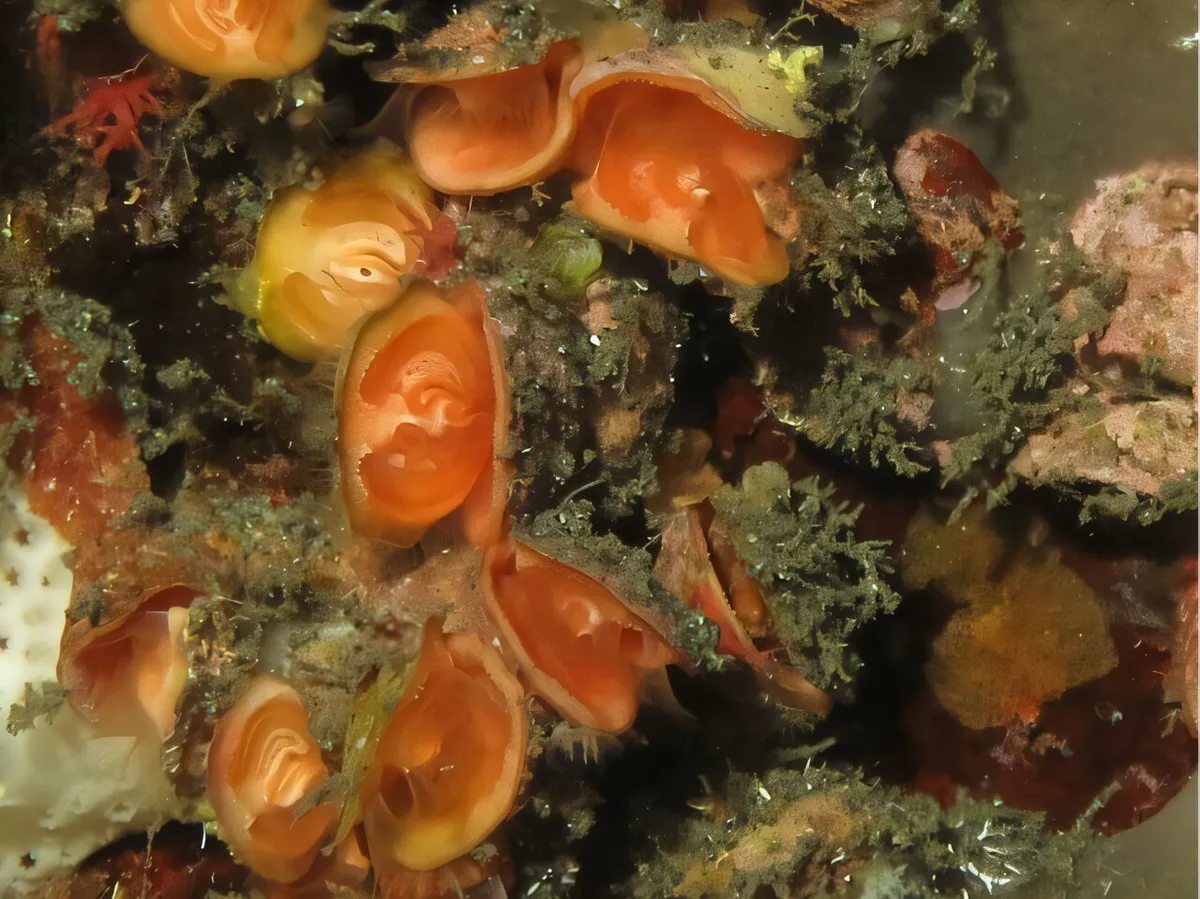
Underwater photo of one of the species studied, Pajaudina atlantica, from La Palma, Canary Islands, Spain. Credit: Hana Jurikova New research from the University of St Andrews has shed light on the evolution of an important yet thus far poorly understood group of marine invertebrate animals—brachiopods. The work, published in Science Advances, presents the first comprehensive phylogenomic analysis of all five extant brachiopod orders and related lineages.

Study links DNA methylation to OCD psychotherapy treatment response - News-Medical
OCD is a mental health disorder characterized by unwanted, recurring thoughts and repetitive behaviors that can severely interfere with everyday life. Exposure-based psychotherapy is one of the most effective treatments, but the biological mechanisms underlying treatment response remain poorly understood. To investigate this, researchers from the University of Bergen studied DNA methylation, an epigenetic mechanism in which small chemical groups attach to DNA and can influence gene activity without changing the genetic code.

108-year-old stays strong with daily leg exercises – 2 simple moves anyone can do at home - Women's Health
Jump to:Susan’s simple daily fitness routine2 simple lower-body exercises to add to your routineHow to do a wall sitHow to do a squatEarlier this year, Susan Young Browne from Delaware celebrated her 108th birthday – the news of which travelled across the world. Everyone wanted to know the retired teacher’s longevity secrets. How did Susan, who had just renewed her driving licence until 2033, retain such a good quality of life? Well, movement, it seems, has played an integral part. Firstly, Susan, who still walks unassisted, told TODAY that she continues to attend chair dancing classes at a local community centre. But she’s also committed to consistent, everyday movement. Susan’s simple daily fitness routineSusan told TODAY that she begins every morning with a 10-minute stretching, strengthening and balancing routine. With flexibility, mobility, strength and balance all being key markers of longevity, Susan’s routine is a reminder that workouts do not need to be long and complicated to have far-reaching benefits.
0 comments
No comments yet. Be the first to share your thoughts!