Researchers capture clear images of complex cancer drug building enzyme - News-Medical
This story deserves to be shared
Send it to someone who'd care, or post it on your networks.
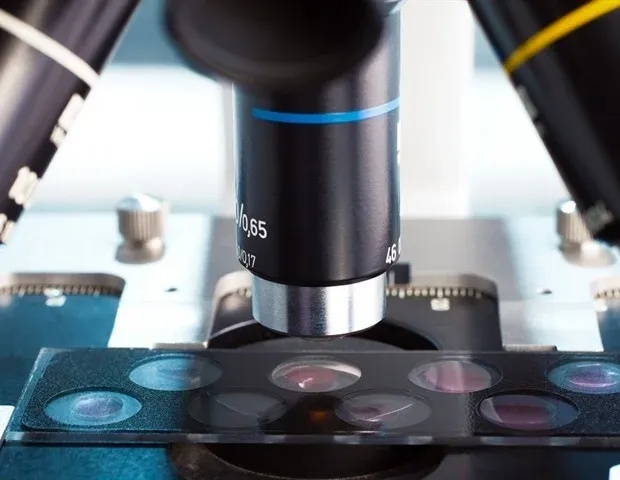
A joint research group led by Ryo Tanifuji and Hiroki Oguri from the University of Tokyo and Yoshikazu Tanaka from Tohoku University has successfully visualized SacC, an enzyme that plays a key role in building the complex five-ring core of safracin B. This core structure is shared with trabectedin, a drug used to treat soft tissue sarcoma. While getting a clear picture of the enzyme in its working state is a remarkable achievement in and of itself, the method pioneered during the project might have the widest reach. With its potential applicability to a broad range of related enzymes that produce medically useful compounds, the approach could open new avenues for research into not only optimizing already existing compounds but also creating new ones. The findings were published in the Journal of the American Chemical Society (JACS).
The production line for the drug trabectedin starts with the bacterial compound safracin B, which the enzyme SacC assembles within the bacteria. The enzyme carries out a remarkable, seven-step catalytic cascade, stitching together two new carbon-to-carbon bonds and producing a five-ring core scaffold in a single pass.
This article is an excerpt. To read the full content, visit the original source. News-Medical
Related articles
Thermal Noise Used To Send Data Without Active Signal - Mirage News
Stanford researchers recently revealed how a seemingly physics-defying wireless communication technology works. The new technology, called thermal noise communication, harnesses background static that normally is the bane of radio, cellular, and other wireless signals. In a new study published in Proceedings of the National Academy of Sciences, the team showed how a transmitter could deliver data to a receiver without any actively produced signal by manipulating tiny oscillations in voltage. The findings describe how the system works at a fundamental level, opening the door to improving the communication mode and determining real-world applications for it. "We've built a system that others could very easily implement," said senior author Zerina Kapetanovic, an assistant professor of electrical engineering. A physics mysteryIn her previous research at the University of Washington, Kapetanovic studied agricultural sensing technologies, which inspired her to pursue low-power modes of relaying data like soil moisture levels.
Giant Canyon on Mars Is Still Tectonically Active Today - Lamont-Doherty Earth Observatory
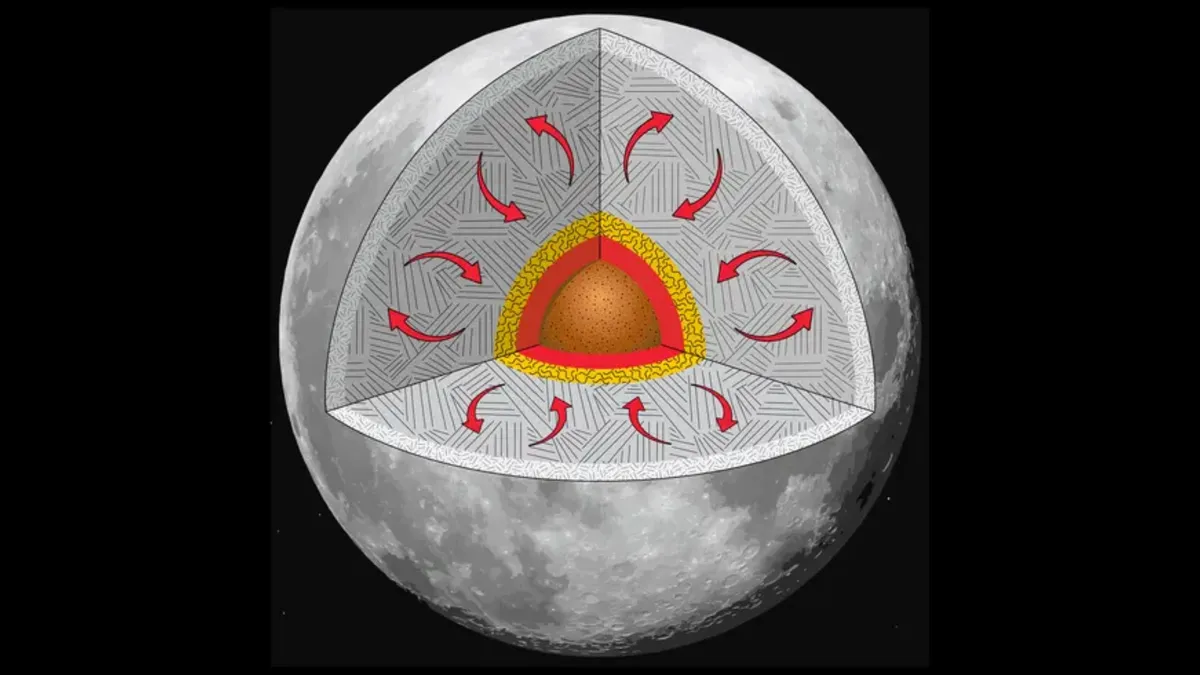
The moon is shrinking. 10,000 cracks on the lunar surface reveal by how much - Space
One new study shows how much the moon has diminished over time.
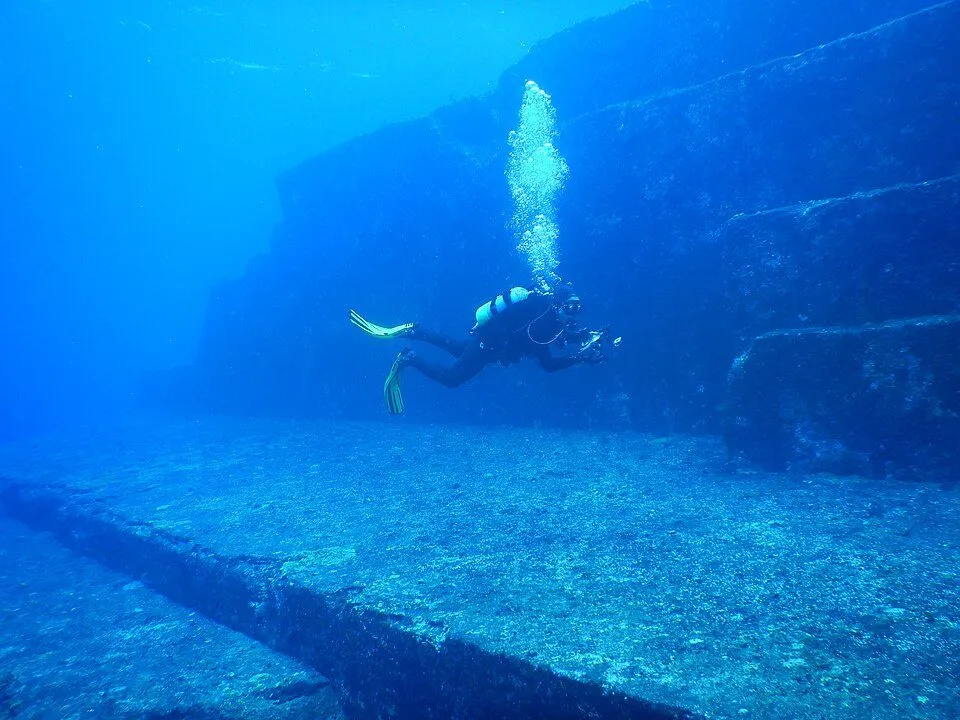
It’s thousands of years old, as long as a football field, taller than the Great Sphinx of Giza and no-one knows how it ended up at the bottom of the sea - BBC Wildlife Magazine
Off the coast of a Japanese island so far west that it’s actually closer to Taiwan, it’s possible to see hundreds of hammerhead sharks battling ripping currents around 35 metres deep. That is, if you’re a very experienced diver visiting between November and early May. But not everyone comes for the scalloped hammerheads. Some divers visit this remote destination to swim through the inky blue waters past mysterious blocks of towering rock that look like they could have been plonked there by a giant playing with Lego.
0 comments
No comments yet. Be the first to share your thoughts!