Famous Siberian cave yields remains of yak-like Ice Age mammal - Reuters
This story deserves to be shared
Send it to someone who'd care, or post it on your networks.
This article is an excerpt. To read the full content, visit the original source. Reuters
Related articles
Feeding and fasting reveal appetite-linked genes in Siberian sturgeon | Newswise - Newswise
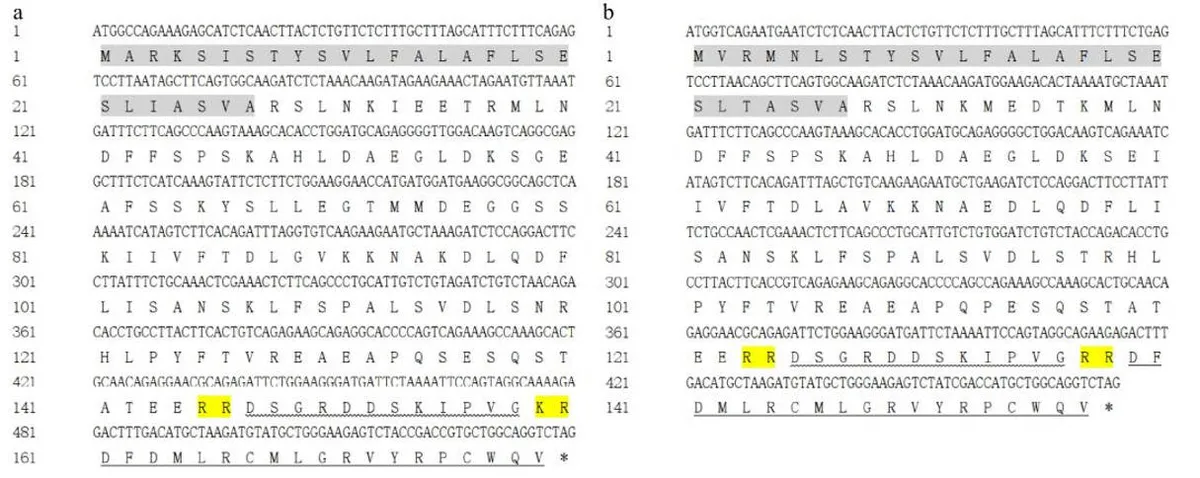
Newswise — Fish rely on signals from the brain and other organs to balance food intake with their energy needs. One such signal, melanin-concentrating hormone (MCH), was first discovered in salmon and has since been studied across vertebrates. In mammals, MCH generally promotes eating, but studies in fish have produced mixed results: its associated gene appears to respond differently to feeding and fasting in different species. Siberian sturgeon are widely farmed for meat and caviar, yet little was known about their pmch genes, where those genes are active, or how they respond when food becomes available or scarce. A study (DOI: 10.48130/jai-0026-0004) published in Journal of Applied Ichthyology on 30 July 2026 by Zhiqiong Li's & Ni Tang's team, Chengdu Agricultural College, reports two pmch forms whose expression patterns suggest possible roles in appetite regulation and liver energy metabolism. The researchers first isolated and sequenced two pmch transcripts, named pmcha and pmchb, from Siberian sturgeon. Their sequences encode precursor proteins of 179 and 158 amino acids, respectively.

Science popularization center in Heilongjiang offers interactive experience of Siberian tigers, Amur leopards - Global Times
People visit the Northeast China Tiger and Leopard National Park Dongning Science Popularization and Education Center in Dongning, northeast China's Heilongjiang Province, Oct. 12, 2026. Located in Dongning City, Heilongjiang Province, the Dongning Science Popularization and Education Center of the Northeast China Tiger and Leopard National Park focuses on the sensory experience of tigers and leopards. Combining diverse interactive experience scenes, it allows visitors to gain an immersive understanding of Siberian tigers and Amur leopards. (Photo: Xinhua) People visit the Northeast China Tiger and Leopard National Park Dongning Science Popularization and Education Center in Dongning, northeast China's Heilongjiang Province, Oct. 12, 2026. Located in Dongning City, Heilongjiang Province, the Dongning Science Popularization and Education Center of the Northeast China Tiger and Leopard National Park focuses on the sensory experience of tigers and leopards. Combining diverse interactive experience scenes, it allows visitors to gain an immersive understanding of Siberian tigers and Amur leopards. (Photo: Xinhua)
Cosmic 'hamburger' offers rare edge-on view of where giant planets may take shape - Phys.org
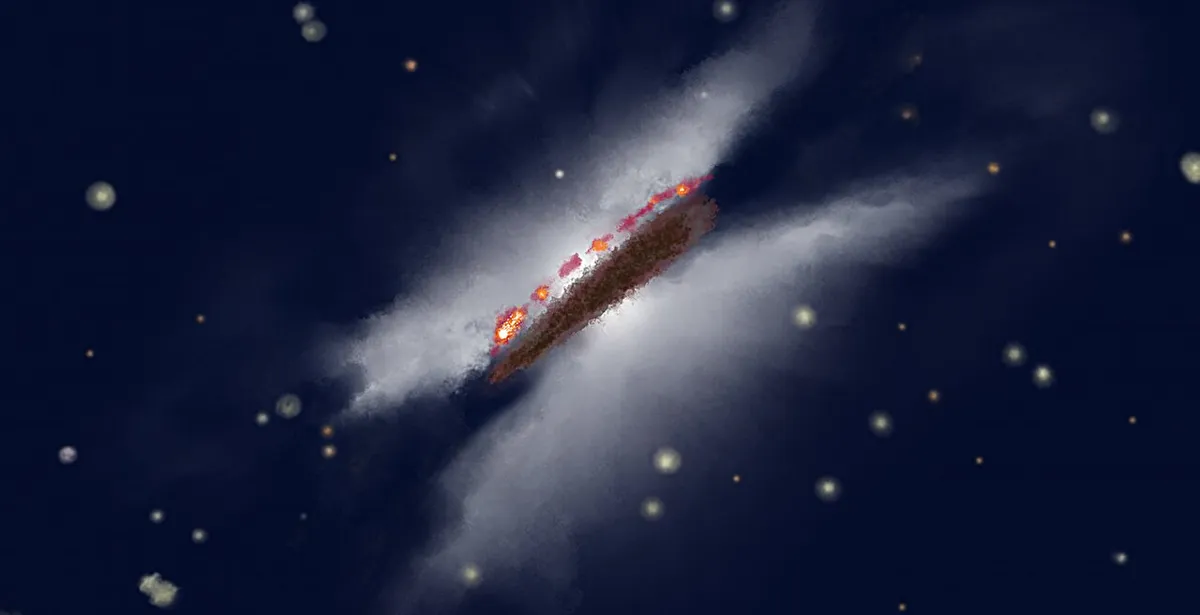
Gomez's Hamburger System. This artist's impression of the Gomez's Hamburger system shows the stacked layers of gas and dust as they rotate around a young star. ALMA observations reveal a direct view of its vertical structure at millimeter wavelengths, allowing astronomers to map the location of the millimeter-sized dust grains and several different gas-phase molecules, which have arranged themselves into distinct levels. Credit: NSF/AUI/NSF NRAO/P. Vosteen. Astronomers using the Atacama Large Millimeter/submillimeter Array (ALMA) were surprised to discover the earliest phases of giant planet formation between the dense layers of gas and dust in the "Gomez's Hamburger" system, referred to as GoHam.
The ESA's Euclid Space Telescope Has Discovered A New Comet - Universe Today
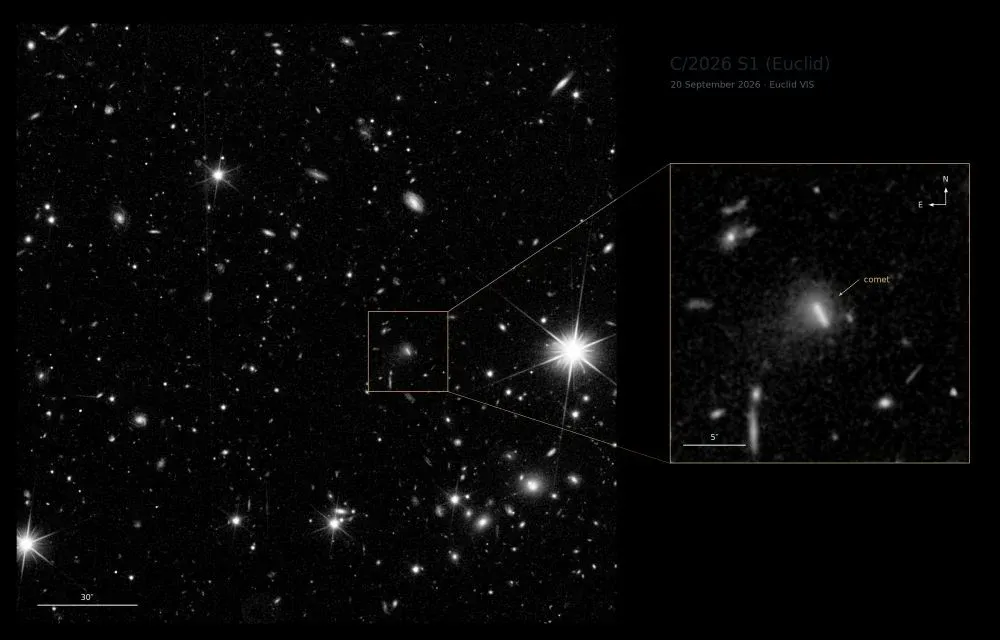
The ESA's Euclid Space Telescope has discovered its first comet, a result that's not part of its primary mission. The telescope was launched at the beginning of July, 2023, and its mission is to observe about 1.5 billion galaxies out to redshift z=2, which corresponds to seeing around 10 billion years into the past. The goal is to measure the redshift of a massive amount of galaxies, to shed light on the expansion history of the Universe and the force that drives it, dark energy. The space telescope has observed other comets, but this is the first time it's discovered one. The comet was found in multiple images captured between September 16th and 24th, 2026. For a telescope built to take deep images of distant galaxies, discovering a rapidly moving comet in the Milky Way is a surprising bonus.
Japan launches spacecraft to mysterious moons of Mars in a bold mission to bring home soil samples - CFJC Today Kamloops
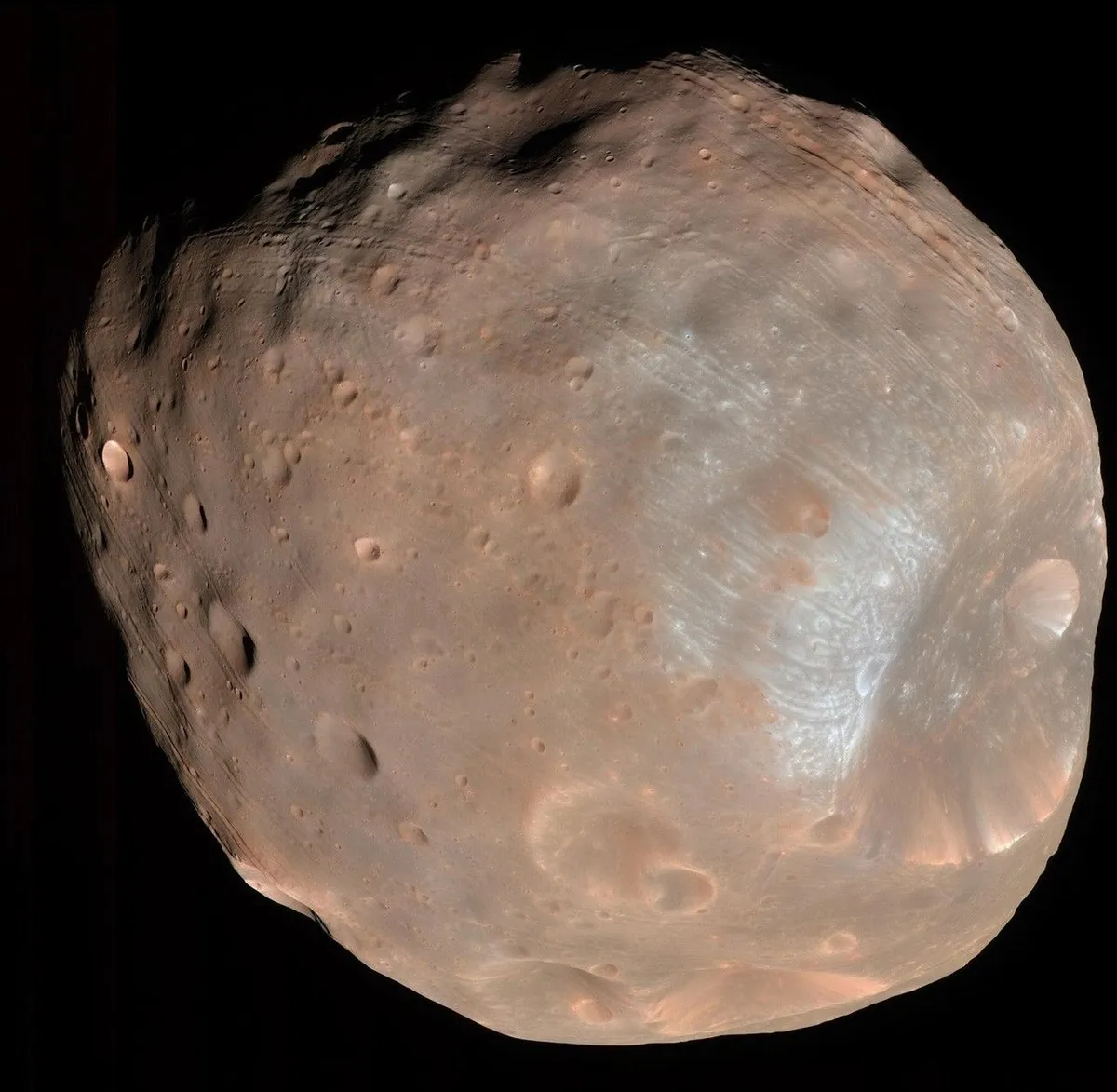
If successful, bits of dust, soil and rocks from Phobos will arrive on Earth in 2031. “There’s a lot of adrenaline and a lot of excitement and a lot of wow,” said NASA astrophysicist Tom Statler, who’s involved with the project. Japan has an edge going in, with two asteroid sample returns already under its cosmic belt. Phobos is a lumpy, potato-shaped rock just 14 miles (22 kilometers) or so across. Examining pieces of it can explain how Mars’ moons — and possibly moons elsewhere — came to be. Dubbed MMX for Martian Moons Exploration, the $578 million mission features a hefty 5-ton spacecraft that should reach Mars by late next summer. It will sync up with Phobos’ tight orbit around the red planet, before ejecting the French-German rover that’s named Idefix after the white terrier in the Asterix comics. No bigger than a microwave oven, Idefix will plop onto Phobos by itself, bouncing for several minutes before coming to a halt in the moon’s extraordinarily low gravity. The four-wheeled rover is designed to right itself if it lands upside down. All bets are off, though, if it sinks into soft soil or gets wedged between rocks, said the French Space Agency’s Julien Baroukh.
0 comments
No comments yet. Be the first to share your thoughts!