The ESA's Euclid Space Telescope Has Discovered A New Comet - Universe Today
This story deserves to be shared
Send it to someone who'd care, or post it on your networks.
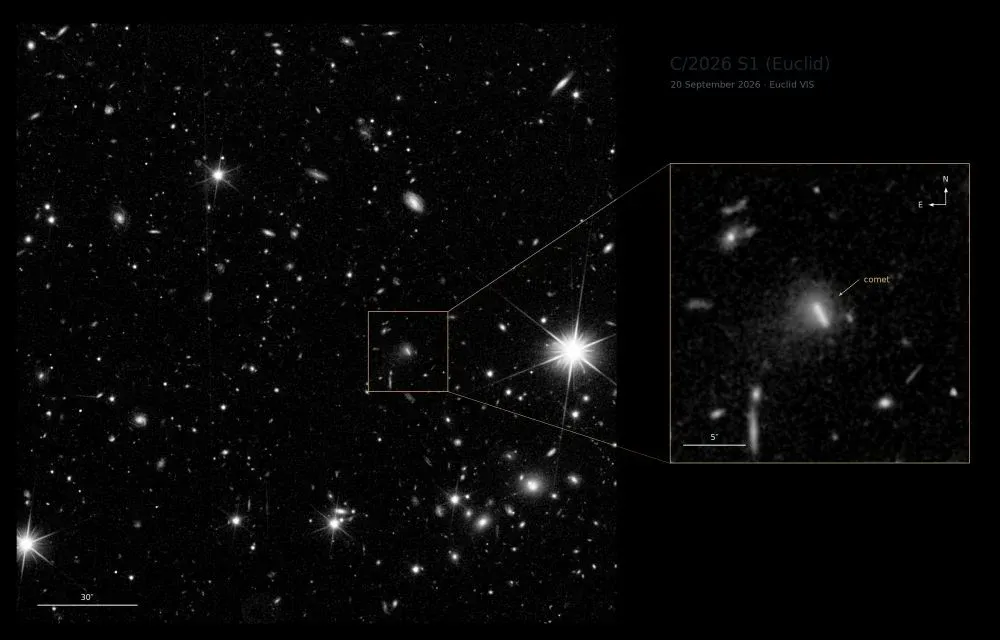
The ESA's Euclid Space Telescope has discovered its first comet, a result that's not part of its primary mission. The telescope was launched at the beginning of July, 2023, and its mission is to observe about 1.5 billion galaxies out to redshift z=2, which corresponds to seeing around 10 billion years into the past. The goal is to measure the redshift of a massive amount of galaxies, to shed light on the expansion history of the Universe and the force that drives it, dark energy.
The space telescope has observed other comets, but this is the first time it's discovered one. The comet was found in multiple images captured between September 16th and 24th, 2026. For a telescope built to take deep images of distant galaxies, discovering a rapidly moving comet in the Milky Way is a surprising bonus.
This article is an excerpt. To read the full content, visit the original source. Universe Today
Related articles
ESA’s Euclid Space Telescope Discovers Its First Comet - Sci.News
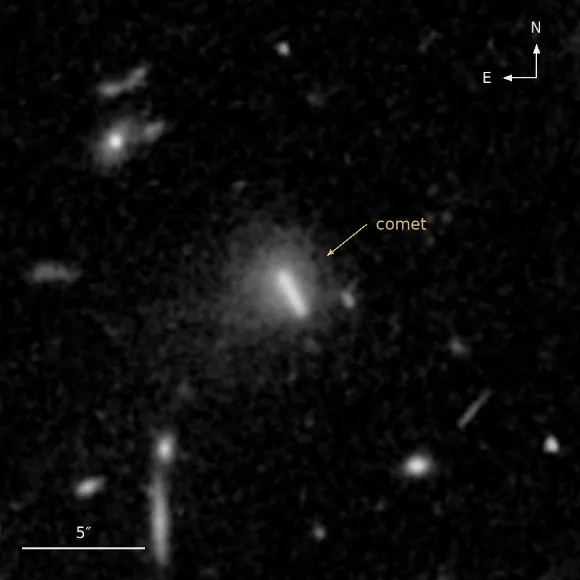
Officially named C/2026 S1 (Euclid), the comet turned up in images Euclid captured between September 16 and 24, 2026. This Euclid shows the comet C/2026 S1 (Euclid). Image credit: ESA / Euclid / Euclid Consortium / NASA / Pöntinen et al.
Euclid discovers its first new comet 810 million miles from Earth - Phys.org
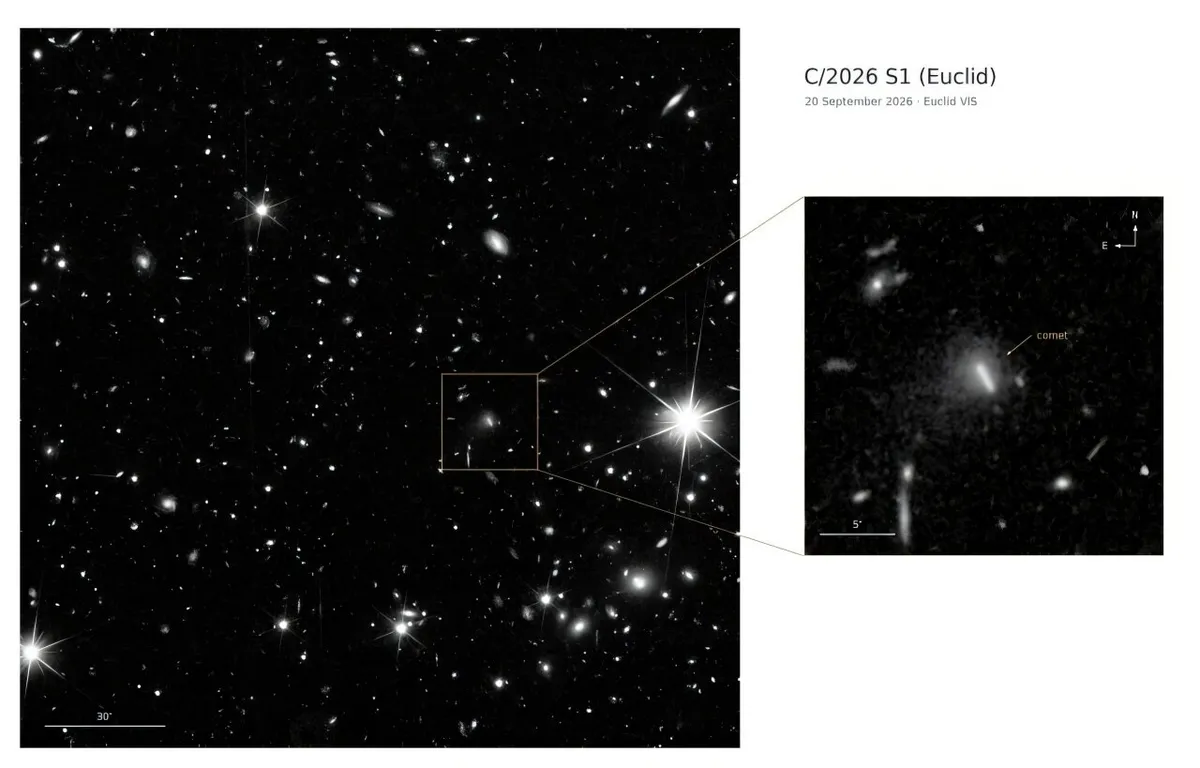
The European Space Agency's Euclid space telescope has discovered its first previously unknown comet in images taken between Sept. 16 and 24, 2026. The discovery is impressive for a mission that is designed to take deep, steady images of distant galaxies—not to follow fast-moving solar system objects like comets. Furthermore, the quick turnaround between identification and validation demonstrates that Euclid can detect new comets while they are still relatively far from the sun, potentially leading to a suitable target for ESA's future Comet Interceptor mission.
Rogue planets and how the Euclid spacecraft is tracking them down - BBC Sky at Night Magazine
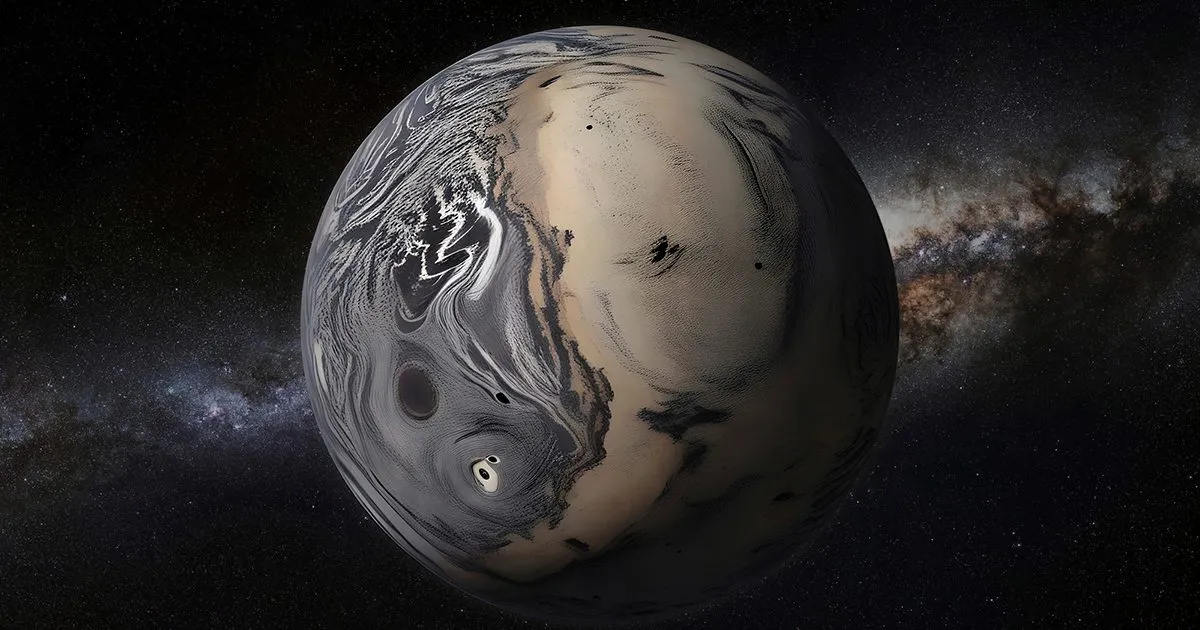
Most people know planets are objects that go around a star, just like Earth goes around the Sun. Rogue planets are objects that have mass similar to planets but are not orbiting stars.
Euclid Space Warps – help us hunt for galaxy-galaxy lense - Max-Planck-Gesellschaft
Machine learning reveals potential warning signal for polar vortex disruptions - Phys.org
The polar vortex, a swirling mass of cold air encircling the North Pole, is sometimes disrupted by sudden stratospheric warming (SSW) events, unleashing waves of frigid air that penetrate farther south than usual. Temperatures across North America and Europe drop precipitously when this happens, but such events remain hard to predict, meaning we can't easily warn people when SSW is imminent.
0 comments
No comments yet. Be the first to share your thoughts!