108-year-old stays strong with daily leg exercises – 2 simple moves anyone can do at home - Women's Health
This story deserves to be shared
Send it to someone who'd care, or post it on your networks.

Jump to:Susan’s simple daily fitness routine2 simple lower-body exercises to add to your routineHow to do a wall sitHow to do a squatEarlier this year, Susan Young Browne from Delaware celebrated her 108th birthday – the news of which travelled across the world. Everyone wanted to know the retired teacher’s longevity secrets. How did Susan, who had just renewed her driving licence until 2033, retain such a good quality of life? Well, movement, it seems, has played an integral part. Firstly, Susan, who still walks unassisted, told TODAY that she continues to attend chair dancing classes at a local community centre. But she’s also committed to consistent, everyday movement. Susan’s simple daily fitness routineSusan told TODAY that she begins every morning with a 10-minute stretching, strengthening and balancing routine. With flexibility, mobility, strength and balance all being key markers of longevity, Susan’s routine is a reminder that workouts do not need to be long and complicated to have far-reaching benefits.
This article is an excerpt. To read the full content, visit the original source. Women's Health
Related articles

Scientists Have Ranked Which Exercises Are Best For Your Bones - ScienceAlert
Exercise is good for you – that much we can all agree on – but which exercises work best for which types of benefit? Knowing that can help in developing personalized exercise programs that suit individuals better. In a new study published in the BMJ, researchers from China decided to analyze the connections between different exercise routines and bone mineral density (BMD), a key measure of bone strength. There was a particular focus on protecting against osteoporosis and the associated bone fragility that comes with getting older. With that in mind, the study team gathered data for 18,429 individuals aged 40 or over, taken from 124 previous trials. While it's well established that exercise can help strengthen bones, the researchers wanted to see which type of exercise might work best, and how much of it was needed.600 METs minutes-per-week was where the difference got meaningful. (Lu et al., BMJ, 2026)"Age-related declines in bone mineral density are strongly associated with reduced bone strength and increased fracture risk," write the researchers in their published paper.

Cosmic 'hamburger' offers rare edge-on view of where giant planets may take shape - Phys.org
Gomez's Hamburger System. This artist's impression of the Gomez's Hamburger system shows the stacked layers of gas and dust as they rotate around a young star. ALMA observations reveal a direct view of its vertical structure at millimeter wavelengths, allowing astronomers to map the location of the millimeter-sized dust grains and several different gas-phase molecules, which have arranged themselves into distinct levels. Credit: NSF/AUI/NSF NRAO/P. Vosteen. Astronomers using the Atacama Large Millimeter/submillimeter Array (ALMA) were surprised to discover the earliest phases of giant planet formation between the dense layers of gas and dust in the "Gomez's Hamburger" system, referred to as GoHam.

The ESA's Euclid Space Telescope Has Discovered A New Comet - Universe Today
The ESA's Euclid Space Telescope has discovered its first comet, a result that's not part of its primary mission. The telescope was launched at the beginning of July, 2023, and its mission is to observe about 1.5 billion galaxies out to redshift z=2, which corresponds to seeing around 10 billion years into the past. The goal is to measure the redshift of a massive amount of galaxies, to shed light on the expansion history of the Universe and the force that drives it, dark energy. The space telescope has observed other comets, but this is the first time it's discovered one. The comet was found in multiple images captured between September 16th and 24th, 2026. For a telescope built to take deep images of distant galaxies, discovering a rapidly moving comet in the Milky Way is a surprising bonus.
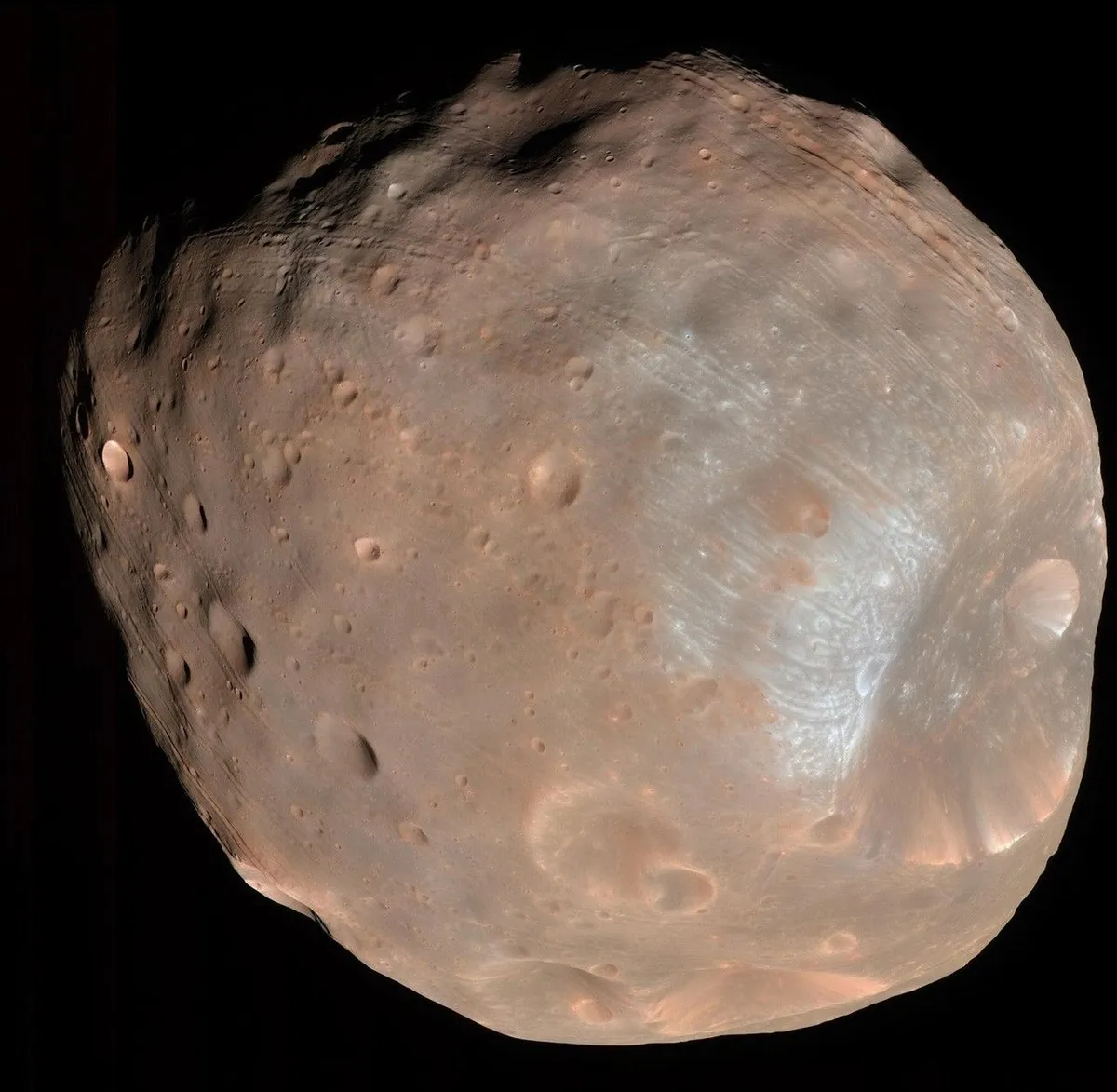
Japan launches spacecraft to mysterious moons of Mars in a bold mission to bring home soil samples - CFJC Today Kamloops
If successful, bits of dust, soil and rocks from Phobos will arrive on Earth in 2031. “There’s a lot of adrenaline and a lot of excitement and a lot of wow,” said NASA astrophysicist Tom Statler, who’s involved with the project. Japan has an edge going in, with two asteroid sample returns already under its cosmic belt. Phobos is a lumpy, potato-shaped rock just 14 miles (22 kilometers) or so across. Examining pieces of it can explain how Mars’ moons — and possibly moons elsewhere — came to be. Dubbed MMX for Martian Moons Exploration, the $578 million mission features a hefty 5-ton spacecraft that should reach Mars by late next summer. It will sync up with Phobos’ tight orbit around the red planet, before ejecting the French-German rover that’s named Idefix after the white terrier in the Asterix comics. No bigger than a microwave oven, Idefix will plop onto Phobos by itself, bouncing for several minutes before coming to a halt in the moon’s extraordinarily low gravity. The four-wheeled rover is designed to right itself if it lands upside down. All bets are off, though, if it sinks into soft soil or gets wedged between rocks, said the French Space Agency’s Julien Baroukh.
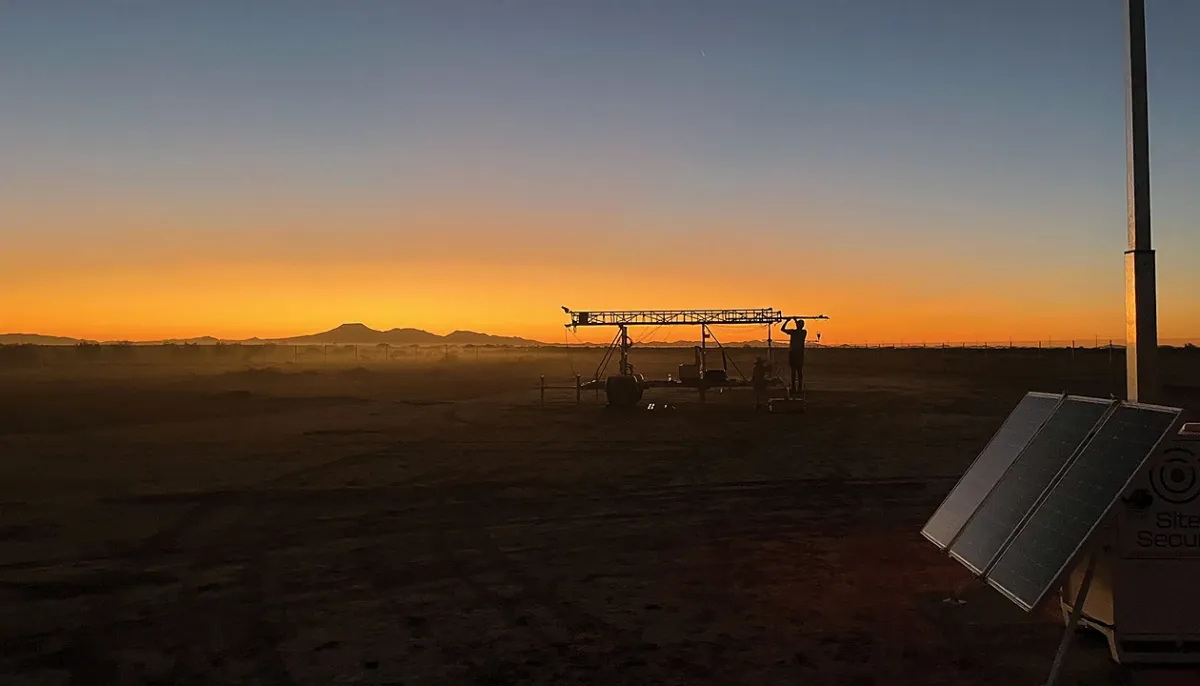
Earth-bound scientists validate space-based methane estimates - Chemical & Engineering News
The latest chemistry news, including important research advances, business and policy trends, chemical safety practices, career guidance, and more. In 2025 scientists put the methane-sensing capabilities of 12 spectral-imaging satellites to the test. Some were designed specifically to measure atmospheric methane; others were repurposed for the task. Now the researchers have shared their results: each of the satellites can be used to detect methane, but some are better than their counterparts for quantifying the potent greenhouse gas (Nature 2026, DOI: 10.1038/s41586-026-11115-0).

NASA’s Curiosity Rover Unveils a Spectacular New View of Mars at Dawn - SciTechDaily
The captivating shapes of wind-carved crags called yardangs are revealed in this zoomed-in crop of a broader panorama captured by NASA’s Curiosity Mars rover on Aug. 11, 2026. Scientists are eager to learn more about how the yardang layer formed. Credit: NASA/JPL-Caltech/MSSSCuriosity’s latest panorama sharpens the view of a Martian rock layer that looks out of place and may have formed from ancient volcanic ash. A band of wind-carved cliffs stretches roughly 10 miles (16 kilometers) across the northwestern reaches of Mount Sharp on Mars, and NASA’s Curiosity rover is climbing toward it. A newly released panorama offers the most detailed view yet of these formations, known as yardangs, which mission scientists have long wanted to examine up close. This artist’s concept shows Mount Sharp, the 3-mile-tall (5-kilometer-tall) mountain that NASA’s Curiosity has been ascending since 2014. The location of the yardang layer, which the rover recently captured from a distance, is indicated by an ellipse annotation on the mountain’s northwestern shoulder. Credit: NASA/JPL-Caltech/ESA/DLR/FU Berlin/MSSS“The yardang layer looks out of place.
0 comments
No comments yet. Be the first to share your thoughts!