BBlogFlow

Categories

Science

10972 articles

Science

Slow down a honey bee stinging and you see impressive mechanisms at work - CBC

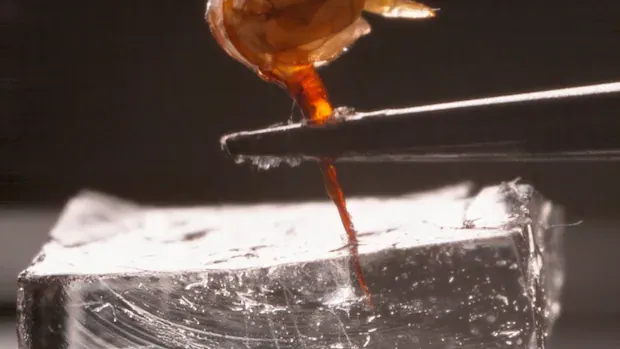
ScienceNew research is showing what makes honeybee stings an effective, self-driving weapon. High speed cameras reveal how the stinger uses a double-piston that pumps up and down to drive it deeper while delivering its poison. New research slows down and shines light on a fatal defense mechanismAnand Ram · CBC News · Posted: Oct 12, 2026 3:00 PM EDT | Last Updated: October 12Listen to this articleEstimated 5 minutesThe audio version of this article is generated by AI-based technology. Mispronunciations can occur. We are working with our partners to continually review and improve the results. High speed videography of an experiment captures how a western honey bee's stinger embeds itself deeper. (Ramirez Esquivel et al. 2026)The stinger of a western honey bee (Apis mellifera) is a weapon of last resort, designed to embed itself and deposit venom in flesh — most often resulting in the worker bee's death. New research published in the Proceedings of the National Academy of Sciences is quite literally shedding light on what makes this defence mechanism so effective.

CBC·
Science

Bee stingers work like saws to pump venom - Popular Science

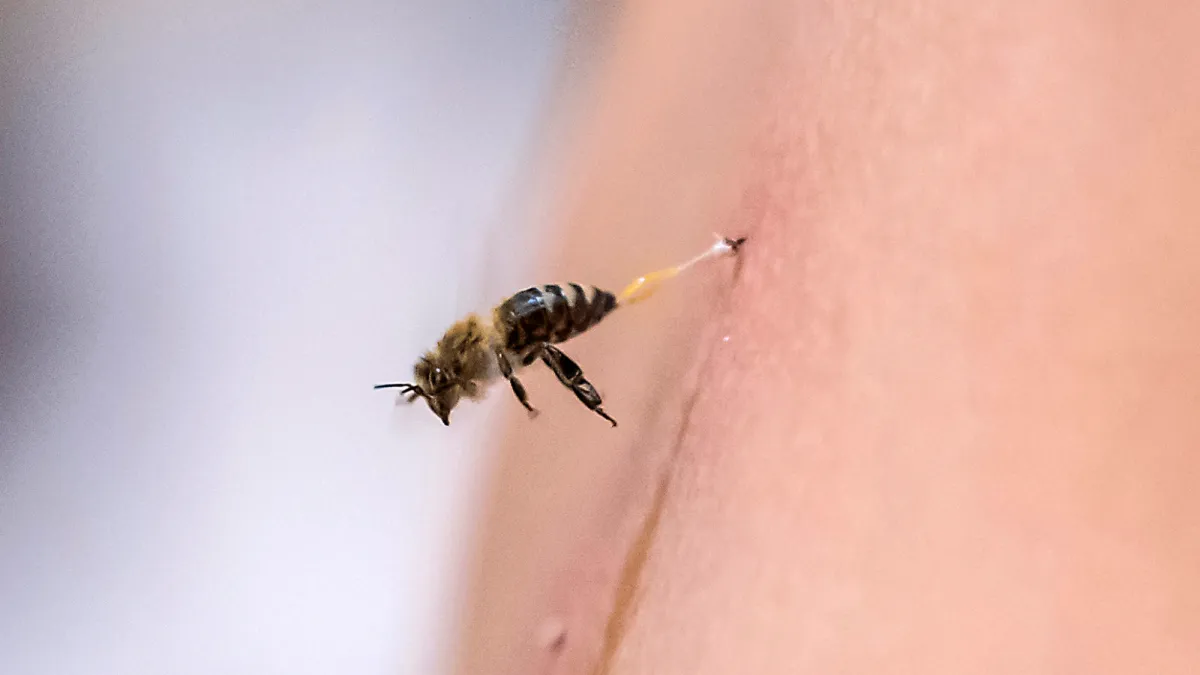
A bee stings the back of a patient receiving treatment at the workshop of Sayed al-Sayeh, an apitherapist who originally trained as an agricultural engineer, in a suburb of Giza, Egypt on June 11, 2021. Al-Sayeh offers his traditional medicine treatment free of charge, in principle using bees' sting venom to treat rheumatic pain, nerve inflammation, and arthritis. It’s one of nature’s seemingly magical tricks. A honey bee (Apis mellifera) stings a victim, and the stinger will still pump venom into a wound even after it has fully detached from the bee’s body. Thanks to some high-speed video, we may finally know the secrets behind this sting.

Popular Science·
Science

Book on “Brain Evolution” Hasn’t Aged Well - Science and Culture Today

Two decades ago, the book of the breathless hour was The Accidental Mind: How Brain Evolution Has Given Us Love, Memory, Dreams, and God (2007) by Johns Hopkins neuroscientist David J. Linden. From the publisher: You’ve probably seen it before: a human brain dramatically lit from the side, the camera circling it like a helicopter shot of Stonehenge, and a modulated baritone voice exalting the brain’s elegant design in reverent tones.

Science and Culture Today·
Science

Study Rewrites Cattle Pregnancy Science - Farms.com

Oct 12, 2026By Farms.com Researchers discover cattle pregnancies can succeed without a protein long considered essential For many years, scientists believed that a protein known as interferon tau (IFNT) was essential for successful pregnancy in cattle. This protein is produced by the developing embryo and was thought to send a crucial signal to the mother, helping maintain the pregnancy. However, new research from Ludwig Maximilian University (LMU) Munich has challenged this long-standing scientific belief. The study, recently published in Nature Communications, found that cattle embryos can establish and maintain pregnancies even without producing interferon tau. The discovery could change how scientists understand reproduction in cattle and may lead to new strategies to improve fertility in livestock. The research team, led by Dr.

Farms.com·
Science

Behind Nobel-Winning IceCube Science Lies a Decade of SDSC Computing Expertise - UC San Diego Today

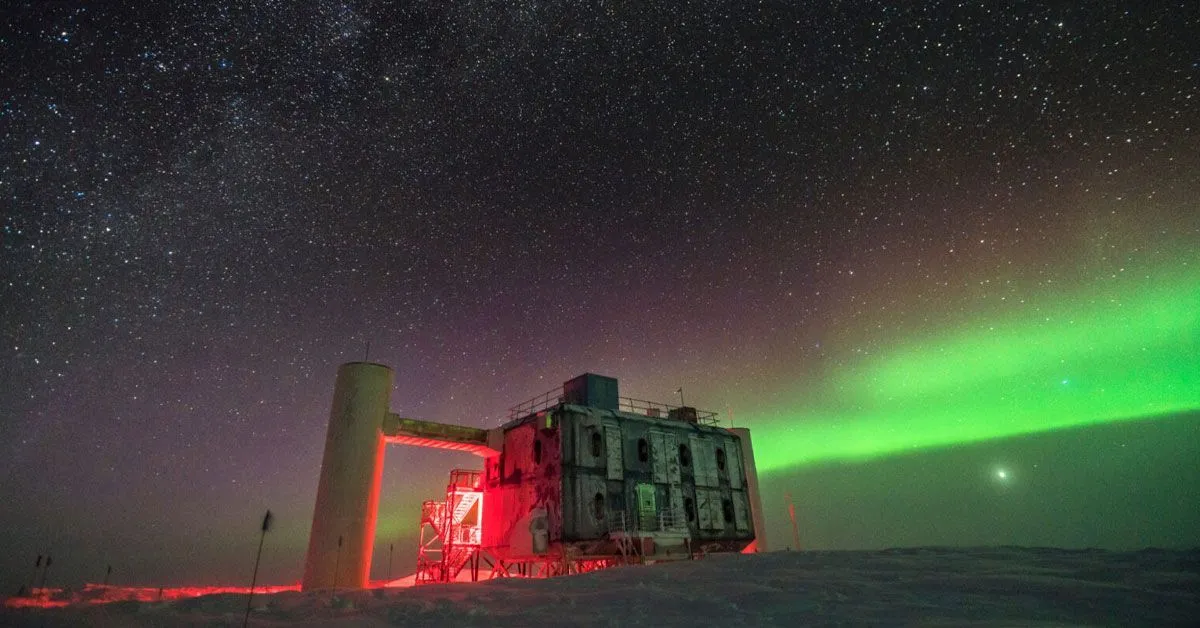
A long-standing collaboration with the San Diego Supercomputer Center (SDSC) at the University of California San Diego has helped provide the computing expertise for the search for high-energy neutrinos from space, work recognized this week with the 2026 Nobel Prize in Physics. Francis Halzen, the University of Wisconsin–Madison physicist whose vision and leadership helped establish the IceCube Neutrino Observatory, was awarded the prize on October 6 “for decisive contributions to the IceCube Neutrino Observatory and the discovery of high-energy neutrinos of astrophysical origin.” The recognition also marks a moment of celebration for SDSC – a division of the Halıcıoğlu School of Data Science and Computing – which has partnered with IceCube for more than a decade to advance the computing infrastructure supporting its science

UC San Diego Today·
Science

In Canada, New Push for Euthanasia for People with Dementia - Science and Culture Today

Some are celebrating Canada’s government “indefinitely suspending” legalizing euthanasia for mental illness as a great victory for life. Not me. Here’s why. Of course, I am gratified that mental illness will not become grounds for being killed in 2027 as was scheduled. But note: In announcing the suspension, the government mooted legislation likely to pass that would have permanently outlawed killing for mental illness. Moreover, “indefinite” can mean years — or a month. So, it’s not a matter of principle.

Science and Culture Today·
Science

Scientists Predicted Humanity Would End on November 13, 2026. Should We Be Worried? - SciTechDaily

In 1960, scientists published a mathematical model predicting that humanity would face a population catastrophe on November 13, 2026. Credit: ShutterstockFor decades, a doomsday equation predicted population growth better than most experts, until falling birth rates undermined its forecast of catastrophe in 2026. In 1960, Science, one of the world’s leading science journals, published an article with an unambiguous title: Doomsday: Friday, 13 November, A. D. 2026. It predicted that on this future date—just over a month from today—the human population would approach infinity and effectively annihilate itself. The outlandishness of the claim landed the article in widespread public attention. More surprisingly—because its underlying research and math seemed sound—it also received careful and sustained scientific attention. The authors—Heinz von Foerster, an Austrian-American professor and cybernetics expert, and two of his students, Patricia M. Mora and Lawrence W. Amiot—argued that human populations are exceptional and might grow beyond an exponential rate, at an ever-increasing one. “Our great-great-grandchildren will not starve,” they argued.

SciTechDaily·
Science

Large dog breeds die younger. Biologists think they finally know why. - Popular Science

In many mammal species, larger size corresponds to longer lives. That's not the case with dogs, however. A first-of-its-kind genetic analysis of dog breeds presents the clearest insights into why larger dogs rarely outlive their smaller relatives. According to a team of biologists writing in the journal Science, the longstanding size–age correlation is likely due to “jumping genes” that inevitably begin sowing chaos inside canine DNA as dogs get older.

Popular Science·
Science

NASA’s SpaceX CRS-35 Mission to Launch Health Research - NASA Science (.gov)

NASA experiments focused on human and plant health and drug-resistant organisms will travel to the International Space Station aboard SpaceX’s 35th Commercial Resupply Services mission for the agency from Cape Canaveral Space Force Station in Florida, advancing research that benefits life on Earth and future exploration. This research supports astronaut health during long-duration missions through four investigations from the agency’s Biological and Physical Sciences division, including 3D models of the human brain, a crop disease study, a faster way to assess astronaut health, and an analysis of antibiotic-resistant bacteria aboard the space station.

NASA Science (.gov)·
Science

Experts studied the world's longest-living people – and found something surprising about their drinking habits - BBC Science Focus Magazine

Icarus died pursuing the Sun off the island of Ikaria, so legend has it. The residents of this Greek island in the eastern Aegean take no such risks. Their lives are sedate, filled with Sun (at a safe distance), sand, good food and company. Meals tend to be typical Mediterranean fare – pulses, wholegrains, some fish, a little meat – and are enjoyed with friends.

BBC Science Focus Magazine·
Science

Scientists reaffirm ‘incontrovertible’ evidence of human influence on climate - AGU Newsroom

A new review shows that more than three decades of climate “fingerprint” research has provided overwhelming evidence that greenhouse gas emissions are driving changes throughout Earth’s climate system. Cars driving past steaming smokestacks, both human activities that introduce greenhouse gases into the atmosphere. A new review summarizes over three decades of “incontrovertible” evidence for human influence on global climate. Credit: Jacek Dylag on Unsplash.

AGU Newsroom·
Science

Bones, Liver, And Blood Fats All Shift Abruptly at Menopause, Huge Study Finds - ScienceAlert

If puberty is like climbing a physiological cliff, then menopause may be like falling off one. A new study, published in Nature Medicine, argues that the end of menstruation is not a gradual part of aging, as previously assumed, but an abrupt physiological transition. Using more than 300 million lab tests from over one million women, the new study identifies a number of sudden 'jumps' that occur throughout the body when menopause begins. Some of the most obvious changes are to do with sex hormones, which the ovaries help produce, but there are also sudden shifts in bone health, liver function, kidney function, blood chemistry, and blood fats. "Menopause reshapes female physiology, yet current understanding islimited by small longitudinal cohorts that characterize it as a gradualtransition," explain the authors, led by molecular cell biologist Glen Pridham from the Weizmann Institute of Science in Israel. That may be a misconception. Pridham and colleagues have instead used a computational framework to analyze the transition to menopause in two large cohorts of women, one in the United States and another in Israel.

ScienceAlert·
Science

7 simple habits that could reverse diabetes - BBC Science Focus Magazine

Just 20 years ago, type 2 diabetes was a lifelong diagnosis. When doctors spoke with their patients, the focus was on treating symptoms and managing complications with pharmaceuticals. Thoughts of eradicating the disease itself seemed far-fetched. Now, though, thousands of people are successfully pushing back the disease.

BBC Science Focus Magazine·