Large dog breeds die younger. Biologists think they finally know why. - Popular Science
This story deserves to be shared
Send it to someone who'd care, or post it on your networks.
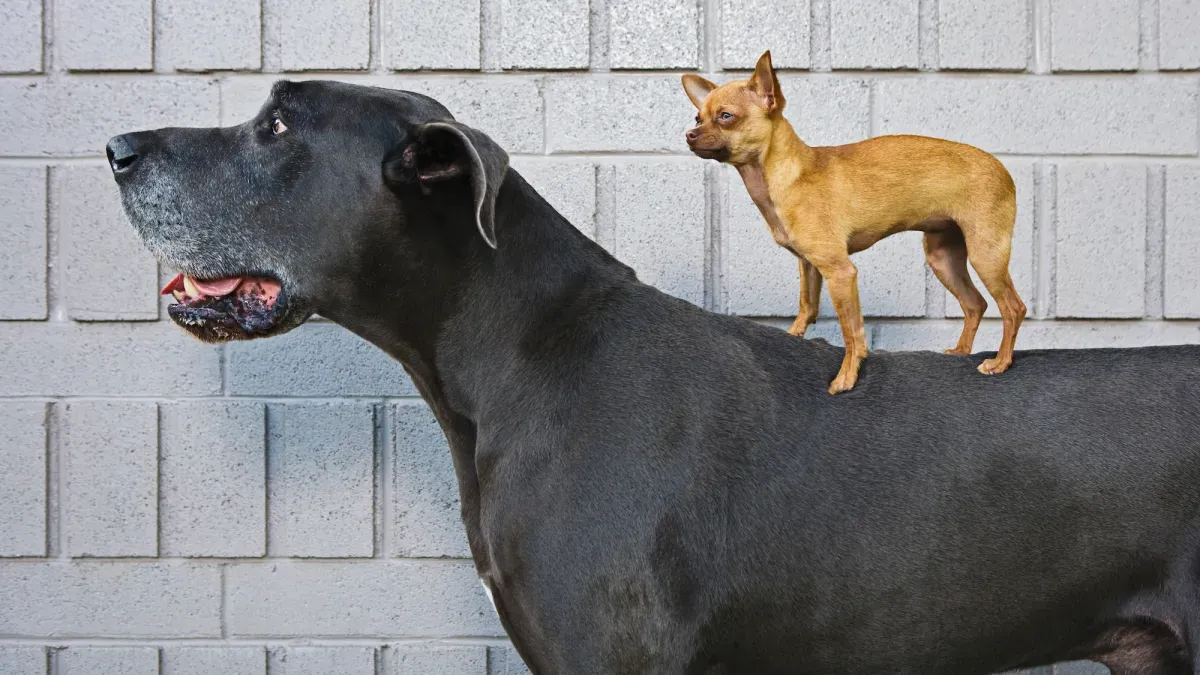
In many mammal species, larger size corresponds to longer lives. That's not the case with dogs, however.
A first-of-its-kind genetic analysis of dog breeds presents the clearest insights into why larger dogs rarely outlive their smaller relatives. According to a team of biologists writing in the journal Science, the longstanding size–age correlation is likely due to “jumping genes” that inevitably begin sowing chaos inside canine DNA as dogs get older.
This article is an excerpt. To read the full content, visit the original source. Popular Science
Related articles

Rag Tag Team of Biologists Who Lost Funding Because of Trump Turned a Motel Room into Makeshift Lab and Made a Groundbreaking Discovery - Futurism
Brought together by Trump’s funding cuts, Julia Van Etten and her rag tag team of biologists pursued their research in a motel room. And it was out of this makeshift lab that they made an incredible discovery: two new microscopic organisms that may be crucial to tracing the origins of life, the New York Times reports.

Ancient mud reveals a surprising secret about Greenland’s ice - Earth.com
Mud from a fjord shows an Atlantic air pattern brought wetter, colder spells to southern Greenland, a clue to how its ice may fare. Greenland’s ice is shrinking as the planet warms. But in the island’s southwest, rainfall and snowfall have been influenced by the same North Atlantic air-pressure pattern for at least 5,000 years. When that pattern tipped one way, the region turned wetter and colder. The record comes from mud on the floor of a Greenland fjord, and it suggests snowfall, not only temperature, shaped how the area’s ice grew and shrank. It doesn’t yet show how glaciers there will respond to the warming ahead. Johan Faust, a researcher at MARUM, the Center for Marine Environmental Sciences at the University of Bremen in Germany, led the work with colleagues in Germany, Norway, Denmark and Canada. A seesaw in the airThe pattern is called the North Atlantic Oscillation. It’s the difference in air pressure between a low that sits near Iceland and a high near the Azores, and it’s strongest in winter. When that difference is large, the pattern is in its positive phase. Northwestern Europe and southwestern Greenland both get more rain and snow.

Simulations explore nuclear mitigation of asteroid threats - Phys.org
Lawrence Livermore National Laboratory researcher Isaiah Santistevan led the development of three-dimensional simulations exploring how a nuclear device could deflect or disrupt an asteroid threatening Earth. Credit: Blaise Douros/LLNL Lawrence Livermore National Laboratory (LLNL) researchers are developing three-dimensional simulations to examine how a nuclear device could be used to deflect or potentially disrupt an asteroid threatening Earth.
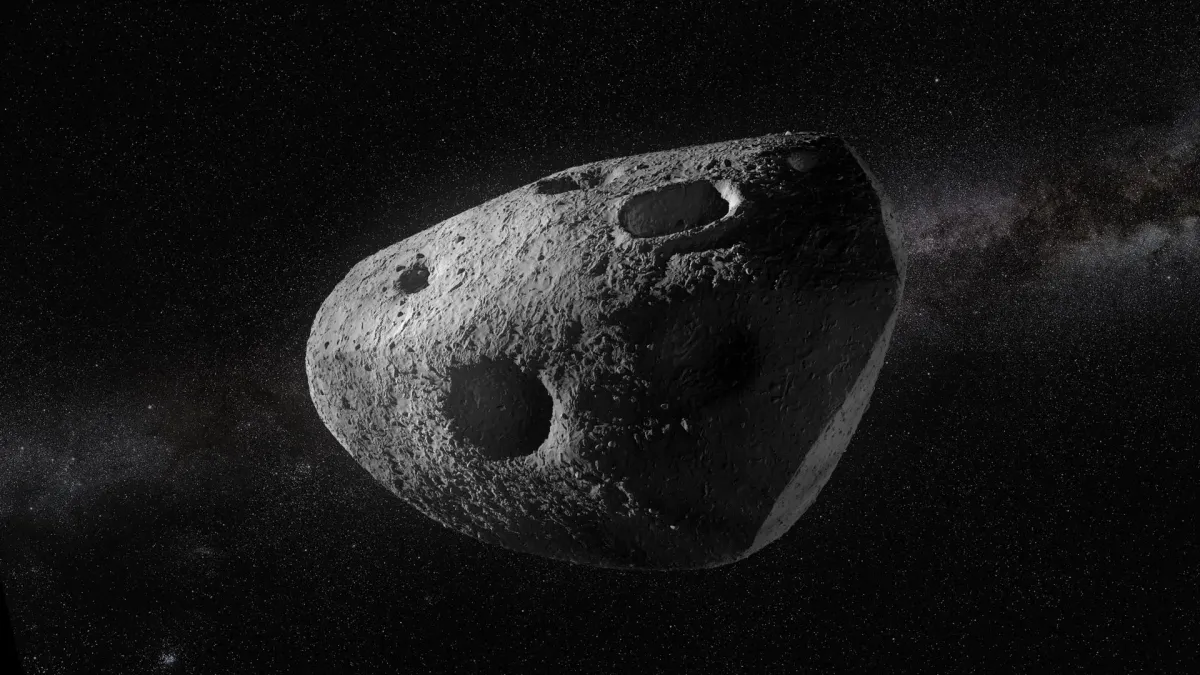
A giant asteroid will skim Earth in 2029—and it’s not us who should worry - Futura, le média qui explore le monde
The Futura Team represents the pulse of Futura’s editorial department, bringing together a collective expertise dedicated to the dissemination of scientific knowledge. Rather than the work of a single author, every article published under this signature is the result of a rigorous collaborative process involving journalists, editors, and fact-checkers. Specializing in news analysis via desk research and international wire services, the team focuses on transforming raw information into accessible, verified content. This curation and synthesis process ensures constant monitoring of technological innovations and major scientific breakthroughs. By cross-referencing sources and conducting multiple rounds of peer review, the Futura Team guarantees scientific accuracy and pedagogical clarity. This collective signature serves as a hallmark of trust, providing reactive, cross-disciplinary information at the forefront of current events Normally, when an asteroid swings by Earth, the burning question is simple: “Are we at risk?” Should we prepare for a massive space rock to pancake our planet? Not this time.
0 comments
No comments yet. Be the first to share your thoughts!