Mechanical load inhibits cancer growth in mouse and human hearts - Science | AAAS
This story deserves to be shared
Send it to someone who'd care, or post it on your networks.
This article is an excerpt. To read the full content, visit the original source. Science | AAAS
Related articles
Nuclear adaptation to intracellular mechanical forces regulates the phagocytic capacity of Drosophila macrophages in vivo - Nature
We’re sharing this article early to provide faster access to peer-reviewed, accepted research. It is citable and carries a permanent DOI. This version is subject to further edits and will be replaced automatically by the final Version of Record. All legal disclaimers apply. AbstractHow macrophages fine-tune their appetite to fulfil their clearance role is incompletely understood. Phagocytosis exacerbates cytoplasmic crowding, but whether macrophages can sense this increase and use it to regulate their phagocytic capacity has never been investigated. Here, we test the hypothesis that phagosomes exert a strain on the nucleus, which in turn responds to the intracellular mechanical inputs influencing macrophage appetite. Combining genetic manipulation and live in vivo imaging, we show that engulfed apoptotic bodies indent and deform the nucleus of Drosophila embryonic macrophages, and that phagocytosis increases Lamin B levels. Importantly, we show that silencing Lamin B or components of the LINC complex negatively regulates apoptotic body engulfment in vivo.
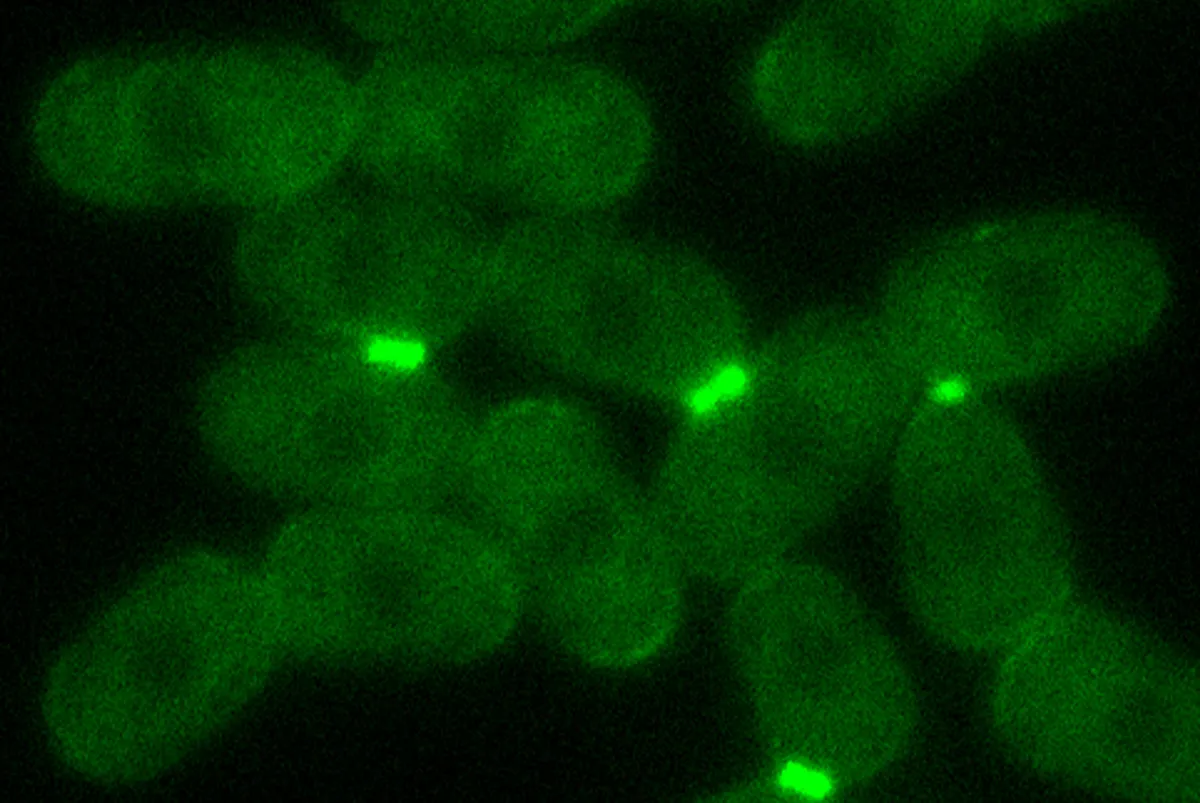
How enzymes locally block cell wall repair, allowing cells to fuse in an irreversible manner - Phys.org
Yeast cells undergoing sexual reproduction, observed by fluorescence microscopy; the green signal reveals a cell wall damage sensor at the site of fusion. Credit: J. Coronas-Serna, UNIGE The fusion of two cells is a decisive event in the sexual reproduction of many organisms. In fungi, cells must not only bring their membranes together and merge them, but also locally open their protective cell wall.
0 comments
No comments yet. Be the first to share your thoughts!