Nuclear adaptation to intracellular mechanical forces regulates the phagocytic capacity of Drosophila macrophages in vivo - Nature
This story deserves to be shared
Send it to someone who'd care, or post it on your networks.
We’re sharing this article early to provide faster access to peer-reviewed, accepted research. It is citable and carries a permanent DOI. This version is subject to further edits and will be replaced automatically by the final Version of Record. All legal disclaimers apply.
AbstractHow macrophages fine-tune their appetite to fulfil their clearance role is incompletely understood. Phagocytosis exacerbates cytoplasmic crowding, but whether macrophages can sense this increase and use it to regulate their phagocytic capacity has never been investigated. Here, we test the hypothesis that phagosomes exert a strain on the nucleus, which in turn responds to the intracellular mechanical inputs influencing macrophage appetite. Combining genetic manipulation and live in vivo imaging, we show that engulfed apoptotic bodies indent and deform the nucleus of Drosophila embryonic macrophages, and that phagocytosis increases Lamin B levels. Importantly, we show that silencing Lamin B or components of the LINC complex negatively regulates apoptotic body engulfment in vivo.
This article is an excerpt. To read the full content, visit the original source. Nature
Related articles
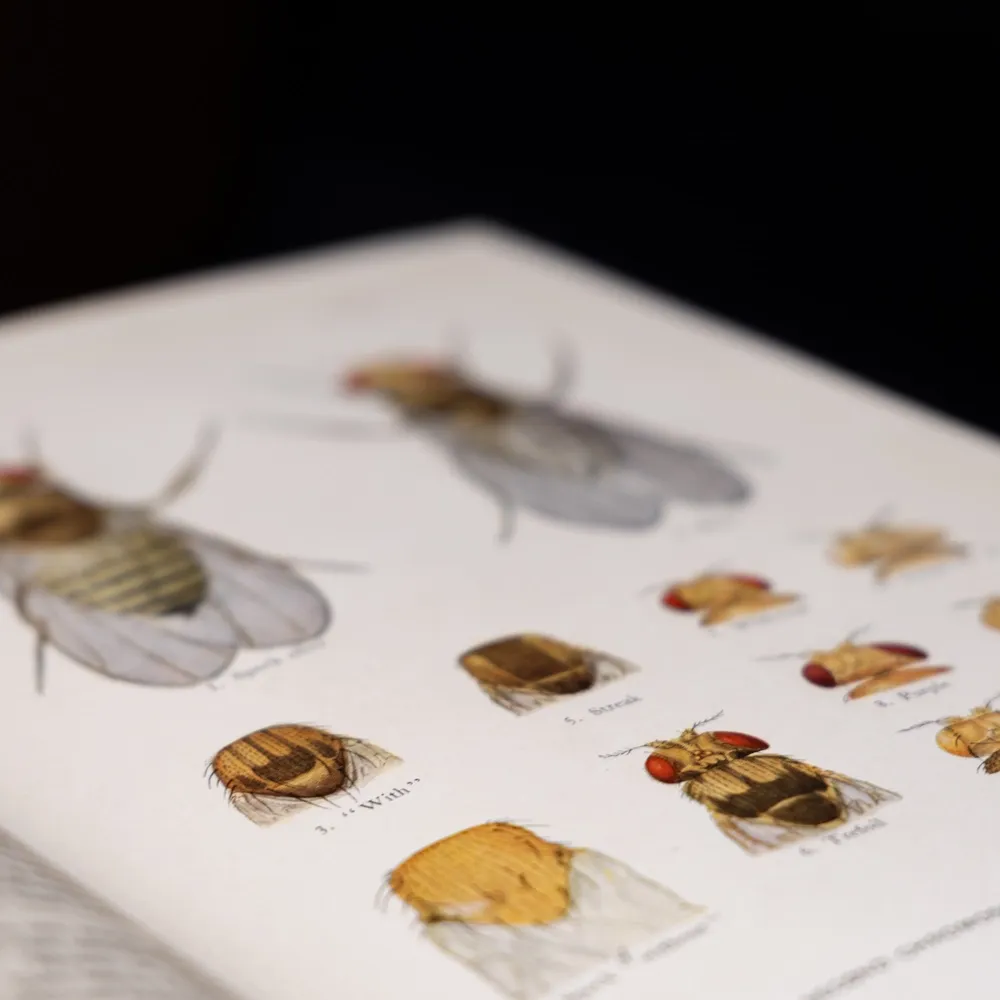
Object 24 | Drosophila Illustrations - Carnegie Science
In the spring of 1910, Thomas Hunt Morgan peered into one of the hundreds of glass milk bottles that filled his cramped and famously messy laboratory at Columbia University and spotted something he had never before seen. Among the thousands of red-eyed fruit flies he had been breeding for nearly a year was a single male with white eyes. That one small fly was the first in a series of discoveries by Morgan and his team that would transform the study of heredity. Over the following decades, Morgan's "fly group" showed that genes are physical units lined up in a fixed order along chromosomes and that their positions could be mapped, laying the foundation of modern genetics. Carnegie Science made much of this research possible, providing sustained funding to the group from 1915 until 1945 and publishing its findings in a series of volumes, which were accompanied by exquisitely detailed ink drawings and watercolors of fruit flies by Edith Wallace, Morgan's technician and the team's artist. Her illustrations, representing the fly group’s work, are Object 24 in our #Carnegie125 series. Before the Flies Morgan was born into a prominent Kentucky family in 1866. After earning his Ph. D.
0 comments
No comments yet. Be the first to share your thoughts!