Importance of elephants for dung beetle biodiversity and ecosystem functions - Science | AAAS
This story deserves to be shared
Send it to someone who'd care, or post it on your networks.
This article is an excerpt. To read the full content, visit the original source. Science | AAAS
Related articles

Astronomers say they’ve discovered the first green star - Scripps News
Astronomers analyzing white dwarf stars have for the first time found a star that would appear green to human eyes, according to a new study. While for most stars, color is temperature-dependent and limited to a few hues, white dwarfs, which are the dense remnants of sun-like stars that have died, can glow in an incredible range of colors, said lead study author Mark Hollands, an astrophysicist at the University of Warwick, England, on Thursday. “The colors that normal stars can have are pretty much only orange, white or blue,” Hollands told CNN. “What we found is, for most white dwarfs, that’s the same as well. But there are some special cases where the physics in the outer layers of these stars are sufficiently strange that it causes actually quite big deviations in terms of their spectrum,” he said. These deviations are due to the interaction between the helium in their atmosphere and traces of other elements, which vary between white dwarfs, depending on what material has interacted with the star over the course of its lifetime.

Fast-tracked genetic testing helping sick kids - Medical Xpress
A new genetic testing approach for sick children with immune conditions could slash diagnosis waiting times from 12 months to as little as two weeks, University of Queensland research has found. A study with Children's Health Queensland has shown a new genetic testing process for children with immune conditions could speed up diagnoses, fast-track treatments and save lives.
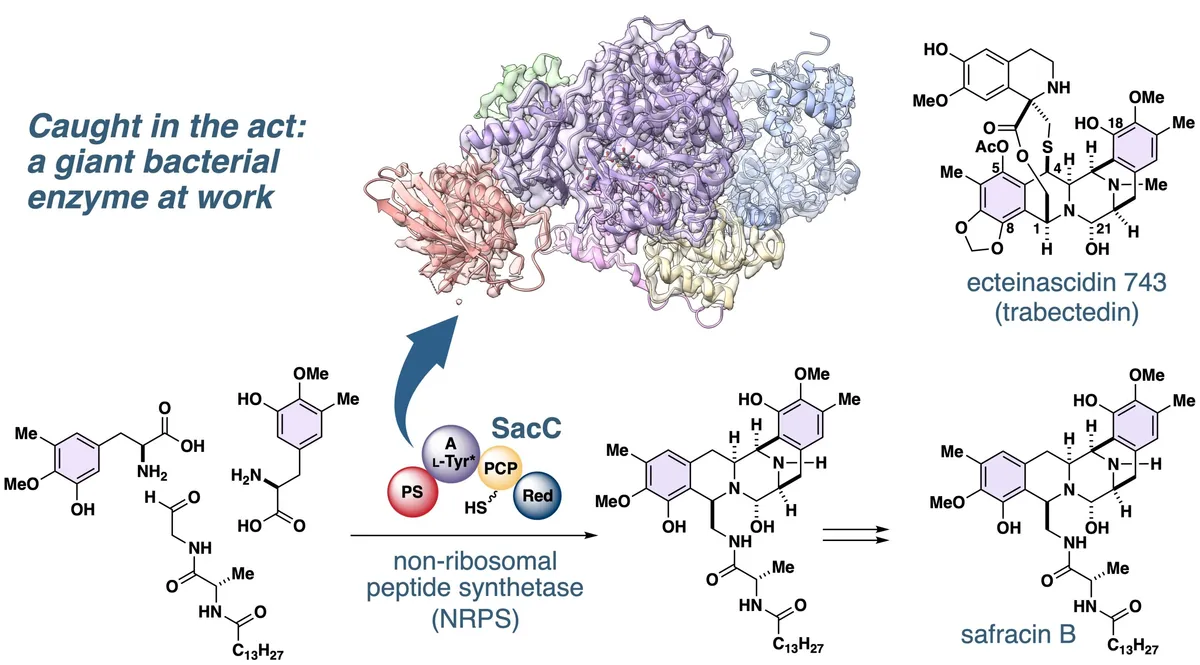
Frozen in action: Visualizing how a cancer drug scaffold is built - Phys.org
The bacterial enzyme SacC builds the five-ring core shared by safracin B and the anticancer drug ecteinascidin 743 (trabectedin), forming two new carbon-to-carbon bonds through a seven-step catalytic cascade. Above, the enzyme is seen by cryo-electron microscopy, with its working parts in different colors. Credit: Haraguchi et al., 2026 A joint research group led by Ryo Tanifuji and Hiroki Oguri from the University of Tokyo and Yoshikazu Tanaka from Tohoku University has visualized SacC, an enzyme that plays a key role in building the complex five-ring core of safracin B. This core structure is shared with trabectedin, a drug used to treat soft tissue sarcoma.
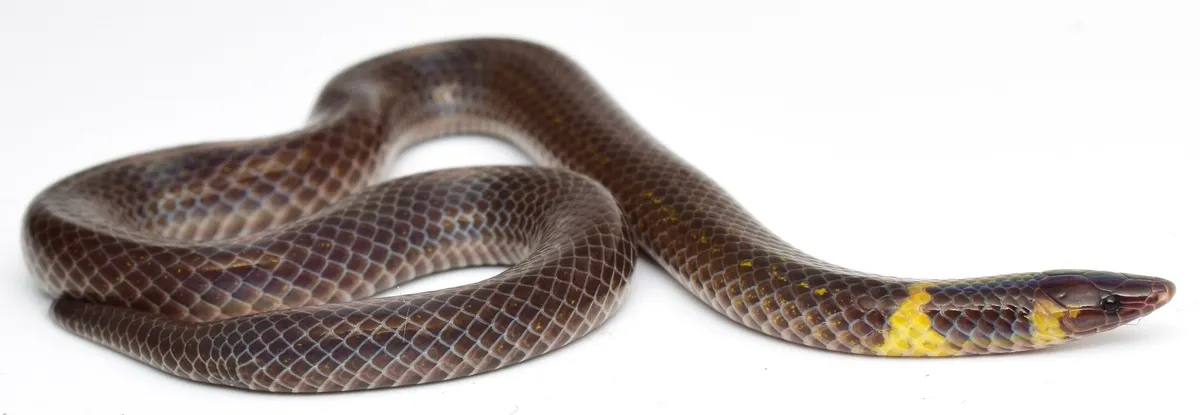
Rolling without wheels: How dwarf reedsnakes coordinate their bodies for high-speed escapes - Phys.org
A species of dwarf reedsnake, Pseudorabdion saravacense, investigated in the study. Credit: Yosuke Kojima Small snakes called dwarf reedsnakes can escape danger by rolling rapidly along the ground. Researchers investigated how they perform this unusual form of locomotion using multi-angle video analyses. The results show that the snakes use precisely coordinated body movements that keep their heads facing the direction of travel and at a relatively stable height, even as the posterior body undergoes large rotational movements.
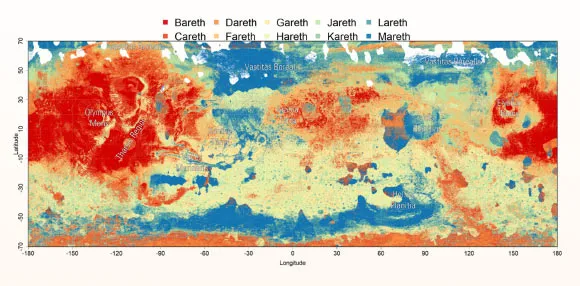
Planetary Scientists Create Classification System and Map of Martian Soils - Sci.News
Planetary researchers at the University of Sydney have proposed a new way to classify the soils of Mars, along with a new word for them: areth (the name comes from Ares, the Greek name for Mars). Classification of realms across the Martian surface. Image credit: McBratney et al., doi: 10.1016/j.catena.2026.110649.
0 comments
No comments yet. Be the first to share your thoughts!