Fast-tracked genetic testing helping sick kids - Medical Xpress
This story deserves to be shared
Send it to someone who'd care, or post it on your networks.

A new genetic testing approach for sick children with immune conditions could slash diagnosis waiting times from 12 months to as little as two weeks, University of Queensland research has found.
A study with Children's Health Queensland has shown a new genetic testing process for children with immune conditions could speed up diagnoses, fast-track treatments and save lives.
This article is an excerpt. To read the full content, visit the original source. Medical Xpress
Related articles

Experts tracked lions for four years and found something incredible - BBC Science Focus Magazine
Think of hyenas and you may picture opportunistic creatures, such as the ones in The Lion King, who simply follow lions and feed off their scraps. But that image is wrong, new research suggests. Instead, scientists who fitted GPS collars to animals in Namibia and Botswana concluded that in fact it is the lions – especially the males – that approach hyenas, not the other way around.
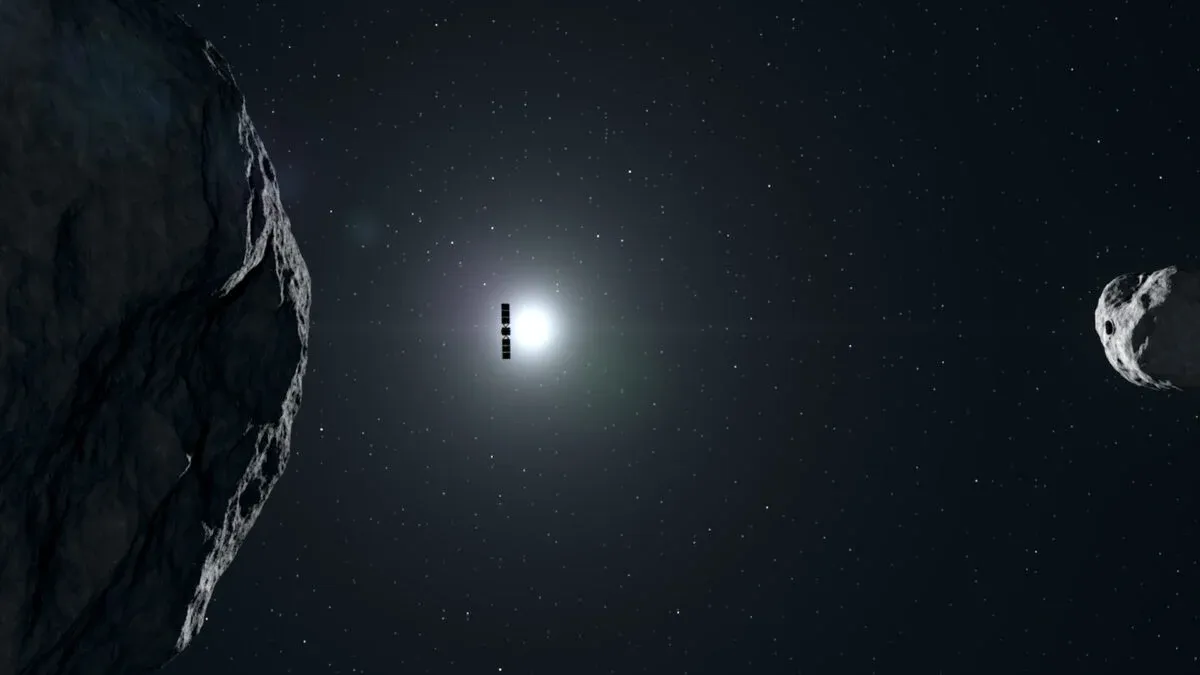
Hera Closes In on Asteroid Pair to Study the Impact Damage of NASA’s DART Strike - Gizmodo
In September 2022, a NASA spacecraft violently smashed into a tiny asteroid as a test of planetary defense. Now, a new probe is ready to check out the wreckage by rendezvousing with the space rock for a closer look. The European Space Agency (ESA) launched its Hera mission on October 7, 2024, as a crucial follow-up to NASA’s DART (Double Asteroid Redirection Test), a first-of-its-kind attempt to redirect the orbit of an asteroid. The small, car-sized spacecraft recently pulled off a braking maneuver to slow it down as it approaches the binary asteroid system before it makes its first close flyby in early November. Hera is set to perform a detailed, post-impact survey with the aim of turning a one-time, space experiment into a well-understood planetary defense mechanism. The mission could also help scientists learn more about how asteroids form. Collision ahead For the DART test, NASA sent a 1,340-pound spacecraft (607 kilograms) and smashed it into Dimorphos, a 558-foot-wide (170-meter) space rock that orbits its larger 2,625-foot-wide (800-meter) companion, Didymos.
0 comments
No comments yet. Be the first to share your thoughts!