The Moon Is Shrinking, Causing More Faults Than Expected And Threatening Future Bases - IFLScience
This story deserves to be shared
Send it to someone who'd care, or post it on your networks.
This article is an excerpt. To read the full content, visit the original source. IFLScience
Related articles
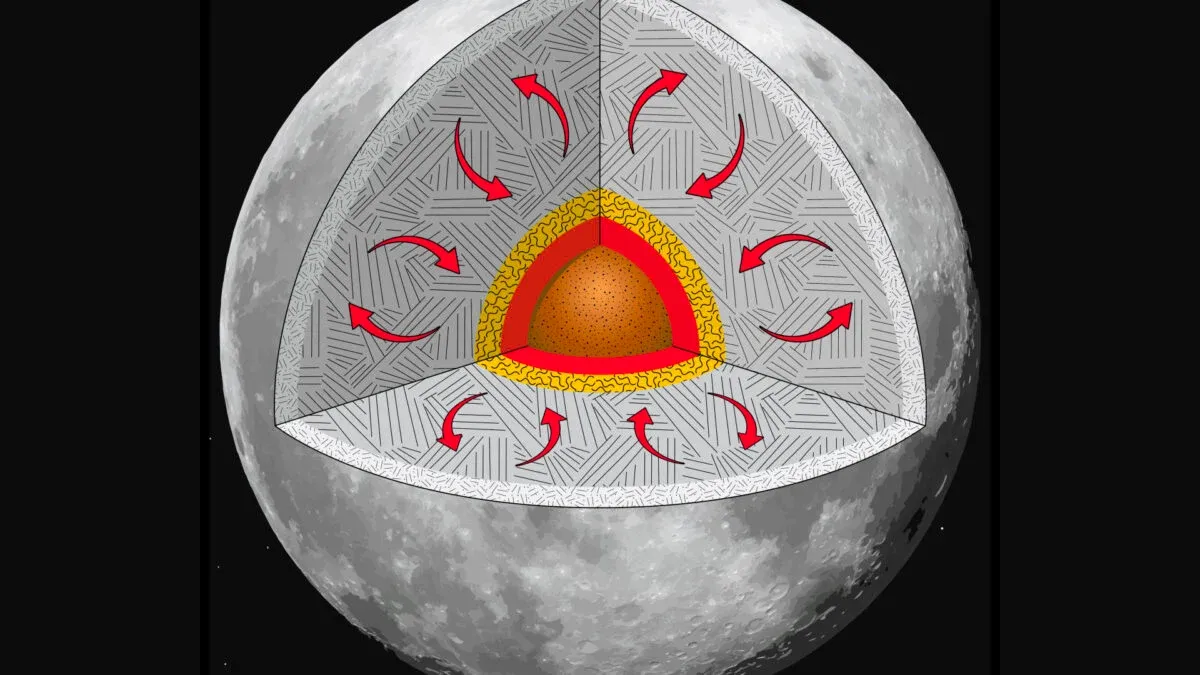
NASA Images Reveal 10,000 Young Faults on the Moon. That’s a Problem - Gizmodo
Seen from Earth, the Moon looks so bright and peaceful. But on closer inspection, the lunar surface is etched with crinkles that also happen to be active faults—whose appearance and behavior may be more unexpected than scientists thought. In a study published yesterday in The Planetary Science Journal, scientists report the identification of more than 10,000 young faults across the lunar surface. The team referenced images from NASA’s Lunar Reconnaissance Orbiter Camera (LROC), specifically its images of ridges and long, curvy structures called lobate scarps. These features form as a result of a celestial body’s contraction, in this case the Moon. From the analysis, the researchers concluded that the moon’s radius has shrunk by roughly 148 feet (45 meters) in the past 400 million years. Global map of the moon centered on the nearside. The red lines show the locations of over 8,900 lobate scarps, and the blue lines show the locations of over 2,000 small mare ridges. Credit: NASA/ASU/Intuitive Machines/SmithsonianThis kind of change isn’t unique to the Moon; similar shrinkage is also happening to Mercury.

AssetWatch Adds Electrical Monitoring to Catch Hidden Motor Faults Before They Cause Downtime - Reliable Plant
Expanding predictive maintenance with continuous electrical monitoring for a more complete view of motor health.
Thermal Noise Used To Send Data Without Active Signal - Mirage News
Stanford researchers recently revealed how a seemingly physics-defying wireless communication technology works. The new technology, called thermal noise communication, harnesses background static that normally is the bane of radio, cellular, and other wireless signals. In a new study published in Proceedings of the National Academy of Sciences, the team showed how a transmitter could deliver data to a receiver without any actively produced signal by manipulating tiny oscillations in voltage. The findings describe how the system works at a fundamental level, opening the door to improving the communication mode and determining real-world applications for it. "We've built a system that others could very easily implement," said senior author Zerina Kapetanovic, an assistant professor of electrical engineering. A physics mysteryIn her previous research at the University of Washington, Kapetanovic studied agricultural sensing technologies, which inspired her to pursue low-power modes of relaying data like soil moisture levels.
Giant Canyon on Mars Is Still Tectonically Active Today - Lamont-Doherty Earth Observatory
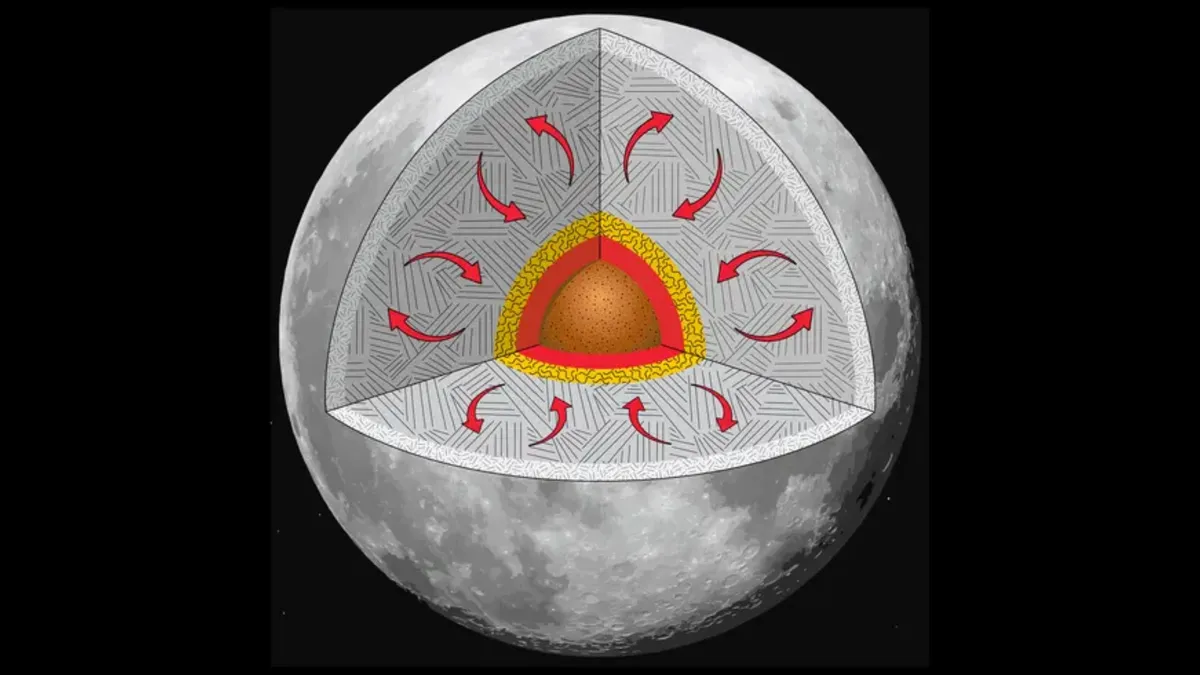
The moon is shrinking. 10,000 cracks on the lunar surface reveal by how much - Space
One new study shows how much the moon has diminished over time.
0 comments
No comments yet. Be the first to share your thoughts!