Diverse social activities may help slow age-related cognitive decline - News-Medical
This story deserves to be shared
Send it to someone who'd care, or post it on your networks.

Diverse and sustained social activities may boost cognitive performance and slow the decline in brain health associated with aging, suggest the findings of a large international study, published online in the Journal of Epidemiology & Community Health.
Regularly engaging in 3 or more of these activities, and including volunteering and sports club membership among them, seem to be particularly effective at helping to keep minds sharp, the findings indicate.
This article is an excerpt. To read the full content, visit the original source. News-Medical
Related articles
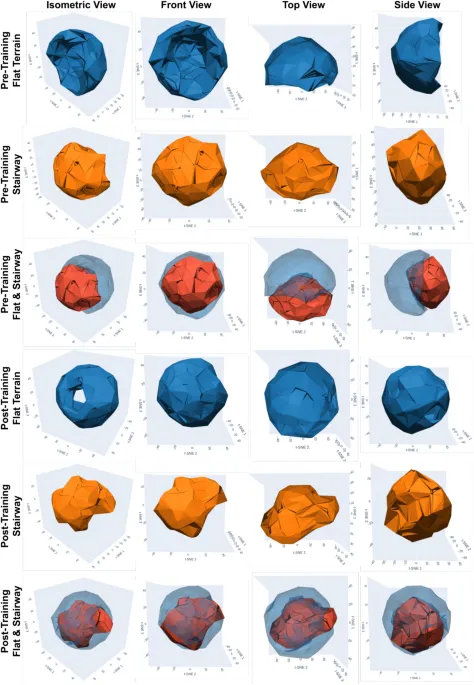
A semantic-conditioned multi-modal behavior cloning framework for terrain-specific behavior isolation in humanoid locomotion - Nature
Held-out test subset of \(\mathscr {D}\) \(\textbf{e}_{l_t} \in \mathbb {R}^{8}\)
Associations of serum phosphate levels and intravenous phosphate exposure with mortality in patients with sepsis: a multi-database retrospective study - Nature
We’re sharing this article early to provide faster access to peer-reviewed, accepted research. It is citable and carries a permanent DOI. This version is subject to further edits and will be replaced automatically by the final Version of Record. All legal disclaimers apply. AbstractAbnormal phosphate concentrations are common in sepsis, but the prognostic relevance of serum phosphate and the association between recorded intravenous phosphate exposure and mortality remain uncertain. This retrospective cohort study used MIMIC-III, MIMIC-IV, and a single-center database from the First Affiliated Hospital of Chongqing Medical University. Adults with ICD-coded sepsis, a first ICU admission, and an ICU stay longer than 24 h were included. Admission phosphate was evaluated with restricted cubic spline regression for 28- and 90-day mortality. Recorded intravenous phosphate exposure was assessed using multivariable logistic regression in the 48- and 72-h landmark populations. Propensity-score matching and inverse-probability-of-treatment weighting were performed at both landmarks. A target-trial emulation was also performed. Cohorts 1 and 2 included 15,426 and 967 patients, respectively.
Comparative evaluation of unilateral anterior crossbite and monoiodoacetate injection models for temporomandibular joint osteoarthritis in rats - Nature
We’re sharing this article early to provide faster access to peer-reviewed, accepted research. It is citable and carries a permanent DOI. This version is subject to further edits and will be replaced automatically by the final Version of Record. All legal disclaimers apply. AbstractTo systematically compare unilateral anterior crossbite (UAC) and monosodium iodoacetate (MIA) models for temporomandibular joint osteoarthritis (TMJOA) research. This study used healthy adult male SPF-grade Sprague–Dawley (SD) rats, aged 6–8 weeks and weighing 180–200 g, with a total of 24 rats. After a 7-day acclimatization period, the rats were randomly and equally allocated into three groups: a normal control group (NC), an occlusion intervention group (UAC), and a drug injection group (MIA). Condylar height at the anterior, central, and posterior regions was quantitatively measured via a computer-aided image analysis system to elucidate the observed morphological alterations. Pathological assessments of the TMJ were conducted using Safranin O-Fast Green staining, hematoxylin and eosin (HE) staining, and immunohistochemistry (IHC).
0 comments
No comments yet. Be the first to share your thoughts!