A fish that ages in months reveals how kidneys grow old - Science Daily
This story deserves to be shared
Send it to someone who'd care, or post it on your networks.
This article is an excerpt. To read the full content, visit the original source. Science Daily
Related articles

Scientists Just Revived Pig Kidneys Frozen for a Year. It Could Rewrite the Future of Organ Transplants - Gizmodo
Much like sushi or political humor, badly needed donor organs tend to have a pretty short shelf life. By current estimates, vital organs like a heart or a lung need to be transplanted into their waiting human recipient within six hours or less, while the most hardy of these organs, the kidney, can only remain viable for up to 36 hours before surgery. These unforgiving expirations dates have helped keep over 100,000 Americans (and counting) stuck on the waiting list for a new organ—but surgeons and medical researchers at the University of Minnesota have just reported a breakthrough that might finally get this line moving. A university team, co-led by transplant surgeon Erik Finger, says it has effectively kept pig kidneys in cold storage for months, and in one case over a year, managing to gently thaw, test, and successfully transplant these warmed-over organs into test pig recipients. The research, published as a pre-print with bioRxiv while it awaits peer review, confirmed that the once-frozen organs had both regained their color and helped the test pigs produce urine: critical signs that restored blood flow and organ function had been achieved.
Genetically modified pig kidneys are already being transplanted, yet science has hit a wall - Futura, le média qui explore le monde
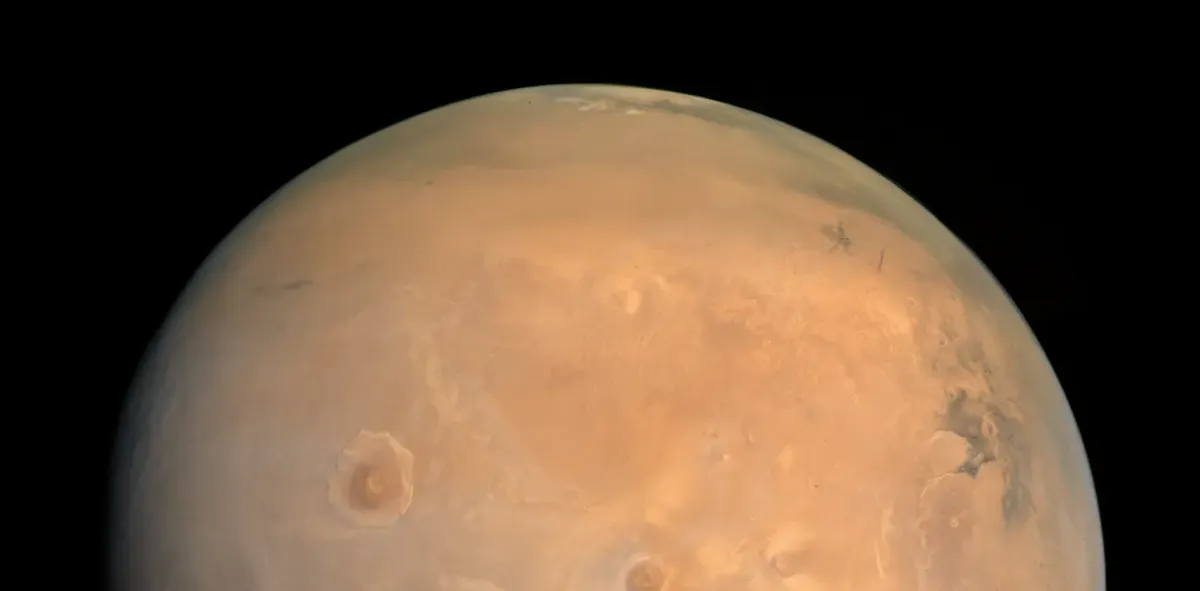
NASA’s Mars orbiter fleet is getting old – here’s how that could affect future exploration - The Conversation
Currently, about 16,000 satellites are orbiting Earth, providing everything from GPS service and weather reports to phone service in remote locations to people across the globe. In contrast, the highest-ever number of active satellites in orbit around Mars, one of the best-explored other planets in our solar system, is eight.
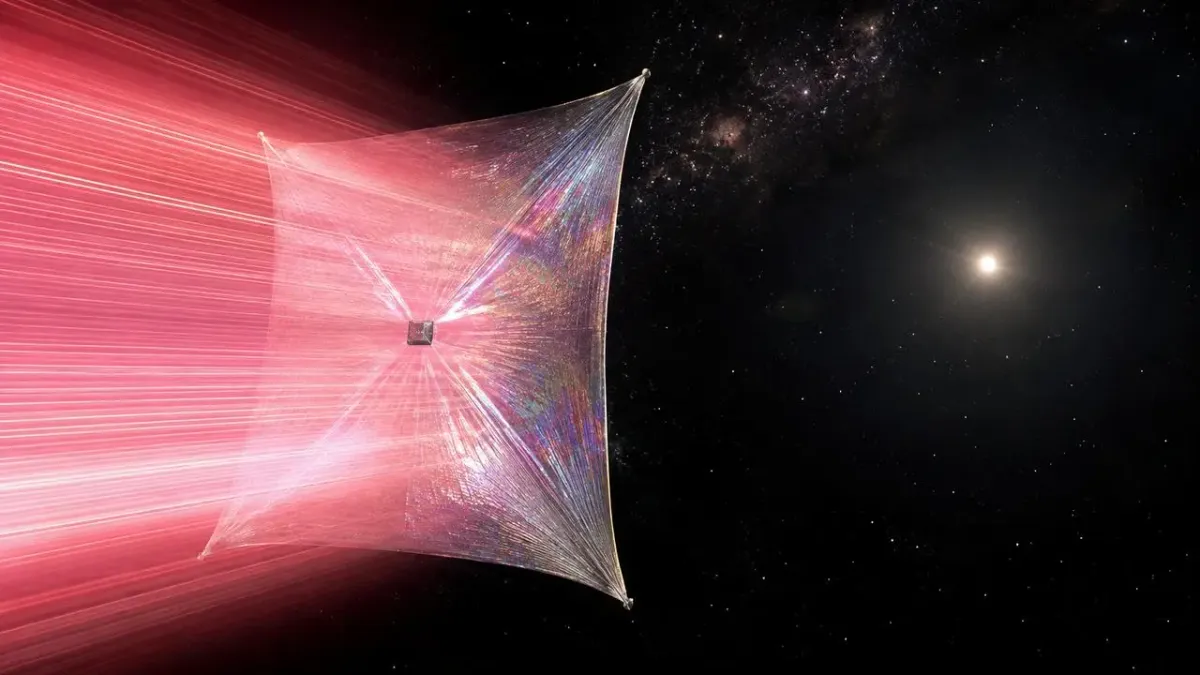
Light-Powered Probes: The Daring New Plan to Reach Distant Stars Faster - Futura, le média qui explore le monde
The only thing we can be sure of about the future is that it will be absolutely fantastic. If what I say seems reasonable to you, then I have failed completely, declared Arthur C. Clarke back in 1964 on the BBC. In the legendary BBC Horizon documentaries more than 60 years ago, Clarke made several predictions—including some about the Internet that proved uncannily accurate.
Surprisingly high redundancy in electronic structure data across materials explained by low intrinsic dimensionality - Nature
AcknowledgementsThe authors thank UCLA's Institute for Digital Research and Education (IDRE), Michigan Technological University's MRI computing clusters, and the National Energy Research Scientific Computing Center (NERSC) for providing computational resources. The authors thank Abhishek Keripale for assistance with the development of later versions of the CrFeCoNi machine-learning models. The authors used GPT-5 (OpenAI) for language editing and proofreading and subsequently reviewed and edited all content. FundingThis work was primarily supported by the U. S. Department of Energy (DOE), Office of Science, Basic Energy Sciences (BES), under Award DE-SC0023432, which provided primary support for the overall project conception and integrated KS-DFT–ML investigations. The University of California National Laboratory Fees Research Program under Grant L25CR9003 supported data generation and post-processing at UCLA (ASB). The National Science Foundation under Award 2442313 supported data-pruning and dimensionality analyses at Michigan Technological University (SG, SH). This research also used resources of the National Energy Research Scientific Computing Center (NERSC), a U. S.
0 comments
No comments yet. Be the first to share your thoughts!