Genetically modified pig kidneys are already being transplanted, yet science has hit a wall - Futura, le média qui explore le monde
This story deserves to be shared
Send it to someone who'd care, or post it on your networks.
This article is an excerpt. To read the full content, visit the original source. Futura, le média qui explore le monde
Related articles
Old Hearts Become Biologically Younger When Transplanted Into Younger People - ScienceAlert
The heart is, inarguably, one of the most important organs in the body. It sits in your chest, carefully armored by sternum and ribs, constantly pulsing to maintain the flow of blood, transporting oxygen, nutrients, and other essential substances to every extremity of your body. It might be reasonable to think that there's an indelible link between the heart and the body it resides in – the processes that affect one inevitably affect the other. But a new preprint, uploaded to bioRxiv and yet to be peer-reviewed, suggests that this may only be true up to a point. Take the heart out of the body and put it in a new one, and something incredible happens. The transplanted heart begins to take on the biological age of its new owner. Older hearts transplanted into younger recipients appear to become biologically younger, while younger hearts placed in older bodies show signs of accelerated aging. That's the fascinating finding of a study led by molecular biologist Jesse Poganik of Harvard Medical School, suggesting that an organ's biological age isn't entirely intrinsic to the organ itself, but is strongly influenced by the body around it.
Targeted pathway mining reveals novel modified hexapeptides from the demiguisin family - Nature
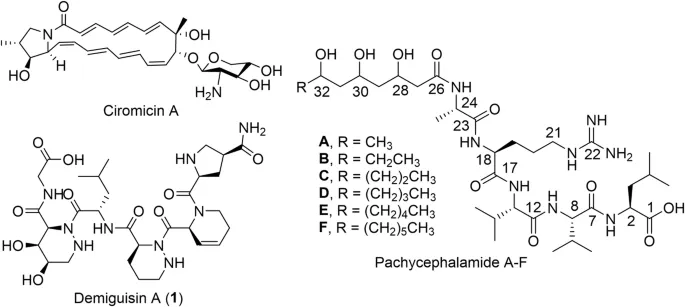
IntroductionBirds rely on a collection of behavioural, physiological, and chemical defences to mitigate the constant threat posed by pathogens and parasites in their environment1. Preen oil from the uropygial gland (UG) is a key component of avian integumentary immunity, supporting feather maintenance and waterproofing, while the UG is also known to harbour diverse microbes, including γ- and α-Pseudomonadota and Actinomycetota, that contribute to feather defense2,3. We recently exemplified a case of the bacterial isolate Amycolatopsis sp. PS_44_ISF1 derived from the UG of the toxic bird Pachycephala schlegelii that can directly contribute to the bird’s chemical defence system, by producing bioactive metabolites such as the antifungal macrolactam ciromicin A3,4, the co-secreted tensioactive lipopeptide family pachycephalamides, and a highly modified hexapeptide, named demiguisin A (1) (Fig. 1). The chemical structure of 1, caught our interest, as it contains non-proteinogenic piperazic acid (hexahydropyridazine-3-carboxylic acid, Piz) residues within the sequence Gly–β,γ-OH-Piz–Leu–Piz–DHPA–γ-c-Pro (Fig. 1)3,5.
0 comments
No comments yet. Be the first to share your thoughts!