BBlogFlow

Categories

Science

13443 articles

Science

NASA’s SunRISE Mission Targets No Earlier Than Mid-2027 Launch - NASA Science (.gov)

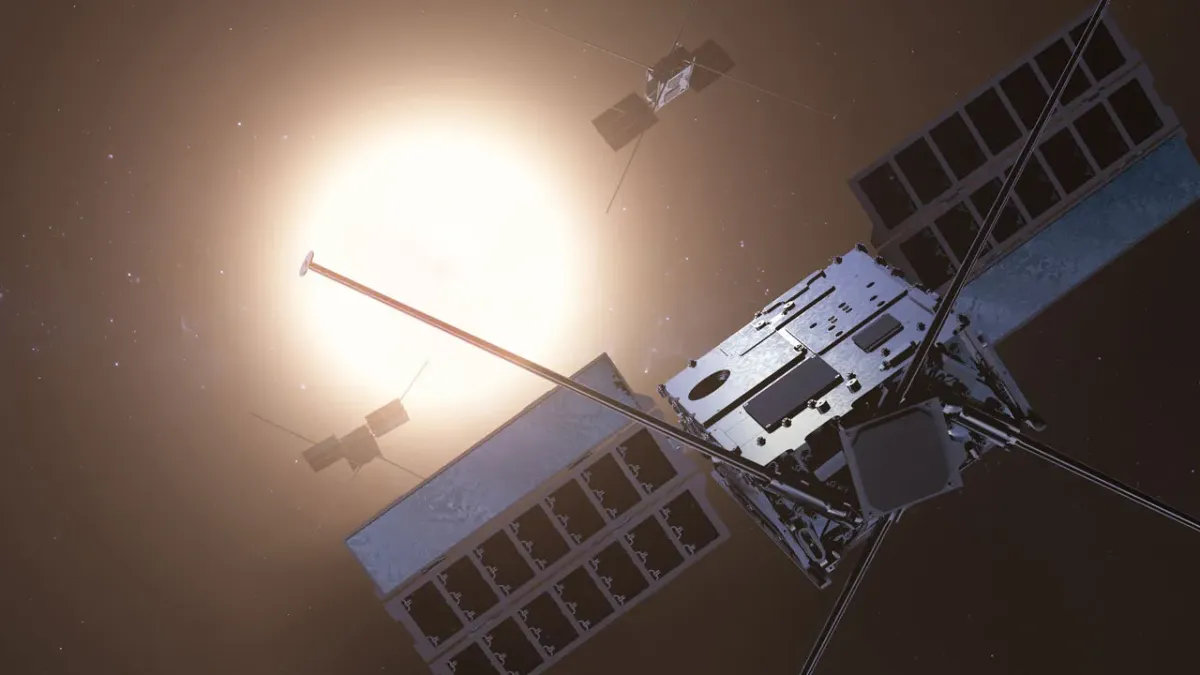
NASA’s SunRISE (Sun Radio Interferometer Space Experiment) mission will launch no earlier than mid-2027. The heliophysics mission will hitch a ride on a SpaceX Falcon Heavy rocket from the agency’s Kennedy Space Center in Florida as a rideshare with a payload sponsored by the United States Space Force’s Space Systems Command. The mission’s six toaster-oven-size small satellites, or SmallSats, will operate as one giant radio dish slightly above geosynchronous orbit, which is about 22,000 miles (35,000 kilometers) in altitude, and will track the rumbles of radio bursts coming from within the Sun’s atmosphere, or corona. The bursts are generated by accelerated particles leaving the Sun. The solar radio waves arrive at Earth before the solar energetic particles. In extreme cases, solar particle events can damage satellites and affect astronauts. Using SunRISE to track the radio waves could improve prediction and mitigation efforts.
NASA Science (.gov)·
Science

Science starts at the dinner table: Building STEM connections with families - American Society for Biochemistry and Molecular Biology

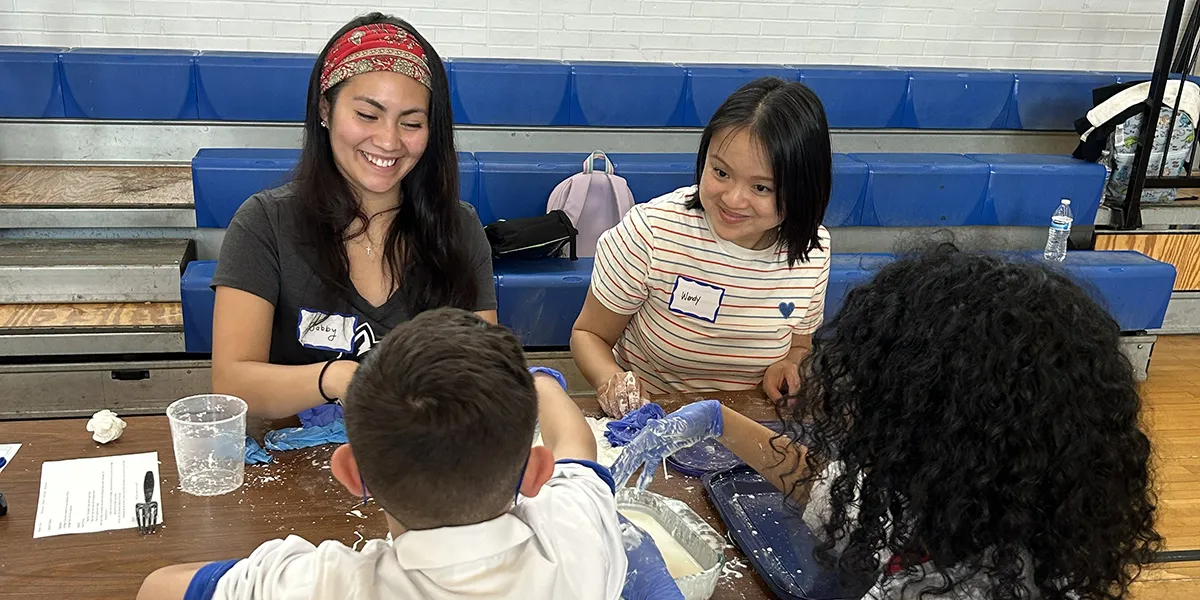
At a family science event in Hartford, a volunteer used salt-dough bones and modeling clay to show how cartilage protects joints. When she removed the “cartilage” and ground the bones together to simulate arthritis, one elementary school student exclaimed, “It’s like my grandpa!” Graduate students and Cena y Ciencias leaders Gabriela Soriano and Wendy Mok work with Burns Latino Elementary School students to create oobleck, a cornstarch-and-water mixture that resembles cartilage, at the 2025 outreach event, “Cartilage: Your Skeleton’s Best Friend!”

American Society for Biochemistry and Molecular Biology·
Science

NEW BRUNSWICK Fredericton science centre debuts new mobile planetarium - Education News Canada

Education News Canada is part of the Jaguar Media Group. Our daily e-newsletter delivers the latest news and developments related to the education field. In addition to publishing news issued by universities, colleges, school boards, governments and related organizations, we also conduct a thorough press review coming from Canada’s daily newspapers and over 400 regional and local news sources.

Education News Canada·
Science

Tropical trees built homes for ants. Wasps are taking them over - Science Daily

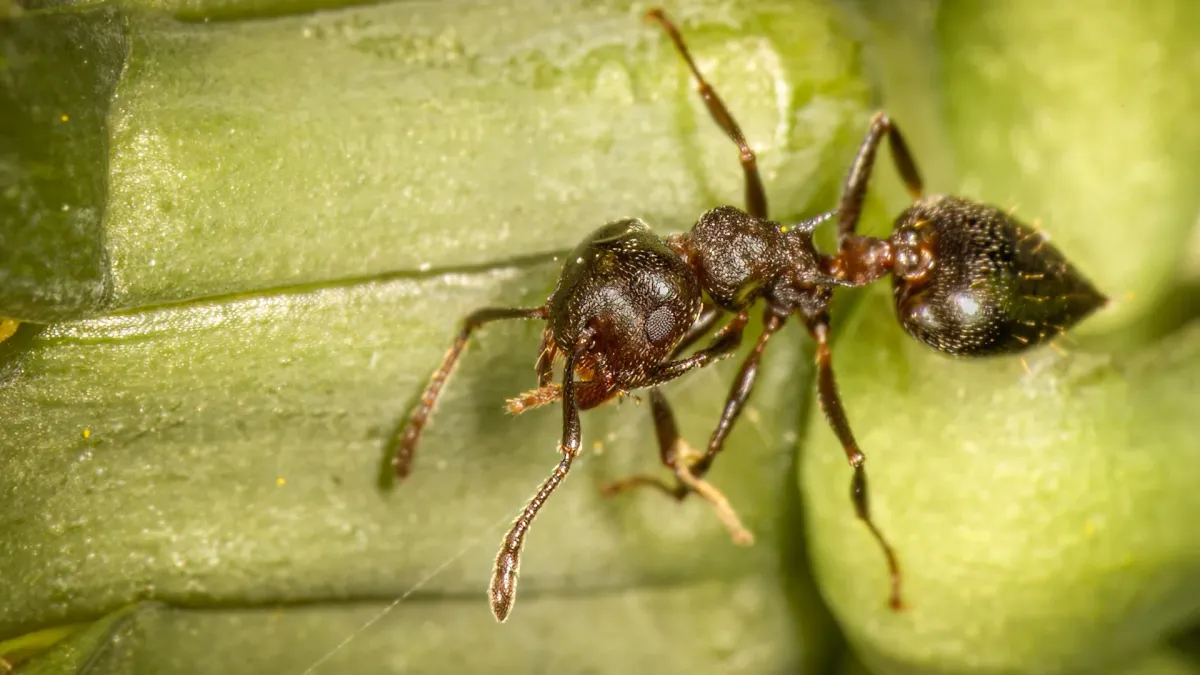
Scientists studying the tropical forests of Malaysian Borneo have discovered an unexpected shift in one of the region's long-running ecological partnerships. An international team from Queen Mary University of London, the Royal Botanic Gardens, Kew, the Biology Center of the Czech Academy of Sciences, and other institutions found that predatory wasps are increasingly occupying the hollow stems of the tropical plant Macaranga pearsonii. The findings, published in PeerJ, reveal that the wasps are moving into structures that evolved specifically to shelter protective ant colonies.

Science Daily·
Science

Chemical Insights’ research to make an impact at The International Society of Exposure Science Annual Meeting - EurekAlert! Science News Releases

UL Research Institutes’ Chemical Insights’ scientists will share their latest information on chemical and exposure safety at the 2026 International Society of Exposure Science (ISES) Annual Meeting in Vancouver, Canada. Chemical Insights is hosting a symposium, five presentations, one workshop and six poster sessions on the impacts of chemical emissions on human health. The ISES Annual Meeting, which runs from Oct. 4 – 8, brings together researchers, practitioners, and leaders from across sectors to share new findings, spark collaboration, and translate science into real-world impact.

EurekAlert! Science News Releases·
Science

Dr. Egnor: The “Platonic Turn” in Science - Science and Culture Today

The latest episode of Secrets of the Human Body identifies what might be the body’s most profound secret: that there is a “disconnect” between a physical organ of the body — the brain — and the “immortal mind,” the human spirit, that transcends it. Neurosurgeon Michael Egnor, co-author with Denyse O’Leary of The Immortal Mind, considers near-death experiences among other startling phenomena in his field that point to this immaterial reality. Dr. Egnor concludes dramatically by noting that the recognition of that reality extends increasingly across scientific disciplines. In biology, Dr. Richard Sternberg speaks of the “immaterial genome,” described in my book about his thinking, Plato’s Revenge. Egnor draws a parallel conclusion:

Science and Culture Today·
Science

Marfan Foundation Convenes Global Scientists in Barcelona to Advance Research on Marfan, Loeys-Dietz, VEDS and Related Conditions - Marfan Foundation

Thanks to the generosity of our community, the Marfan Foundation is able to power world-class research and convene scientists to move us toward new breakthroughs, better treatments and hope for a brighter future. On October 4 – 5, the Marfan Foundation’s 12th International Symposium on Marfan, Loeys-Dietz, Vascular Ehlers-Danlos and Related Syndromes brought together scientists from around the world at a meeting in Barcelona, Spain to share what they are learning about VEDS, Loeys-Dietz syndrome, Marfan syndrome and related conditions.

Marfan Foundation·
Science

Science Weekly video episodes - The Guardian

Kicking off the 2026 Nobel prizes in is the award for physiology or medicine. This year the prize went to three scientists for their work investigating the mysteries of the brain. Karl Deisseroth of the Howard Hughes Medical Institute and Stanford University, Peter Hegemann of the Humboldt University of Berlin and Georg Nagel of the University of Würzburg have been awarded the prize “for their discoveries concerning light-gated ion channels and optogenetics”. Science correspondent Nicola Davis tells Madeleine Finlay how this technique is already transforming neuroscience and how it could one day help restore sight, remove pain and tackle diseases like addiction and Alzheimer's

The Guardian·
Science

Executive Speaker Gene Gutnik - Purdue University

The Department of Computer Science welcomes Gene Gutnik, Chief Technology Officer at WakeCap and member of the Purdue President’s Parents Council, for a special discussion on technical interviews and career preparation in the technology industry. Drawing on his extensive experience as a technology executive and engineering leader, Gutnik will share practical strategies for navigating technical interviews, standing out as a candidate, and preparing for careers in software development and technology. Attendees will gain valuable insight into what employers look for during the hiring process, common interview challenges, and best practices for showcasing technical and problem-solving skills with confidence.

Purdue University·
Science

Zoya Abbasi and Jaden Saïd win 2026 Applied Mathematics, Modeling and Computational Science (AMMCS) prize - University of Waterloo

Congratulations to Zoya Abbasi and Jaden Saïd, winners of the 2026 Applied Mathematics, Modeling and Computational Science (AMMCS) prizes at this year’s AMMCS International conference. AMMCS aims to promote interdisciplinary research and collaboration involving mathematical and computational sciences within a larger international community, and highlight recent advances in applied mathematics, modeling and computational science. The interdisciplinary international conference started in 2011 and was hosted in Waterloo this year.

University of Waterloo·
Science

NASA Selects Projects to Engage Communities Across the US with NASA Science - NASA Science (.gov)

NASA’s Science Mission Directorate (SMD) has selected the next portfolio of Science Activation project teams through the ROSES‑25 (F.6 Science Activation) solicitation. Science Activation is a nationwide network of competitively-selected, collaborative projects that extend the impact of NASA science by connecting people and communities – many of whom would not otherwise meaningfully engage – with NASA science data and experts, local partnerships, and authentic science experiences. These sustained, community-embedded, and relevant opportunities and resources enable widespread involvement and participation - doing NASA science - inspiring the future STEM workforce and changing lives.

NASA Science (.gov)·
Science

Connecting voters with candidates - Queen's University

Michael Murphy, director of the Centre for International and Defence Policy and former Buchanan Postdoctoral Fellow in Canadian Democracy, and Jonathan Rose, a professor of Political Science and former department head have created Better Debates Kingston: A Guide to Help Meet Voters' Needs. The guide, which was designed around the unique challenges of municipal elections, focuses on redesigning the structure of all candidate meetings to provide voters with critical information and help them distinguish between candidates. It connects the goals of a debate to a ready-to-use framework. "Despite municipal elections representing the most local form of democracy, this level of government unfortunately sees a low level of engagement compared to federal or provincial elections," Dr. Murphy says when asked about why they created the guide. "Especially in small- to medium-size cities, part of the challenge is in terms of information accessibility. We just don't have the same level of local news coverage that communities used to enjoy, and independent campaigns don't have access to the communication resources that political parties do at other levels.

Queen's University·