NASA’s SunRISE Mission Targets No Earlier Than Mid-2027 Launch - NASA Science (.gov)
This story deserves to be shared
Send it to someone who'd care, or post it on your networks.
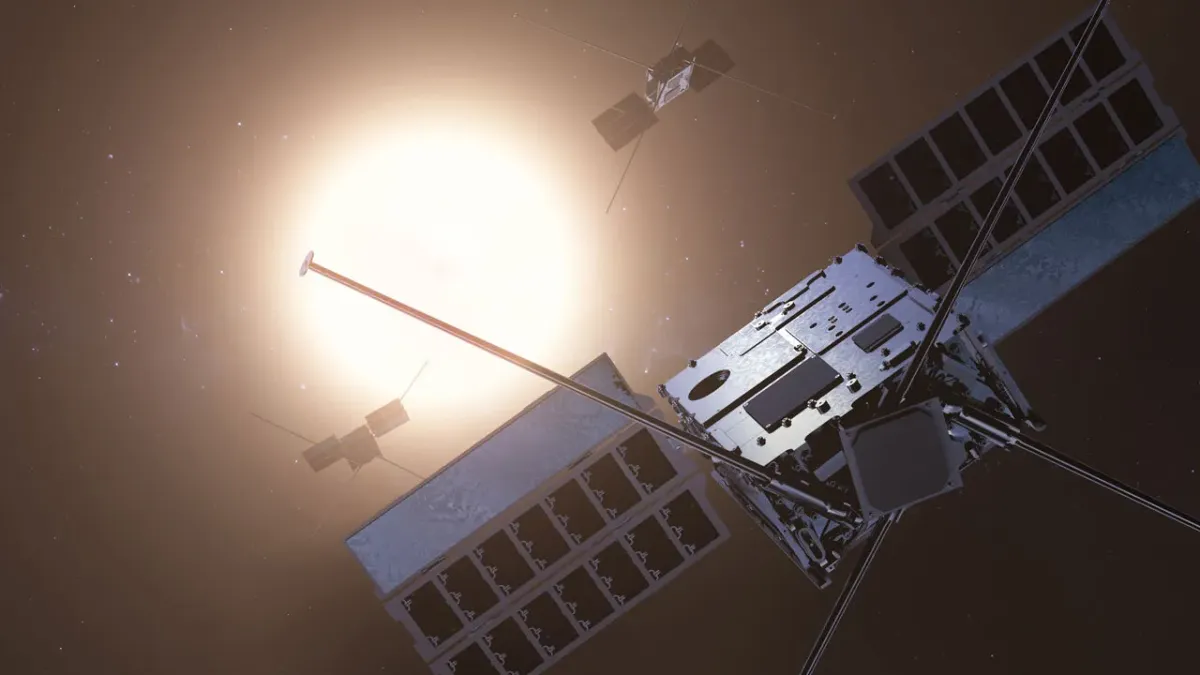
NASA’s SunRISE (Sun Radio Interferometer Space Experiment) mission will launch no earlier than mid-2027. The heliophysics mission will hitch a ride on a SpaceX Falcon Heavy rocket from the agency’s Kennedy Space Center in Florida as a rideshare with a payload sponsored by the United States Space Force’s Space Systems Command.
The mission’s six toaster-oven-size small satellites, or SmallSats, will operate as one giant radio dish slightly above geosynchronous orbit, which is about 22,000 miles (35,000 kilometers) in altitude, and will track the rumbles of radio bursts coming from within the Sun’s atmosphere, or corona. The bursts are generated by accelerated particles leaving the Sun. The solar radio waves arrive at Earth before the solar energetic particles. In extreme cases, solar particle events can damage satellites and affect astronauts. Using SunRISE to track the radio waves could improve prediction and mitigation efforts.
This article is an excerpt. To read the full content, visit the original source. NASA Science (.gov)
Related articles
Sunrise III – Early Science - IOPscience
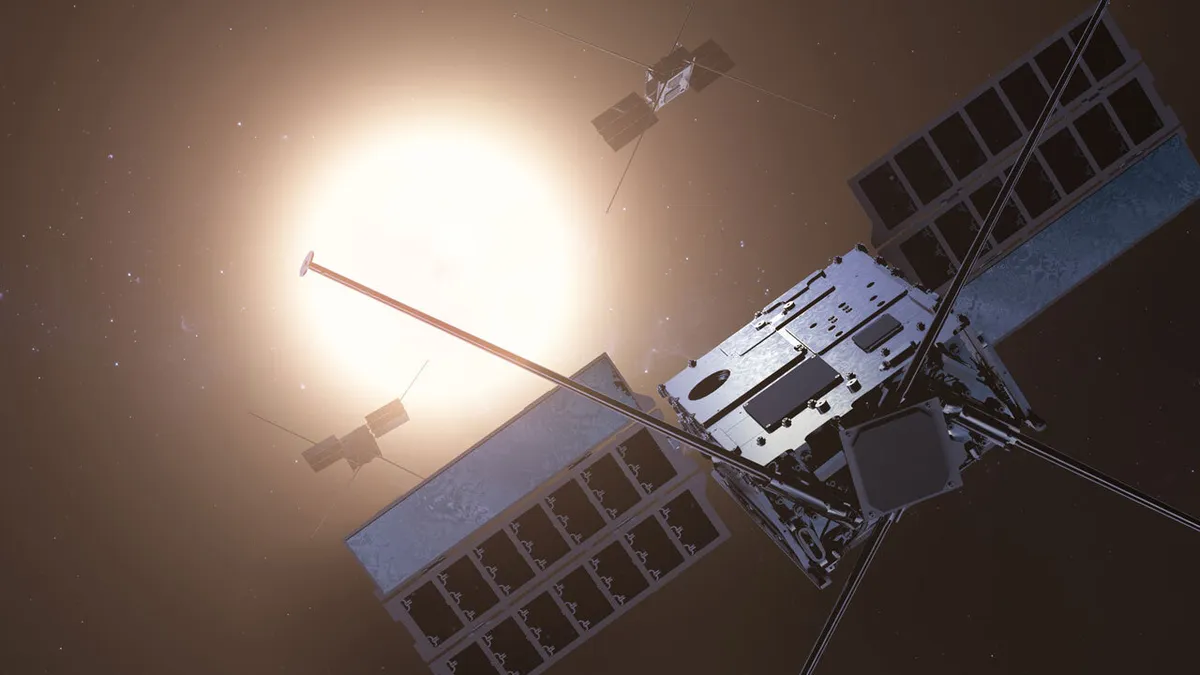
NASA’s SunRISE Mission Targets No Earlier Than Mid-2027 Launch - NASA Jet Propulsion Laboratory (JPL) (.gov)
NASA’s SunRISE (Sun Radio Interferometer Space Experiment) mission will launch no earlier than mid-2027. The heliophysics mission will hitch a ride on a SpaceX Falcon Heavy rocket from the agency’s Kennedy Space Center in Florida as a rideshare with a payload sponsored by the United States Space Force’s Space Systems Command. The mission’s six toaster-oven-size small satellites, or SmallSats, will operate as one giant radio dish slightly above geosynchronous orbit, which is about 22,000 miles (35,000 kilometers) in altitude, and will track the rumbles of radio bursts coming from within the Sun’s atmosphere, or corona.

Simulations explore nuclear mitigation of asteroid threats - Phys.org
Lawrence Livermore National Laboratory researcher Isaiah Santistevan led the development of three-dimensional simulations exploring how a nuclear device could deflect or disrupt an asteroid threatening Earth. Credit: Blaise Douros/LLNL Lawrence Livermore National Laboratory (LLNL) researchers are developing three-dimensional simulations to examine how a nuclear device could be used to deflect or potentially disrupt an asteroid threatening Earth.
0 comments
No comments yet. Be the first to share your thoughts!