BBlogFlow

Categories

Science

10982 articles

Science

NASA’s Record-Setting Perseverance Rover Team - NASA Jet Propulsion Laboratory (JPL) (.gov)

Members of NASA’s Perseverance Mars mission team gather in the Mars Yard at the agency’s Jet Propulsion Laboratory in Southern California with a certificate from Guinness World Records marking the rover distance record on the Red Planet. Positioned in front of the team is OPTIMISM (Operational Perseverance Twin for Integration of Mechanisms and Instruments Sent to Mars), a full-scale engineering model used to plan the rover’s driving routes and science activities on Mars. NASA JPL, which is managed by Caltech, built and manages operations of the Perseverance rover on behalf of the agency’s Science Mission Directorate in Washington, as part of NASA’s Mars Exploration Program portfolio. For more about Perseverance: https://science.nasa.gov/mission/mars-2020-perseverance/
NASA Jet Propulsion Laboratory (JPL) (.gov)·
Science

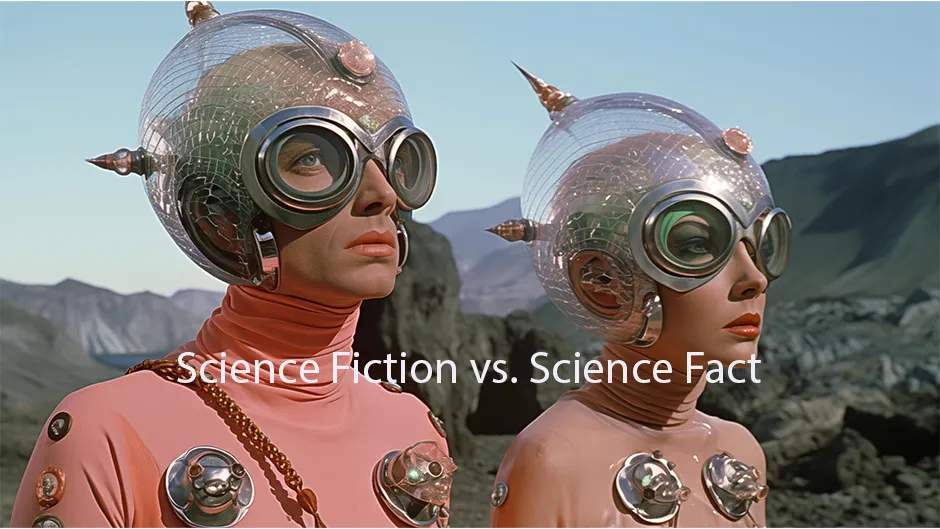
Science fiction meets science fact in new ‘What’s Up, Earth?’ public series - University of Miami News

Science fiction invites us to imagine what is possible. Science fact helps us understand what is happening and what we can do about it. A new free public education series, “What’s Up, Earth?” will bring that spirit of discovery to conversations about the environmental issues affecting our communities and the scientific solutions taking shape. Launching Tuesday, Oct. 20, 2026, the series is presented by the University of Miami Rosenstiel School of Marine, Atmospheric, and Earth Science. It will connect the public with research and expertise from the school and collaborators across the University, making complex topics accessible and showing how science informs responses to real-world challenges.

University of Miami News·
Science

Job advertisement: 2 Postdoctoral researchers - Sciences Po

Home>Job advertisement: 2 Postdoctoral researchers12 October 2026AFFIPRO Project explores how movements between professions reveal occupational affinities and differences in symbolic capital, combining quantitative and ethnographic approaches across three national contexts. We welcome applicants with a PhD in the social sciences, preferably sociology or political science, strong qualitative research skills, and an interest in social inequality. The successful candidates will coordinate ethnographic research and contribute to collaborative publications and the project’s scientific development. One-year, full-time CNRS contracts, with a possible extension subject to performance and funding. Fluency in French and proficiency in English are required. Apply before November 2. Positions start no later than January 1, 2027. See here for the full job description and application details.

Sciences Po·
Science

Teleost gut harbors germinal center-like structures - EurekAlert!

image: The origin of bona fide GaGCL in vertebrates can be traced back approximately 200 million years ago in birds, marking a critical evolutionary milestone in the development of the mucosal adaptive immune system. This study demonstrates GC-like functional structures in the teleost fish gut, shedding light on the evolutionary origins of GCs. They established a viral infection model using SVCV oral gavage, which triggered pathological changes and strong immune responses in the gut. scRNA-seq revealed key ligand-receptor interactions between T and B cells driving GC reactions, including ALCAM-CD6, TNFSF14-TNFRSF14, TGFB1-TGFBR3, and TNFSF14-LTBR. Notably, GaGCL structures were identified within the gut LP, characterized by spatial gradients of cxcr4+ and cxcr5+ expression, elevated expression of aicda+ and mki67+ transcripts, and co-localization of SVCV-specific IgM+ B cells. Additionally, significant B cell proliferation alongside apoptosis was uniquely observed within these GaGCLs in infected fish. These results suggest that gut cell types and functional characteristics are similar between teleost and mammals.

EurekAlert!·
Science

The Science of Positive Heuristics - Psychology Today

About 40 years ago, Daniel Kahneman and Amos Tversky made some wonderful discoveries. They identified a set of heuristics that people use — availability, representativeness, anchoring and adjustment, and even drawing inferences from small samples. Previously, thought leaders like Karl Duncker and Alan Newell and Herb Simon had discussed the importance of heuristics, but Kahneman and Tversky actually identified a set of specific types of heuristics that we commonly apply, and for this, Kahneman and Tversky deserve the accolades and prizes they received. However, the Heuristics and Biases community that sprung up from their work took an unfortunate trajectory. It equated heuristics with biases. The term “bias” can mean preference or predisposition, but the primary understanding is that a biased judgment is not logical or justified. This conflation made some sense because the research methodology used by Kahneman and Tversky and others was to demonstrate that people use heuristics even when the heuristics yield inaccurate judgments.

Psychology Today·
Science

Scabies mite genomes reveal genetic differences linked to host origin - EurekAlert!

image: Population structure of Sarcoptes scabiei inferred from genome-wide nuclear single-nucleotide polymorphism (SNP) data. (A) ADMIXTURE analysis showing estimated ancestry proportions for 83 quality-filtered sample-level datasets from diverse host species, assigned to seven ancestry clusters (K1–K7). (B) Principal component analysis (PCA) of genome-wide SNP data. Each point represents one sample-level dataset and is coloured according to its ADMIXTURE cluster assignment. (C) Phylogenetic relationships inferred from high-quality, linkage-pruned nuclear SNPs. Each bar in panel A represents one dataset derived from an individual mite or a pool of mites. Colours indicate estimated ancestry proportions, not transmission routes. Credit: Fang Fang, Pasi K. Korhonen, Siyi Huang, Barbara Moroni, Luca Rossi, Anna R. Molinar Min, Zhijun Hou, Vito Colella, Qingyou Liu, Jacques Guillot, Robin B. Gasser.

EurekAlert!·
Science

Tiny droplets can form soft networks for brain-inspired computing - EurekAlert!

image: The tiny, watery droplets pictured above can interconnect to form “neuromorphic tissues,” networks inspired by the systems the brain uses to process information, much like silicon chips, but at a far lower energy cost. UNIVERSITY PARK, Pa. — Inside the human brain, billions of individual neurons connect to form a vast network capable of rapidly processing information and electrical signals. A team of researchers and engineers at Penn State is taking inspiration from these natural computers to build soft networks of water-based droplets, connected by membranes like those found in the walls of living cells. Their networks lay the foundation for a new kind of soft computer built for wet environments, capable of sensing and processing information with ions much like silicon chips do with electrons, but at far lower energy cost.

EurekAlert!·
Science

New AI-physics model predicts air pollution more accurately than human forecasters - EurekAlert!

image: ProNet integrates AI directly into traditional atmospheric equations. This hybrid approach accurately predicts air pollution and corrects multi-day errors without violating the laws of physics, minimizing the unfeasible guesses often made by pure AI systems. Every day, millions of people rely on air quality forecasts to protect their health, while cities depend on them to trigger emergency pollution responses and emission controls. Yet delivering forecasts that are both pinpoint-accurate and scientifically explainable has long posed a daunting dilemma. Traditional chemical transport models simulate atmospheric physics and chemistry by calculating governing equations but are severely constrained by unpredictable human emissions. Meanwhile, purely data-driven artificial intelligence (AI) has advanced rapidly, but pure AI models lack physical common sense: they frequently produce erratic, physically unfeasible concentration swings, fail during unprecedented weather extremes, and operate as opaque black boxes that cannot diagnose why errors occur.

EurekAlert!·
Science

Remembering Professor Ricardo Decca - News at IU

Professor Ricardo Decca, Chair of the Department of Physics at IU Indianapolis, passed away on September 4, 2026. To those who knew him, Ricardo was far more than a physicist. He was a devoted husband and father, a mentor, a teacher, a builder, a storyteller, and a person who approached life with boundless curiosity and unmistakable authenticity. Born and raised in Argentina, Ricardo built a distinguished career as an experimental physicist, earning international recognition for his research and eventually leading the Department of Physics at IU Indianapolis. Yet what many remember most is not a title or accomplishment, but the way he engaged with people and ideas. Ricardo believed deeply in understanding the world, whether he was investigating a fundamental question in physics, rebuilding a cabin in Brown County, or helping a student think through a problem for the first time.

News at IU·
Science

University of Oklahoma, NOAA partnership continues life-saving research with five-year renewal - EurekAlert!

image: Fieldwork is the first step in the pathway to mitigating the impacts of severe weather. CIWRO researchers transform fieldwork data into discoveries that drive developments in forecasting. NORMAN, OK – The University of Oklahoma will receive up to $220 million over five years from the U. S. Department of Commerce and the National Oceanic and Atmospheric Administration (NOAA) to continue the life-saving weather research led by the OU-NOAA Cooperative Institute for Severe and High-Impact Weather Research and Operations (CIWRO). The partnership, which began in 1978, marks its fifth decade with this renewal, extending the research partnership between OU and NOAA through Sept. 2031.

EurekAlert!·
Science

Wild Bobwhite Quail spotted at UT’s Ames AgResearch and Education Center - EurekAlert!

Multiple coveys of wild bobwhite quail were recently sighted at the University of Tennessee’s Ames AgResearch and Education Center, marking an encouraging milestone in an ongoing effort to restore habitat for the species at this historic bird dog field trial destination. The sighting comes during the second year of a conservation partnership between UT AgResearch and Tall Timbers, a nonprofit organization specializing in natural resource research and education. Together, teams are restoring bobwhite habitat across more than 5,000 acres of bird dog competition grounds at the Center, home of the National Championship for Bird Dogs, which attracts thousands of visitors annually.

EurekAlert!·
Science

The drought is over. Has the water returned? - EurekAlert!

image: Satellite-based assessment of recovery after severe drought in large river basins. (a) Cumulative recovery probability measured from the time of maximum water storage loss. The black curve represents events in all basins, and the red curve represents events in basins with at least one event remaining unrecovered for more than five years. Shaded ribbons indicate uncertainty. (b) Median recovery time among recovered events in each basin. White circles indicate that recovery times differ by more than one year between events. (c) The longest observed period without recovery in each basin through 2025. Squares indicate that another severe drought prolonged the deficit. The return of rain does not necessarily mean that a river basin has replenished its water reserves. A new satellite-based study shows that recovery after severe drought is widespread across large river basins, but highly uneven. Some recover relatively quickly, while others experience water storage deficits that persist for years.

EurekAlert!·
Science

Applications Open for Simons Postdoctoral Fellowships in Plant Biology - Simons Foundation

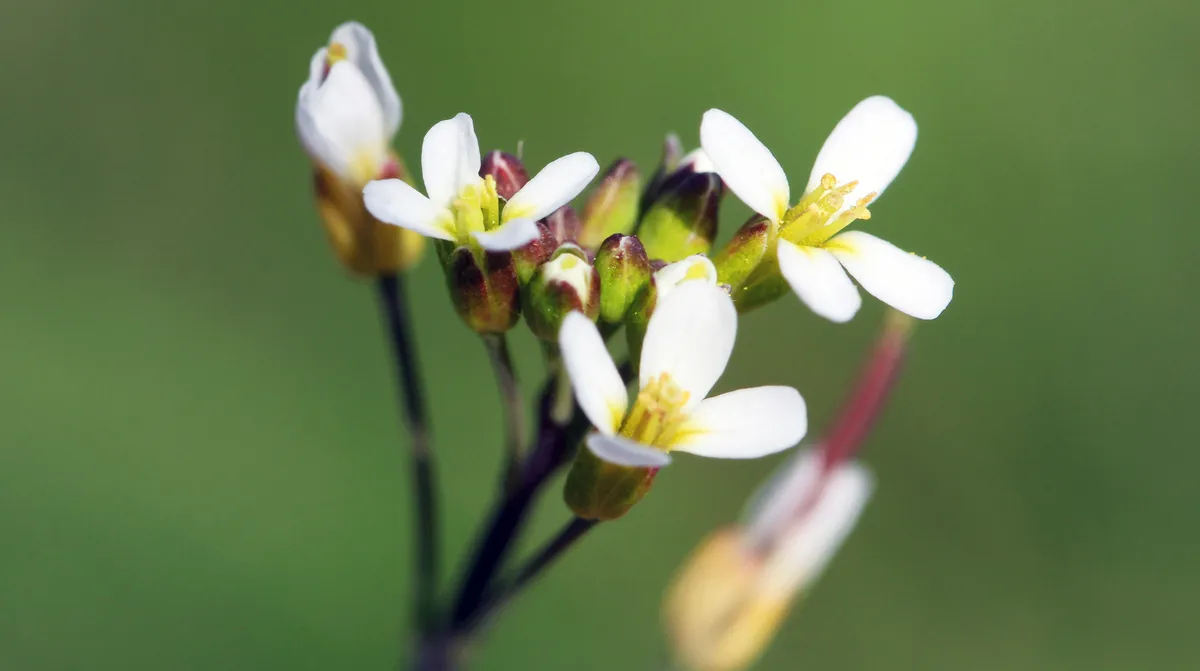
The Simons Foundation’s Life Sciences division is now accepting applications for its Simons Postdoctoral Fellowships in Plant Biology. The application deadline is December 3, 2026, at 12 p.m. (noon) EDT. These postdoctoral fellowships support candidates who intend to pursue a career in basic research on fundamental problems in plant biology. This program supports researchers seeking to understand the inner workings of plants at the level of the whole organism or below. We are interested in applicants with training in disciplines that can be brought to bear on plant biology, including but not limited to engineering, computational modeling, theory, chemistry, synthetic biology and physics, as well as applicants already involved in the plant sciences.

Simons Foundation·
Science

UNESCO Connects Water Science and Regional Cooperation in the Caribbean - UNESCO

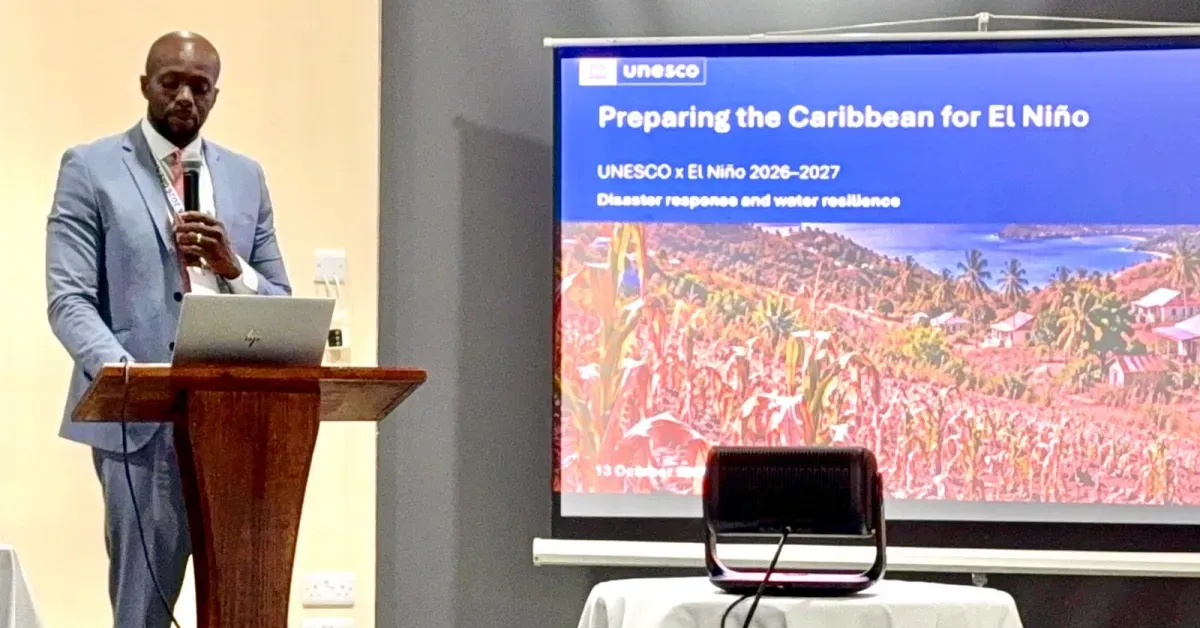
The UNESCO Regional Office for the Caribbean participated in the 22nd High-Level Forum for Caribbean Ministers Responsible for Water, held in Grenada on 12–13 October 2026 within the framework of the Caribbean Water and Wastewater Association’s (CWWA) 35th Annual Conference and Exhibition. Under the theme “From Declaration to Delivery: One Caribbean, Advancing Water Security and Inclusive Wastewater Management,” the Forum brought together ministers, senior officials, water utilities and development partners to discuss practical responses to the region’s water challenges. Representing UNESCO, Bandiougou Diawara, Head of Natural Sciences Programme at the Regional Office for the Caribbean, followed the ministerial discussions and exchanged with national representatives and partners on opportunities for cooperation. Discussions highlighted the importance of reliable data, stronger local institutions and technical capacity to turn water-sector priorities into well-prepared investments and tangible improvements for communities. Participants also stressed the need to share expertise across the region and manage risks before they become crises.

UNESCO·
Science

Some climate tipping points are being studied far more than others — new research - Down To Earth

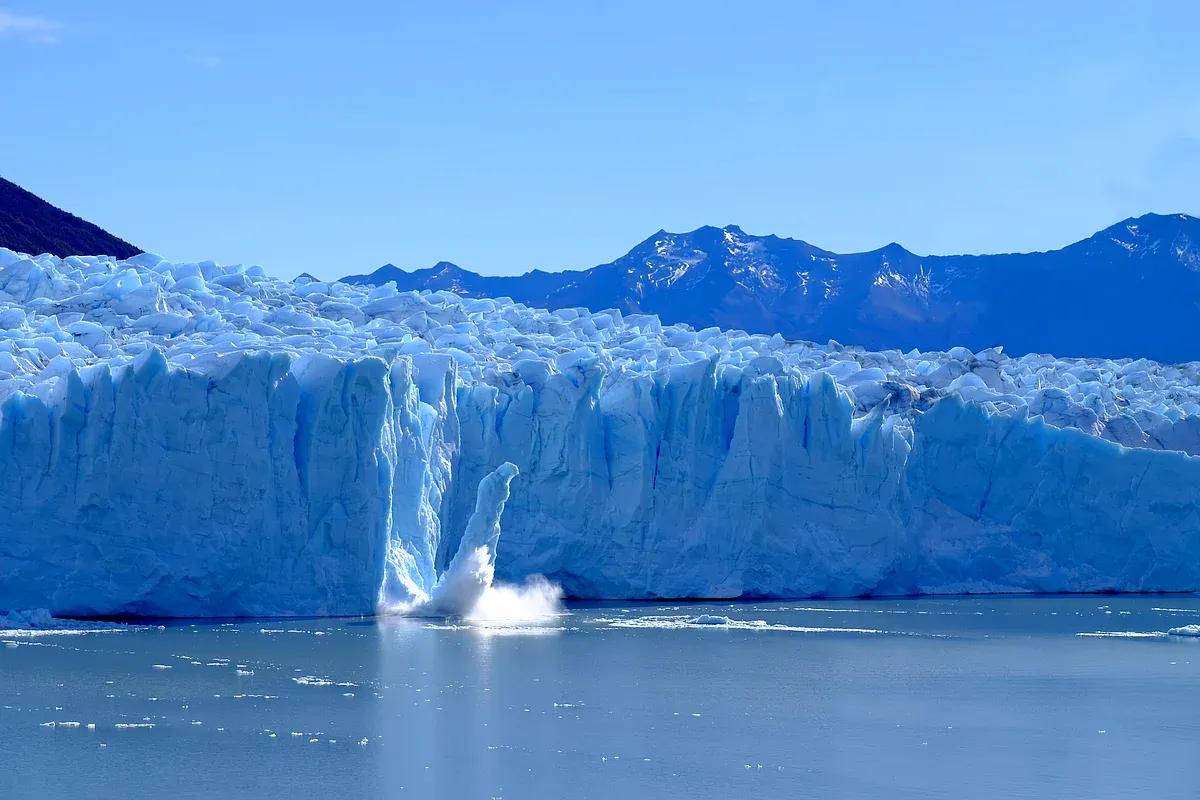
Parts of the Earth’s climate system can change abruptly once warming pushes them beyond critical thresholds. The Greenland and Antarctic ice sheets, the Amazon rainforest, coral reefs and major ocean currents are all among the systems containing potential climate tipping points. These climate systems are known as tipping elements, and research into them has expanded rapidly. But it has not expanded evenly. In a new study published in Proceedings of the National Academy of Sciences, colleagues and I examined 20,736 scientific publications on 14 climate tipping elements published between 2000 and 2025. We wanted to know where scientific attention has accumulated, and whether the systems with relatively low estimated warming thresholds tend to receive more of it. An uneven research landscapeThe Greenland Ice Sheet dominates the studies we analysed. It appeared in 4,141 publications — 20 per cent of the entire dataset. By contrast, abrupt thaw of permafrost in boreal forests just below the Arctic appeared in just 139 papers, or 0.7 per cent. The North Atlantic subpolar gyre, a system of ocean circulation south of Greenland, accounted for 649 papers, or 3.1 per cent.

Down To Earth·