New AI-physics model predicts air pollution more accurately than human forecasters - EurekAlert!
This story deserves to be shared
Send it to someone who'd care, or post it on your networks.
image: ProNet integrates AI directly into traditional atmospheric equations. This hybrid approach accurately predicts air pollution and corrects multi-day errors without violating the laws of physics, minimizing the unfeasible guesses often made by pure AI systems.
Every day, millions of people rely on air quality forecasts to protect their health, while cities depend on them to trigger emergency pollution responses and emission controls. Yet delivering forecasts that are both pinpoint-accurate and scientifically explainable has long posed a daunting dilemma. Traditional chemical transport models simulate atmospheric physics and chemistry by calculating governing equations but are severely constrained by unpredictable human emissions. Meanwhile, purely data-driven artificial intelligence (AI) has advanced rapidly, but pure AI models lack physical common sense: they frequently produce erratic, physically unfeasible concentration swings, fail during unprecedented weather extremes, and operate as opaque black boxes that cannot diagnose why errors occur.
This article is an excerpt. To read the full content, visit the original source. EurekAlert!
Related articles
New Satellites Accurately Detect Methane Emissions - Tomorrow's World Today
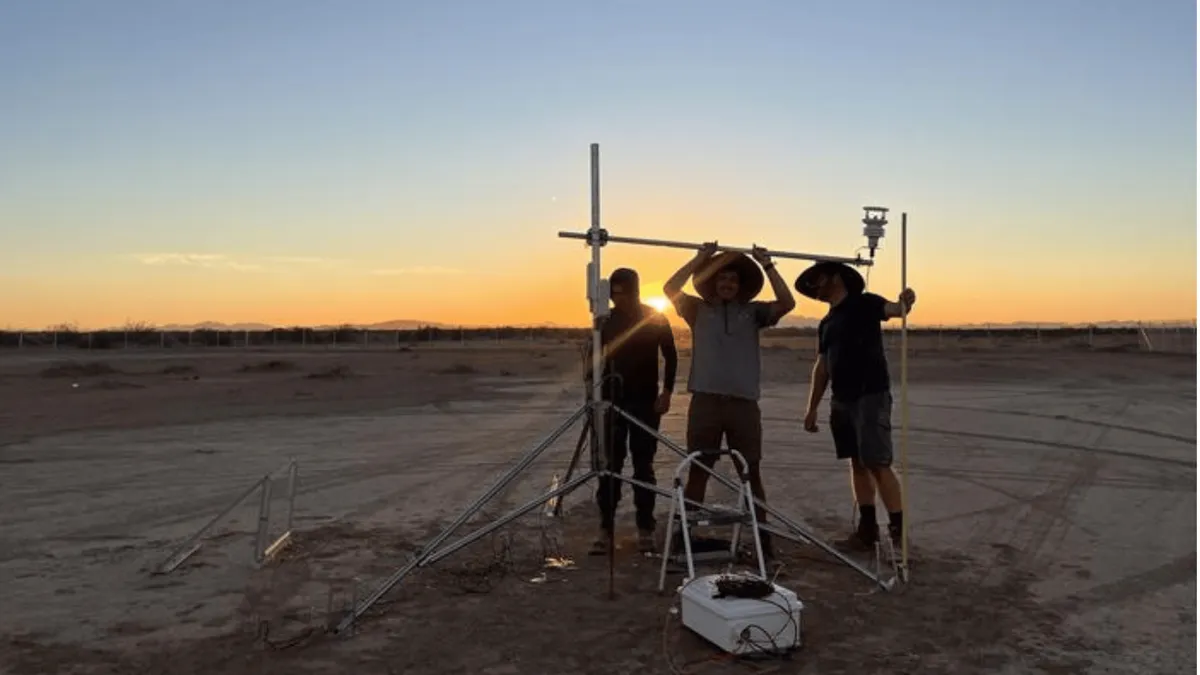
Tracking invisible climate-warming gas from space used to be a long shot. That was until a team of scientists proved that orbit-based monitoring could work. In a study published on October 14 in Nature, researchers from the Stanford Doerr School of Sustainability conducted the largest controlled test of space-based methane monitoring ever. They timed 481 controlled methane releases in Casa Grande, Arizona, matching them with overpasses from 11 different satellites.
Satellites accurately detect methane emissions in largest controlled test yet - Phys.org
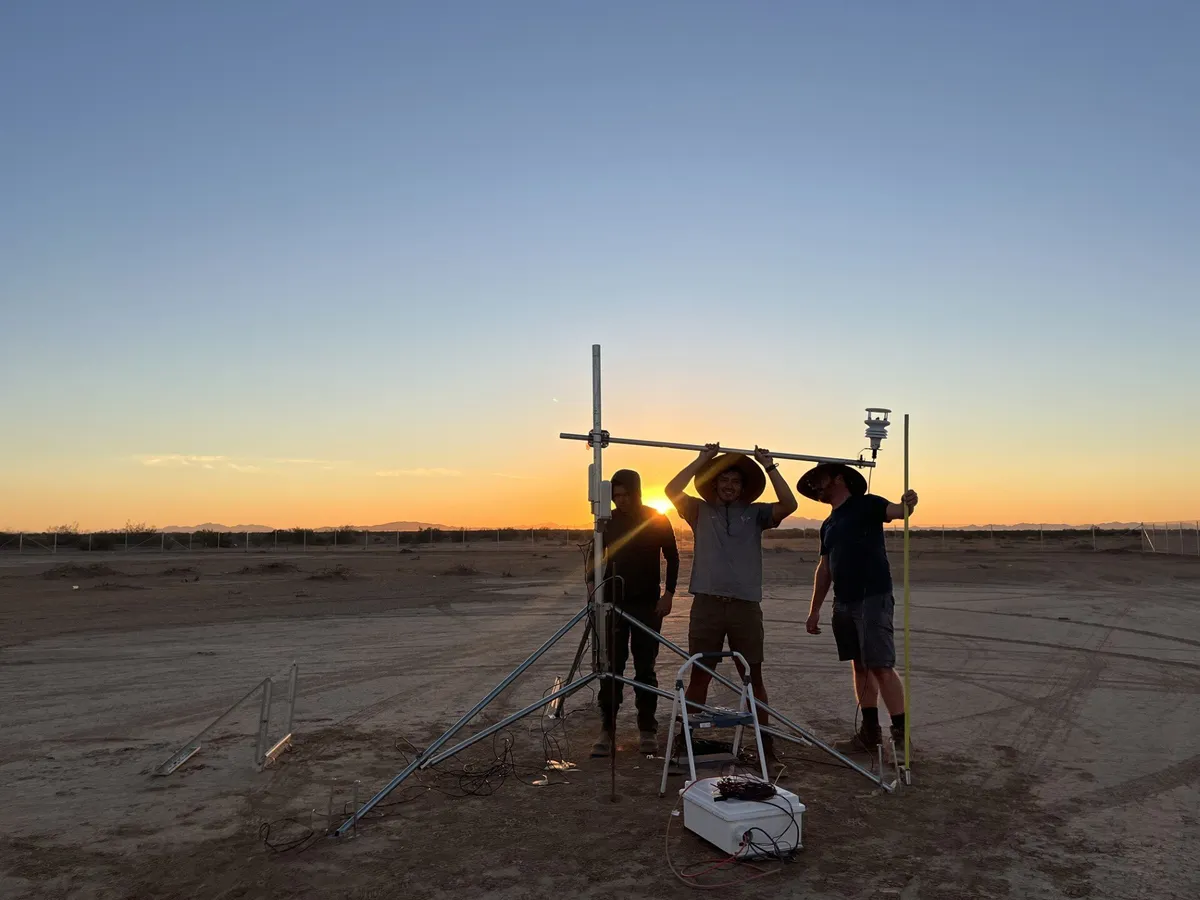
Researchers Adam Brandt, Josh Romo and Taylor Adams set up a meteorology station during preparations for controlled methane releases. Researchers have conducted the largest-ever controlled test of space-based methane monitoring, finding that dedicated methane sensors correctly detected nearly all methane plumes released on clear days. 14 in Nature, the results provide a benchmark for satellite systems increasingly used by regulators, environmental groups and companies to detect leaks and identify super-emitters of the planet-warming gas.

Ancient mud reveals a surprising secret about Greenland’s ice - Earth.com
Mud from a fjord shows an Atlantic air pattern brought wetter, colder spells to southern Greenland, a clue to how its ice may fare. Greenland’s ice is shrinking as the planet warms. But in the island’s southwest, rainfall and snowfall have been influenced by the same North Atlantic air-pressure pattern for at least 5,000 years. When that pattern tipped one way, the region turned wetter and colder. The record comes from mud on the floor of a Greenland fjord, and it suggests snowfall, not only temperature, shaped how the area’s ice grew and shrank. It doesn’t yet show how glaciers there will respond to the warming ahead. Johan Faust, a researcher at MARUM, the Center for Marine Environmental Sciences at the University of Bremen in Germany, led the work with colleagues in Germany, Norway, Denmark and Canada. A seesaw in the airThe pattern is called the North Atlantic Oscillation. It’s the difference in air pressure between a low that sits near Iceland and a high near the Azores, and it’s strongest in winter. When that difference is large, the pattern is in its positive phase. Northwestern Europe and southwestern Greenland both get more rain and snow.

Simulations explore nuclear mitigation of asteroid threats - Phys.org
Lawrence Livermore National Laboratory researcher Isaiah Santistevan led the development of three-dimensional simulations exploring how a nuclear device could deflect or disrupt an asteroid threatening Earth. Credit: Blaise Douros/LLNL Lawrence Livermore National Laboratory (LLNL) researchers are developing three-dimensional simulations to examine how a nuclear device could be used to deflect or potentially disrupt an asteroid threatening Earth.
0 comments
No comments yet. Be the first to share your thoughts!