Scabies mite genomes reveal genetic differences linked to host origin - EurekAlert!
This story deserves to be shared
Send it to someone who'd care, or post it on your networks.
image: Population structure of Sarcoptes scabiei inferred from genome-wide nuclear single-nucleotide polymorphism (SNP) data. (A) ADMIXTURE analysis showing estimated ancestry proportions for 83 quality-filtered sample-level datasets from diverse host species, assigned to seven ancestry clusters (K1–K7). (B) Principal component analysis (PCA) of genome-wide SNP data. Each point represents one sample-level dataset and is coloured according to its ADMIXTURE cluster assignment. (C) Phylogenetic relationships inferred from high-quality, linkage-pruned nuclear SNPs. Each bar in panel A represents one dataset derived from an individual mite or a pool of mites. Colours indicate estimated ancestry proportions, not transmission routes.
Credit: Fang Fang, Pasi K. Korhonen, Siyi Huang, Barbara Moroni, Luca Rossi, Anna R. Molinar Min, Zhijun Hou, Vito Colella, Qingyou Liu, Jacques Guillot, Robin B. Gasser.
This article is an excerpt. To read the full content, visit the original source. EurekAlert!
Related articles

Polynesian Wayfinding Is Written in the Genomes of Island Populations - UC San Diego Today
UC San Diego research reveals how Polynesian seafaring shaped the genomes of island populations, offering new clues to health risks and medical discoveries in rarely studied communities For centuries, Polynesian navigators crossed thousands of miles of open ocean, using their knowledge of stars, currents, birds, clouds and the sea to settle islands across the Pacific. Now, a new University of California San Diego study shows the history of voyaging is also reflected in the genomes of Polynesian populations today.
Time capsule: As woodstove season approaches, elucidating the differences in hardwood and softwood - Anchorage Daily News
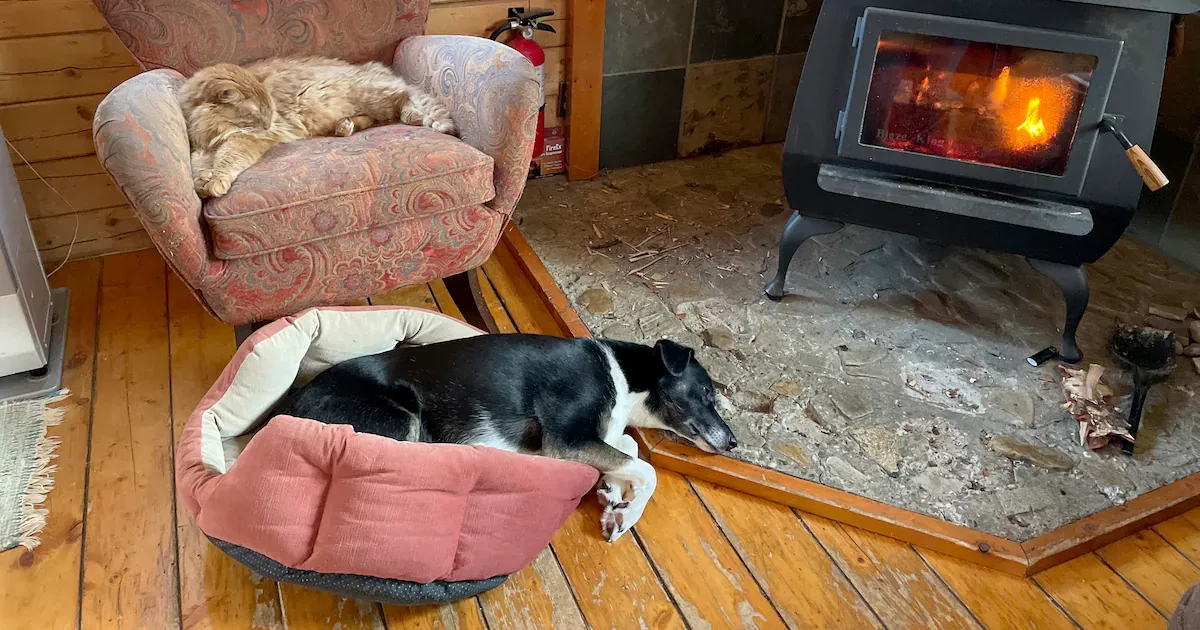
Yukie, in chair, and Junie enjoy a warm fire on a cold Fairbanks day in November 2024. (Photo by Sara Wilbur) Note: After finally cleaning my stovepipe last weekend, it feels like woodstove season at my cabin can officially (and safely) begin. Carla Helfferich wrote this wood power-focused Alaska Science Forum column on Oct. 3, 1990. — Sara WilburA strange thing happens at my house every October: the woodstove seems to get bigger. It’s been an inconspicuous little black thing in the corner of the living room all summer, but come snowfall, it’s a brute right out in the middle. And it looks hungry. If there’s any science whatsoever in that observation, it’s psychology. Important objects may be perceived as larger than they really are, and that stove certainly grows in importance as temperatures decline. Other sciences apply more exactly to heating with wood.
Age associated differences in the composition and function of yak milk - Nature
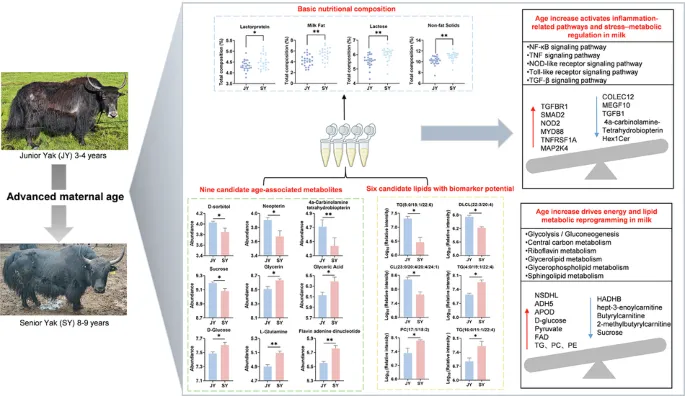
Yunduan Wang1 na1, Shaohui Beng1 na1, Kechao Chen1 na1, Xiaowei Li2, Shuang Zhang1, Xiaoqiang He2, Yunqiang Jia2, Yanwen Wang2, Yuhan Xiang1, Yan Xiong1,3, Daoliang Lan1,3, Jian Li1,3 & … Wei Fu1,3 We’re sharing this article early to provide faster access to peer-reviewed, accepted research. It is citable and carries a permanent DOI. This version is subject to further edits and will be replaced automatically by the final Version of Record. All legal disclaimers apply.
0 comments
No comments yet. Be the first to share your thoughts!