Behavioural scientist Alicia Naser joins The FAN Hockey Show and discusses the dynamic between player injuries, mental health, and recovery and how injuries can have a long-standing impact on a player’s mental health.
For years, Doan Quang Dung, an applied epidemiologist at the Queensland Health Department in Australia, worked within the limits of his laboratory bench: specimens, reagents, a microscope. Then COVID-19 shifted his world, and the period of forced reflection drove him “to look beyond the lab, and at populations that were most at risk of disease.” What began as curiosity during a crisis became a mission, and it led him to the World Health Organization’s Field Epidemiology Fellowship Programme (FEFP) in the Western Pacific. “FEFP provided an eye-opening transition from the controlled lab to the ‘boots on the ground’ reality of field epidemiology, where I worked with complex datasets to uncover the causes and effects of disease,” he shared. This year, that programme turns 20. From mentorship to a regional engine FEFP was established in 2006, to help countries detect and respond rapidly to emerging infections and other acute public health events. Initially individual and mentorship-based, in 2011 it became more structured.
Children experiencing a mental health crisis deserve timely access to the right care in the right setting. Yet across the country, many children remain in emergency departments or hospital inpatient units long after they no longer need hospital-level care because appropriate behavioral health services or placements are unavailable. This practice, known as pediatric mental health boarding, can delay treatment, increase stress on families, and strain hospital resources.
This white paper outlines a practical state policy framework to reduce pediatric mental health boarding and improve access to care. The report highlights evidence-informed strategies for strengthening behavioral health capacity, improving care coordination, aligning Medicaid policy with children's needs, and increasing accountability across child-serving systems.
PERSPECTIVE articleFront. Glob. Women’s Health, 13 October 2026 Sec. Women's Mental HealthVolume 7 - 2026 | https://doi.org/10.3389/fgwh.2026.1989039AbstractMaternal mental health remains an overlooked dimension of global women's health, particularly in conflict-affected and low-resource settings where psychological distress is intensified by poverty, displacement, violence, gender inequality, and fragile health systems. Although maternal health agendas have achieved progress in reducing mortality, survival-focused approaches often fail to capture the psychological burdens that shape women's well-being, caregiving capacity, and intergenerational outcomes. This Perspective argues that maternal mental health should be reframed as a core component of maternal health rather than a secondary concern. Drawing on a life-course and gender-responsive perspective, we propose a conceptual framework linking conflict and structural inequality with social determinants, maternal psychological outcomes, and consequences for mothers and children.
A mother with her child after vaccination at Yalobi Nursing Station, Waya island in Fiji.
A WHO field staff talks to a woman fetching water from a water catchment tank in Kiribati.
An international commission of more than 20 experts is calling on governments, city authorities and research funders to make brain and mental health a standard measure of environmental, urban and climate policy. The Earth Brain Health Commission also sets a goal for the next decade: no major environmental intervention should be planned or evaluated without considering its effects on mental health. Its report is published in Nature Mental Health.
The commission finds that climate and weather extremes, air and noise pollution, urban stressors, biodiversity loss and widening social inequality are associated with increased risks of anxiety, depression, trauma-related disorders and cognitive decline. These exposures rarely occur in isolation. They cluster in the same places and populations, and act together through biological, psychological and social pathways across the life course, from prenatal development through old age.
WesternU’s College of Health Sciences celebrated its 40th anniversary Sept. 26, 2026, at the DoubleTree by Hilton in Claremont, bringing together alumni, faculty, staff, students and community leaders for an evening commemorating the college’s history and impact. (Photo by Tom Zasadzinski)
Left to right: Pomona Unified School District Superintendent Darren Knowles, CHS Dean Gail Evans Grayson, EdD, and Pomona Vice-Mayor Lorraine Canales. (Photo by Tom Zasadzinski)
Minister of Colleges, Universities, Research Excellence and Security Nolan Quinn was at St. Clair College along with Windsor-Tecumseh MPP Andrew Dowie on Oct. 8, 2026, to announce newly funded seats for the college's health care programs.
The Ontario government previously announced a $1.7 billion investment, funding 70,000 additional seats in STEM, health care, education and trades programs at colleges and universities across the province.
(HealthDay News) — Eating more ultraprocessed foods (UPFs) is associated with higher risks for multiple chronic diseases and all-cause mortality, according to a study published online Sept. 22 in Family Medicine and Community Health.
Xiao Liu, MD, PhD, from Duke-NUS Medical School in Singapore, and colleagues conducted a systematic literature search to identify prospective studies evaluating consumption of UPFs and the impact on major chronic outcomes.
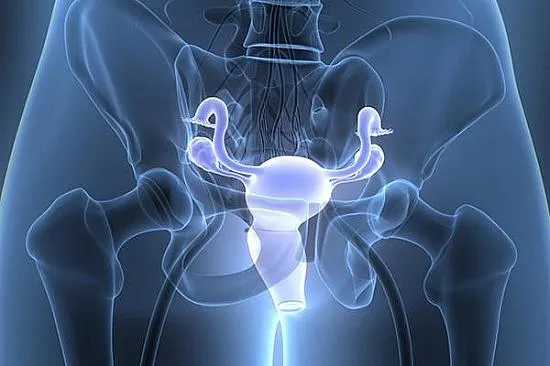
Medicine has long named cancers for where they originate. But that practice may be tipped on its head (in at least one instance) by mounting evidence that most cases of ovarian cancer actually start not in the ovary, but in the nearby fallopian tube.
This surprising shift in understanding began to take shape in recent years as scientists increasingly found precancerous lesions in the fallopian tubes — especially the finger-like projections known as fimbriae — when they examined tubes removed from women at high genetic risk of ovarian cancer. The disease is diagnosed in 21,000 women each year and kills more than 12,000, according to the American Cancer Society.
The rates of sustained tobacco abstinence through 6 months were 4.3% with usual care, 5.1% with added free pharmacotherapy, and 8.8% with added financial incentives.
Among medically underserved adults undergoing lung cancer screening, the use of financial incentives nearly doubles smoking cessation rates compared to other incentives, according to research published in The Journal of the American Medical Association.
Women with autoimmune conditions are up to 74% more likely than men to be told their symptoms are psychological or psychosomatic, and face much longer waits for a diagnosis and treatment, a study suggests. Hundreds of millions of people – about one in 10 globally – are affected by autoimmune conditions, which can cause a range of health issues including fatigue, muscle pain and rashes. But research by the University of Cambridge and University of East Anglia suggests a stark gender divide when it comes to how signs of the conditions are handled by doctors. Women are more likely to have their conditions wrongly attributed to psychiatric causes, more likely to have symptoms misdiagnosed as psychosomatic, and more likely to experience delays in getting a diagnosis, according to the study. The lead author, Melanie Sloan, said: “The damage caused to women by these types of misdiagnosis can be very long lasting in terms of trusting doctors and their own self-esteem.”Sloan, a researcher in the department of public health and primary care at Cambridge and UEA, said some women were forced to wait years before finally getting a diagnosis, causing long delays to treatment for their condition.