Young giant manta rays stay close to home while adults roam more widely - Reuters
This story deserves to be shared
Send it to someone who'd care, or post it on your networks.
This article is an excerpt. To read the full content, visit the original source. Reuters
Related articles
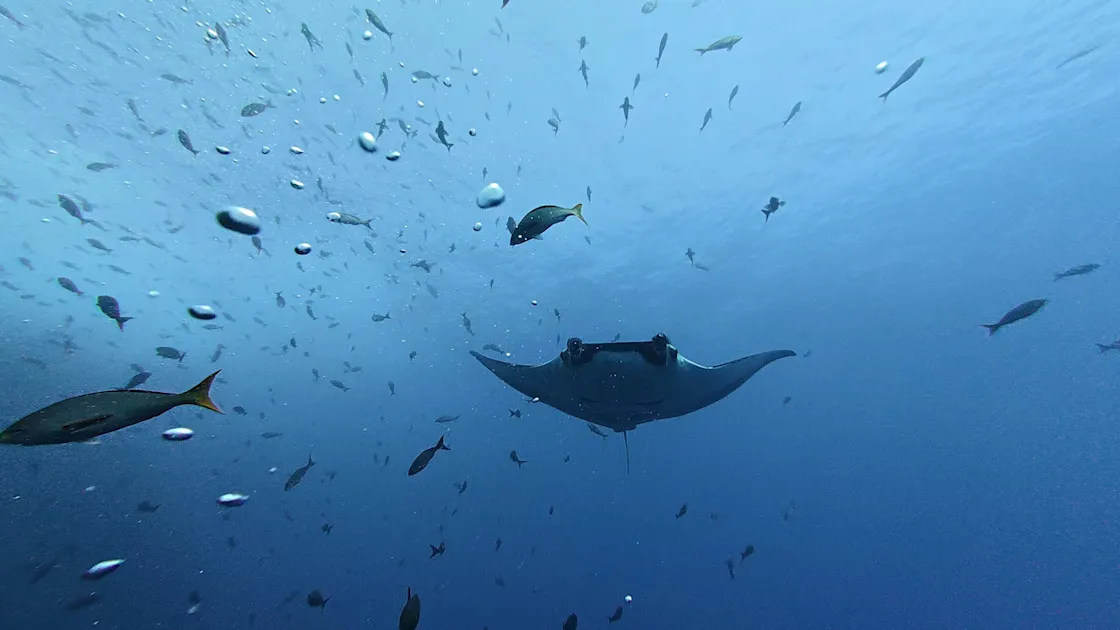
Baby manta rays hunker down close to coasts before facing the open ocean’s dangers - Frontiers
Credit: Jeffry Madrigal. Baby manta rays escape predators by avoiding them until they grow large enough for a face-off, a new study has found. Tracking data shows that young giant manta rays in Central America strictly stick to comparatively safe coastal areas for the first few years of their life. When they’re large enough that natural enemies are a lesser concern, they leave these sanctuaries and embark on journeys spanning hundreds of kilometers. This shift in space use allows mantas to grow in safety before facing another type of danger in the open oceans: industrial fisheries and vessel strikes in unprotected waters. The authors say underwater corridors are needed to protect adult mantas on their treks. Giant manta rays can grow up to nine meters long with a disc size of seven meters across and weigh up to 2,000kg. This size leaves them with very few natural enemies once they reach adulthood at around eight to ten years old. But giant manta ray babies, called pups, cannot rely on their size to protect them from predators that live in the open ocean, including several species of shark and orcas.
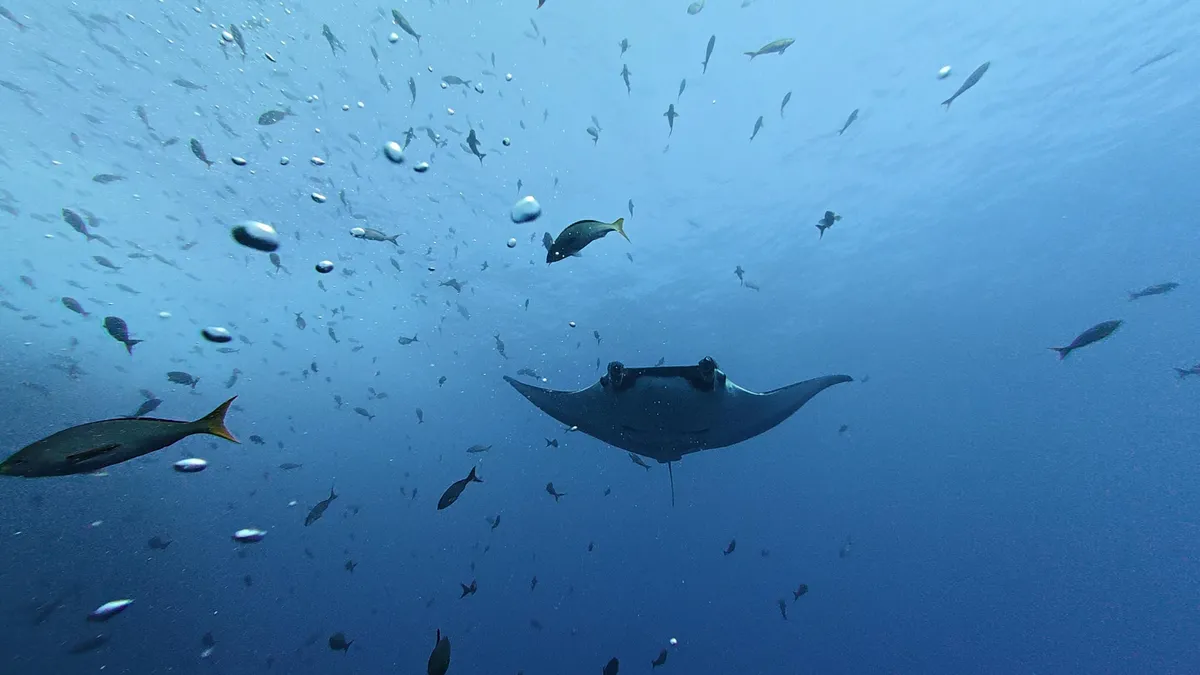
Baby manta rays hunker down close to coasts before facing the open ocean's dangers - Phys.org
One of the manta rays tracked in the study. Credit: Jeffry Madrigal Giant manta rays can grow up to nine meters (30 feet) long with a disk size of seven meters (23 feet) across and weigh up to 2,000 kg (4,400 pounds). This size leaves them with very few natural enemies once they reach adulthood at around eight to 10 years old. But giant manta ray babies, called pups, cannot rely on their size to protect them from predators that live in the open ocean, including several species of shark and orcas.

Scientists Just Cracked a Quantum Mystery That's Puzzled Physicists For Decades - ScienceAlert
The Kondo effect is one of the most important in quantum physics, describing the strange interference that magnetic atoms can have in metals. Usually, as metals cool, they become better at conducting electricity, because the reduction in energy means electrons can flow more smoothly. Add in a magnetic atom or two, though, and below a certain temperature (the Kondo temperature), electrical resistance starts to rise again. That's the Kondo effect, and we already know a lot about it. But in a physics first, researchers from the California Institute of Technology (Caltech) and Yale University in the US have managed to precisely quantify the effect in a real material via fundamental physics calculations. The work, published in Science, represents a significant step forward. Previously, scientists had to use real-world experiments and simplified models to pin down the Kondo effect, without getting predictions as precise as the new method. Scientists have known about the Kondo effect since the 1930s – that magnetic impurities can cause increased electrical resistance at lower temperatures.

Europe's Space Rider vehicle comes crashing down during drop test - Space
This was not exactly what engineers had in mind when they performed Space Rider's drop test.

Amino acid stabilizes material's quantum state above room temperature - Phys.org
An illustration represents the interaction between blue-outlined arginine molecules and tantalum disulfide's star-shaped crystal pattern. Credit: Duan Lab/UCLA New research started with a special material that behaves unusually when it's extremely cold—135 degrees below zero Fahrenheit (minus 93 degrees Celsius), close to the most frigid temperature ever recorded in Antarctica—and showed that the unusual behavior could be extended to well above room temperature—up to about 135 F (57 degrees Celsius), close to the highest heat ever measured in Death Valley, California.
0 comments
No comments yet. Be the first to share your thoughts!