Study explores potential breast cancer benefits of neurokinin receptor antagonists - News-Medical
This story deserves to be shared
Send it to someone who'd care, or post it on your networks.
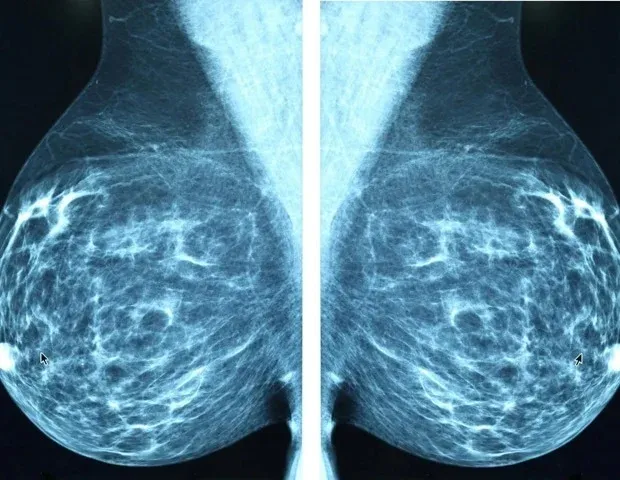
Neurokinin receptor (NKR) antagonists are already widely used for treating menopausal hot flashes, representing a highly effective nonhormone treatment. A new study suggests they may also help breast cancer patients by limiting the spread of cancer cells and helping to prevent a recurring cancer diagnosis. Results of the study will be presented at the 2026 Annual Meeting of The Menopause Society in San Diego October 20-24, 2026.
During menopause, declining estrogen levels disrupt the brain's thermostat located in the hypothalamus. This estrogen drop causes a specific group of brain cells, known as KNDy neurons, to become hyperactive and overproduce a peptide called neurokinin B (NKB). Overactive NKB signaling tricks the body into feeling overheated, triggering sudden sweating and flushing. Neurokinin receptor antagonists work by blocking these receptors, calming the overstimulated pathway and stabilizing body temperature regulation without using hormones.
This article is an excerpt. To read the full content, visit the original source. News-Medical
Related articles
Researchers explore a potential role for NKR antagonists in breast cancer biology - Medical Xpress
Neurokinin receptor (NKR) antagonists are already widely used to treat menopausal hot flashes, providing an effective nonhormone treatment.
Media release: Aotearoa NZ needs action on unhealthy food environment - Public Health Communication Centre
AHF, GNP+ Webinar Puts Spotlight on Global HIV/AIDS Response - AFP.com
AHF ) and the Global Network of People Living with HIV ( GNP+ ) will convene a global webinar on Oct. 22 titled “
HFSA 2026: ATTRibute-CM Analysis; LINK-HF2 Results; More - American College of Cardiology
New science presented at HFSA 2026 and simultaneously published in JACC: Heart Failure spans several evolving areas in heart failure (HF), from ATTR-CM biomarkers and measures of physical function to predictors of adverse outcomes in transplant recipients to artificial intelligence (AI) wearables enhancing discharge care following HF hospitalization. A post-hoc analysis of ATTRibute-CM biomarker data from 587 participants (mean age, 77 years; 9% women) found that an integrated biomarker ratio of log2-transformed serum transthyretin (sTTR) at day 28 to log2-transformed NT-proBNP at month 12 was associated with subsequent risk of all-cause mortality or first cardiovascular-related hospitalization in transthyretin amyloid cardiomyopathy (ATTR-CM). Each 0.1-unit increase in the ratio (reflecting higher sTTR relative to NT-proBNP) was associated with a 63% lower adjusted risk of the composite outcome (hazard ratio [HR], 0.37; p<0.001). However, investigators Peder L.
0 comments
No comments yet. Be the first to share your thoughts!