Scientists may have found the source of the most powerful neutrino ever detected - Science Daily
This story deserves to be shared
Send it to someone who'd care, or post it on your networks.
This article is an excerpt. To read the full content, visit the original source. Science Daily
Related articles
Solving the gallium anomaly: New calculation may explain neutrino shortfall without invoking new particles - Phys.org
Glimpses of the "gallium anomaly" were first seen in the mid-1990s, but it was first clearly discovered and stated in 2007 by neutrino physicist Carlo Giunti of Italy. The problem is simple to state but potentially very important: about 20% fewer electron neutrinos were seen to be captured by gallium nuclei than expected.

Why measuring neutrino mass needs more than one kind of experiment - Innovation News Network
From radioactive tritium to maps of distant galaxies, neutrino experiments are narrowing the possibilities. Their results become most powerful when the differences between their measurements are understood. How do you weigh a particle that almost always passes through your apparatus without interacting? For neutrinos, physicists have developed several answers. They measure radioactive decay, track changes in particle identity, search for extraordinarily rare nuclear transitions and reconstruct the growth of cosmic structure. Each approach reveals something different about mass, and each brings its own assumptions.
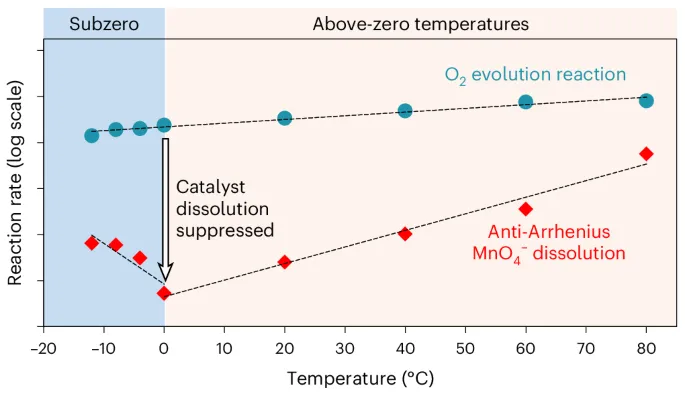
Cooling water to near freezing breaks the activity–stability trade-off of water oxidation electrocatalysis - Nature
Arrhenius, S. Über die reaktionsgeschwindigkeit bei der inversion von Rohrzucker durch Säuren. Z. Phys. Chem. 4, 226–248 (1889). Article Atkins, P. & de Paula, J. The rates of chemical reactions. In Physical Chemistry 9th edn 799–802 (Oxford Univ. Press, 2010). Murakami, K. et al. Key factor for the anti-Arrhenius low-temperature heterogeneous catalysis induced by H+ migration: H+ coverage over support. Chem. Commun. 56, 3365–3368 (2020). Article
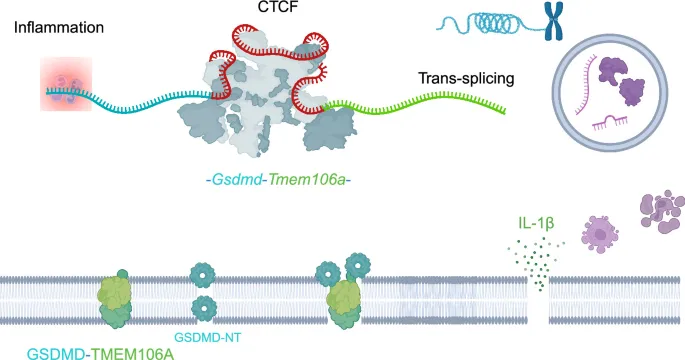
Functional chimeric RNAs expand the mammalian proteome - Nature
Chimeric RNAs (chRNAs) expand transcriptomic and proteomic diversity by joining sequences from distinct genomic loci, yet their physiological functions remain poorly understood. In a recent paper published in Nature, Venezia et al. show that inflammation induces CTCF-dependent chRNA formation in mammalian immune cells and that a Gsdmd-Tmem106a chRNA encodes a functional fusion protein that modulates pyroptosis and the balance between antibacterial defense and inflammatory pathology. The mammalian genome contains a surprisingly limited number of protein-coding genes relative to the complexity of mammalian organisms. Alternative splicing, RNA editing, non-canonical translation and post-translational modification expand the functional output of this finite genome. Chimeric RNAs (chRNAs), in which sequences from distinct genomic loci are joined within a single transcript, may represent another layer of this regulatory complexity.1,2,3 Historically, chimeric transcripts have been closely associated with cancer-associated chromosomal rearrangements.
0 comments
No comments yet. Be the first to share your thoughts!