A magnetar can be born when two neutron stars touch - Phys.org
This story deserves to be shared
Send it to someone who'd care, or post it on your networks.
This article is an excerpt. To read the full content, visit the original source. Phys.org
Related articles
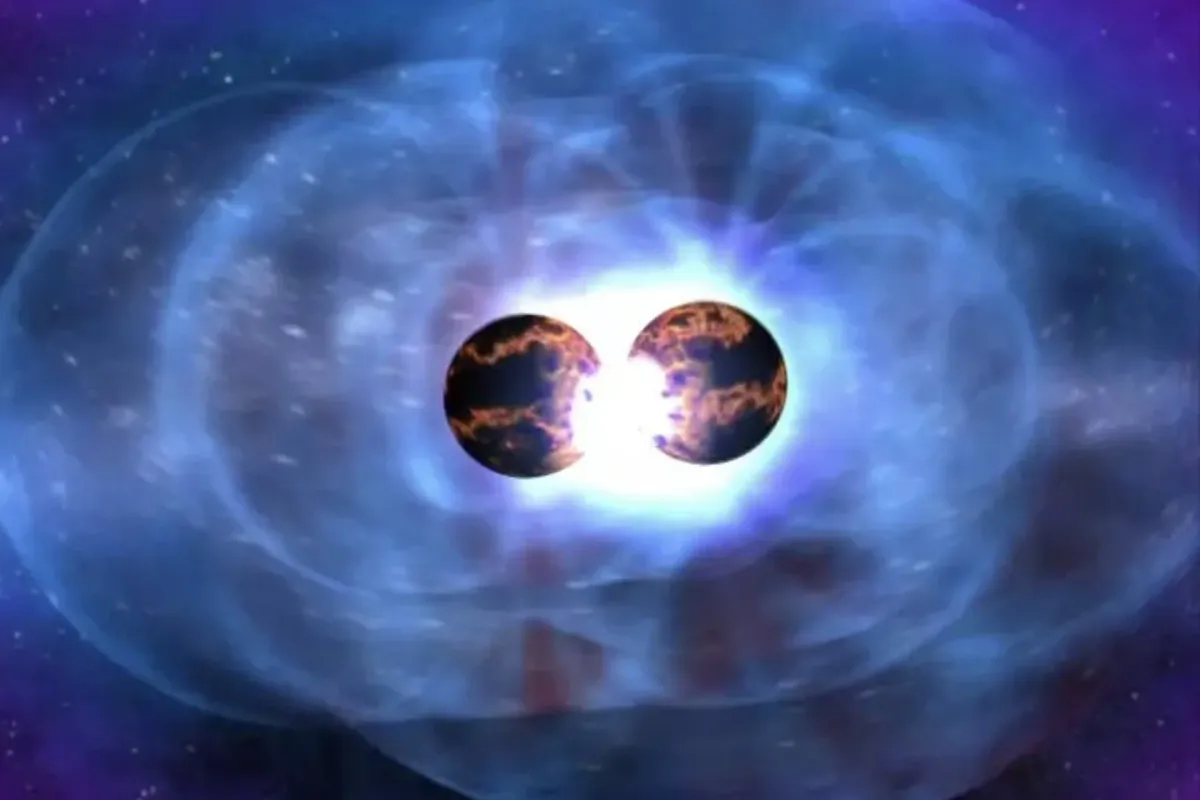
A Magnetar Can Be Born When Two Neutron Stars Touch - Universe Today
All neutron stars have intense magnetic fields. The typical magnetic field of a neutron star is about 100,000 times stronger than the strongest magnetic fields we can create on Earth. But about 1% of neutron stars have even stronger magnetic fields. Known as magnetars, their magnetic fields can be 1,000 times stronger than a regular magnetic field. They are a likely cause for powerful transient events such as soft gamma-ray repeaters and fast radio bursts. A new study looks at how magnetars might form. The work focuses on the mergers of binary neutron stars. Often when two neutron stars collide they form a black hole. This is because the combined mass of the two neutron stars is greater than the Tolman-Oppenheimer-Volkoff (TOV) limit, which is around 2.6 solar masses. Most neutron stars are more massive than white dwarfs, which have a Chandrasekhar limit of about 1.4 solar masses. But some neutron stars have smaller masses. If they happen to have a total mass less than the TOV limit, then they can merge and become a single neutron star.
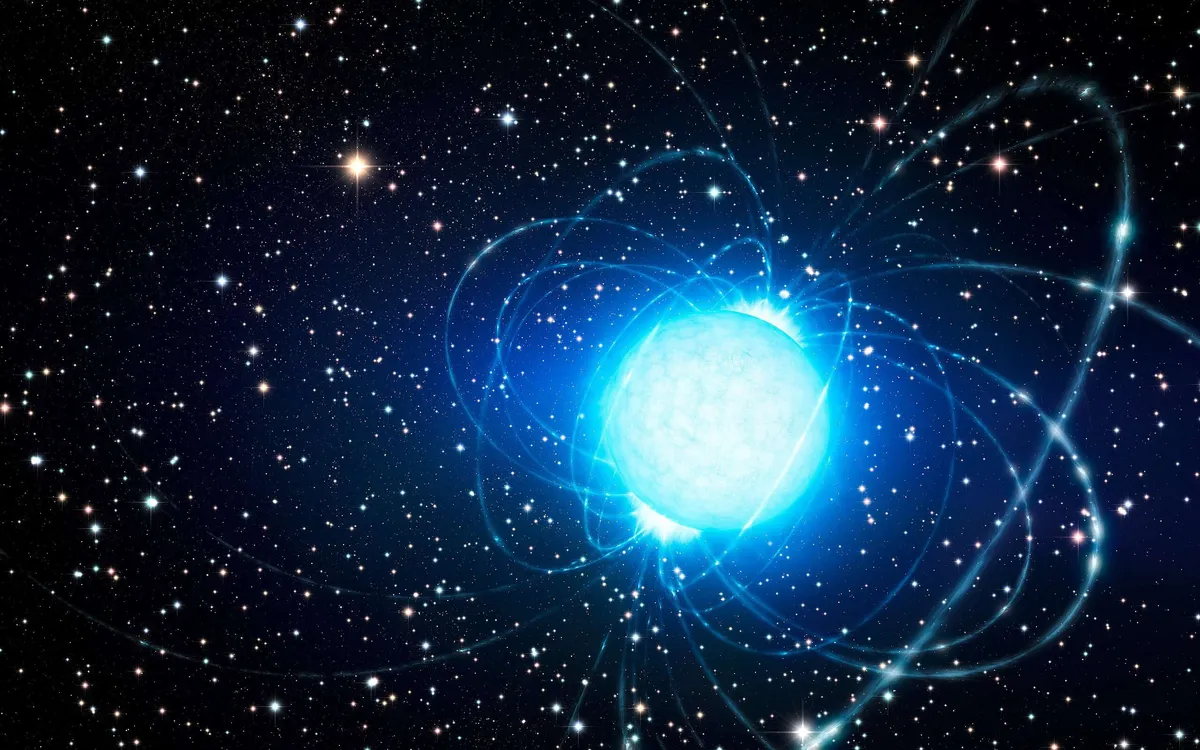
A Strange Cosmic Explosion Glowed in X-Rays for 10 Minutes. A Magnetar May Have Been Born - ZME Science
Artist’s impression of a magnetar with its magnetic field. Credit: Wikimedia Commons On July 4, 2025, astronomers watched a cosmic explosion do something it was not supposed to do.
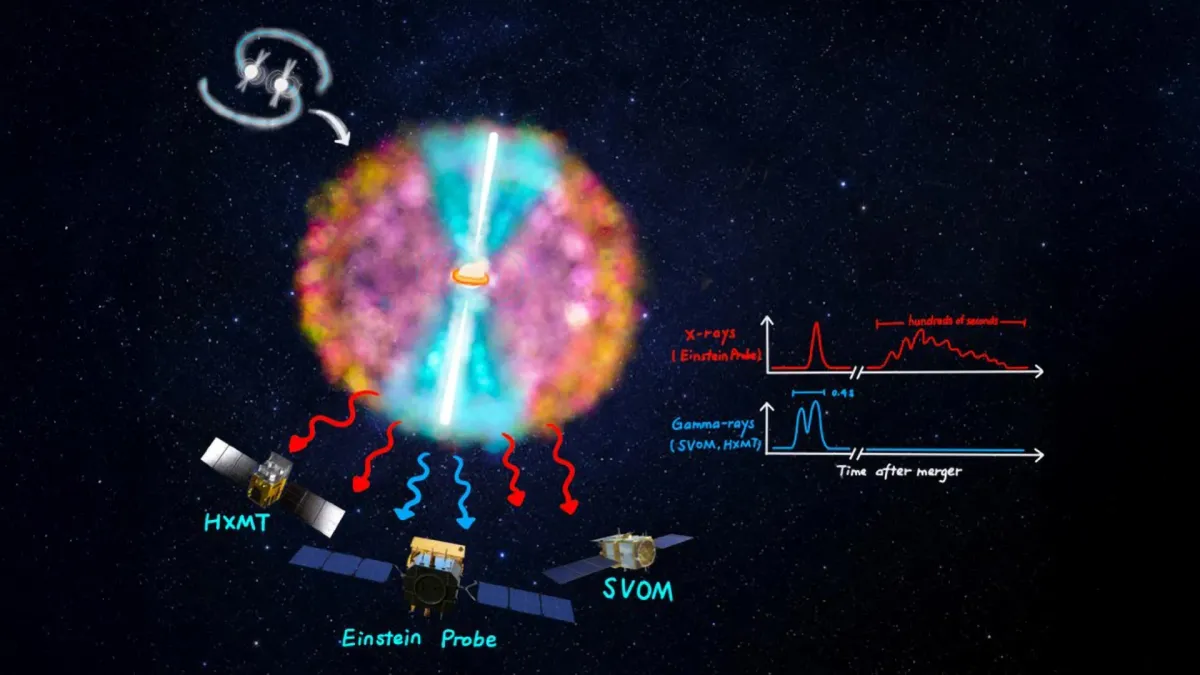
Einstein Probe reveals a hidden phase of neutron star collisions - Science Daily
Short gamma-ray bursts, or short GRBs, are believed to occur when two compact objects, such as neutron stars, spiral toward one another before colliding and merging. These extraordinarily violent events produce gravitational waves and rank among the most powerful explosions in the Universe. For decades, astronomers have mainly detected these events through their gamma-ray flashes. Their earliest soft X-ray emission has been far more difficult to observe because most narrow-field X-ray telescopes depend on gamma-ray alerts to locate a burst before turning toward it. Einstein Probe's wide-field soft X-ray monitoring has now exposed this previously unseen stage, giving astronomers a direct look at the opening moments of a short GRB.
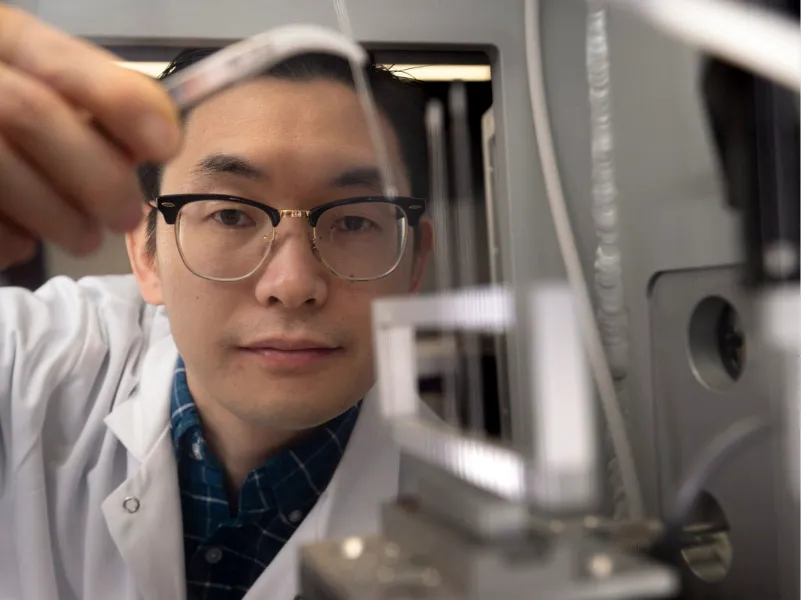
Dr. Gu Receives Prestigious National Neutron Scattering Science Prize - The University of Southern Mississippi
Dr. Xiaodan Gu, associate professor in the School of Polymer Science and Engineering at The University of Southern Mississippi, recently received the 2026 Science Prize from the Neutron Scattering Society of America, a highly selective national honor for junior faculty that recognizes significant
0 comments
No comments yet. Be the first to share your thoughts!