Einstein Probe reveals a hidden phase of neutron star collisions - Science Daily
This story deserves to be shared
Send it to someone who'd care, or post it on your networks.
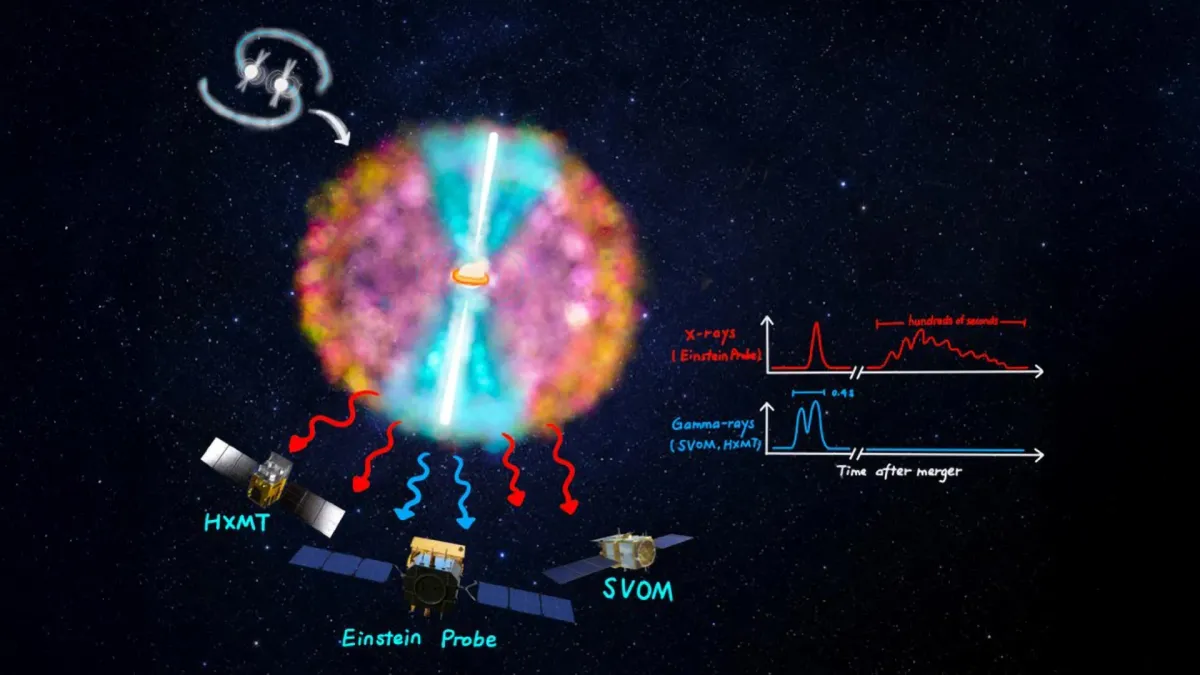
Short gamma-ray bursts, or short GRBs, are believed to occur when two compact objects, such as neutron stars, spiral toward one another before colliding and merging. These extraordinarily violent events produce gravitational waves and rank among the most powerful explosions in the Universe.
For decades, astronomers have mainly detected these events through their gamma-ray flashes. Their earliest soft X-ray emission has been far more difficult to observe because most narrow-field X-ray telescopes depend on gamma-ray alerts to locate a burst before turning toward it. Einstein Probe's wide-field soft X-ray monitoring has now exposed this previously unseen stage, giving astronomers a direct look at the opening moments of a short GRB.
This article is an excerpt. To read the full content, visit the original source. Science Daily
Related articles
Dr. Gu Receives Prestigious National Neutron Scattering Science Prize - The University of Southern Mississippi
NASA’s Webb Provides Crash Course on Planet-Shattering Collisions - NASA Science (.gov)
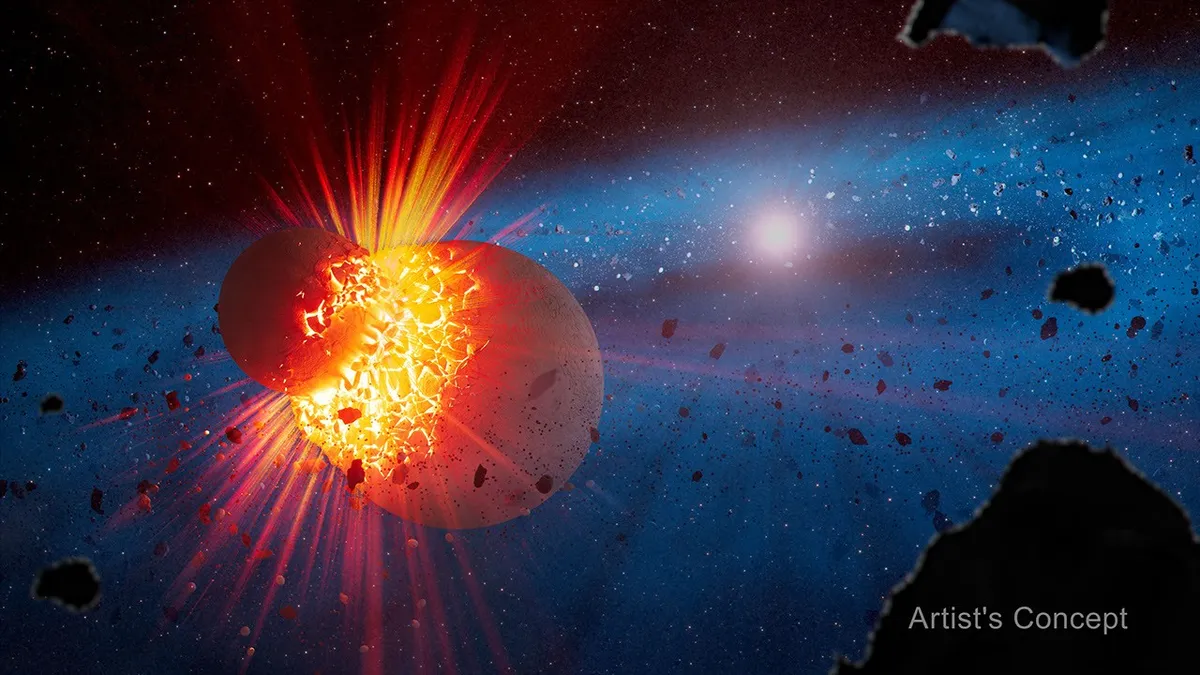
In the early history of our solar system, scientists theorize that a Mars-sized object called Theia smashed into the infant Earth, vaporizing massive amounts of rock and blasting it into space. Some of that material coalesced into the Moon, where NASA’s Artemis program is returning humans, preparing for Mars, and shaping the future of space exploration. That long-ago, violent collision reshaped our home planet. Astronomers have used NASA’s James Webb Space Telescope to examine a class of young stellar systems that show signs of similar upheavals, providing clues to the amount of energy in their collisions. The results offer insights into the composition and evolution of these chaotic systems.
University probe leads to retraction of four neural tube studies - The Transmitter
A probe by the University of Maryland, Baltimore has led to the retraction of four studies that explored the effect of maternal diabetes on neural tube formation. The university’s internal investigation identified image duplications and other data integrity issues in the studies, according to the retraction notices. The studies are among a group of 25 papers that data sleuths flagged as having potentially duplicated or manipulated images, The Transmitter reported in June 2025. Since then, sleuths have flagged a total of 44 studies on PubPeer.
0 comments
No comments yet. Be the first to share your thoughts!