Quantum-informed machine learning for predicting spatiotemporal chaos with practical quantum advantage - Science | AAAS
This story deserves to be shared
Send it to someone who'd care, or post it on your networks.
This article is an excerpt. To read the full content, visit the original source. Science | AAAS
Related articles
Multiplexed sensor arrays for high-spatiotemporal decoding of complex physiological networks - Nature
We’re sharing this article early to provide faster access to peer-reviewed, accepted research. It is citable and carries a permanent DOI. This version is subject to further edits and will be replaced automatically by the final Version of Record. All legal disclaimers apply. AbstractMultiplexed sensor arrays expand biomedical interfaces by allowing independently recoverable sensing sources to share limited transmission, addressing, readout, acquisition, and computational resources. This Review compares time-, frequency-, spatial-, optical-, code-, and hybrid-multiplexing through a requirement–resource framework. We examine how signal integrity, front-end electronics, calibration, materials, mechanics, power, and data handling constrain source-specific recovery and outline architecture-selection principles for reliable physiological sensing and bidirectional biointerfaces.
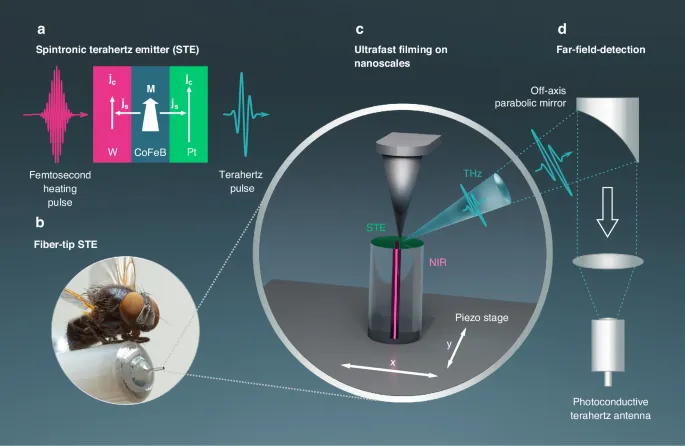
Spatiotemporal terahertz emission nanoscopy of spintronic photocurrent | Light: Science & Applications - Nature
IntroductionGaining a detailed understanding of ultrafast charge and spin currents is vital for the development of next-generation technologies, from highly efficient solar cells and optimized light-driven chemical reactions to terahertz (THz) data-processing devices1,2,3. In this context, the femtosecond (fs) time and nanometer (nm) length scales are of particular importance. These spatiotemporal scales not only match the dimensions of modern electronic and spin-orbitronic devices that are envisioned to operate at ultrafast THz rates but also coincide with the native ranges that govern the relaxation of electronic systems in terms of energy, as well as linear and angular momentum4. Despite this, experimental approaches that combine such resolutions are scarce5, often providing only indirect insights through experimentally demanding setups6,7,8. Consequently, there is an urgent need for probes capable of simultaneously capturing fs charge and spin transport at the nanoscale9. An established tool to measure ultrafast spin and charge photocurrents with fs time resolution is far-field THz-emission spectroscopy (TES)10.
Flightless Jurassic bird reveals early diversity - Asia Research News |
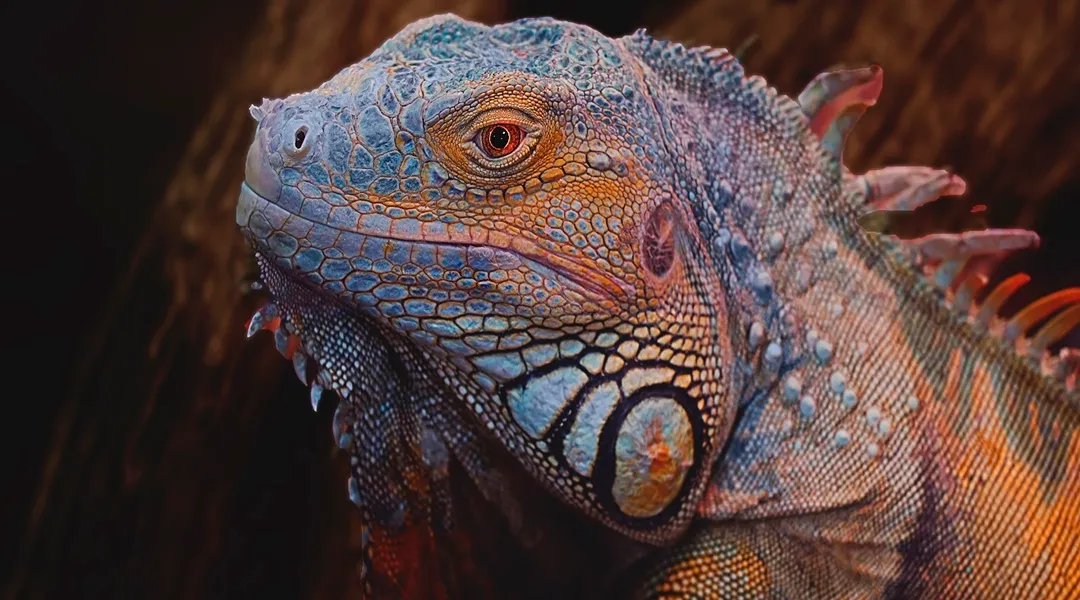
Weigeltisaurids: Earth’s first gliding vertebrates - Advanced Science News
More than 250 million years ago, weigeltisaurids became the first vertebrates to glide through the air, with a flight system unlike anything alive today. Long before birds, bats or even dinosaurs, a small reptile lineage became the first known vertebrates to glide through the air. Weigeltisaurids achieved flight using an unusual wing system built from entirely new bones anchored to the side of their abdomen, and new research shows these early fliers were capable, well-engineered gliders.
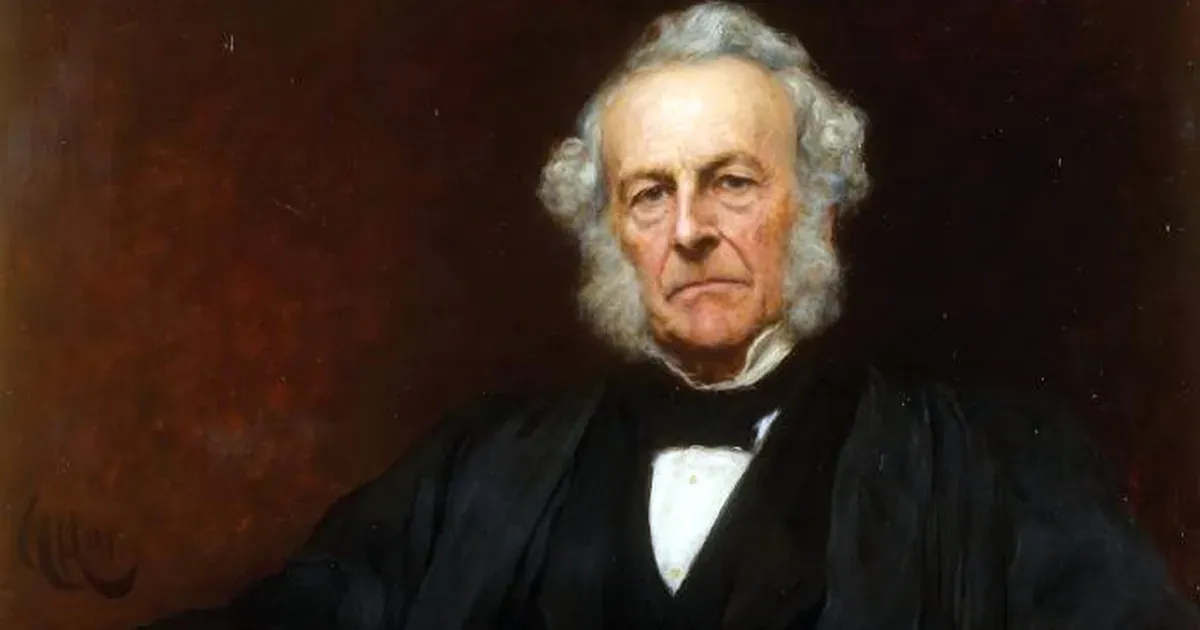
Who was George Gabriel Stokes? The Irish mathematician whose 180-year-old puzzle has AI giants at war - The Irish Times
OpenAI claims to have found proof of Sligo scientist’s equations but tech rivals are less than impressedGeorge Gabriel Stokes made profound contributions to hydrodynamics and devised and performed many ingenious experiments in optical science. Portrait: The Royal Society Aoife KearinsMon Oct 19 2026 - 06:00 • 4 MIN READA mathematical problem is making big news, with AI companies clashing over claims by one tech giant to have found the solution to the Navier-Stokes equations. Regarded as one of trickiest puzzles of mathematics, it has Irish connection. Who was George Gabriel Stokes? George Gabriel Stokes was born in Skreen, Co Sligo, in August 1819, the son of the local Protestant minister. After schooling at home, in Dublin, and in Bristol, Stokes entered the University of Cambridge in 1837 to study mathematics. He held many of the most significant roles in 19th century science, including Lucasian Professor of Mathematics – a position previously held by Isaac Newton and later held by Stephen Hawking – and Member of Parliament for Cambridge University.
0 comments
No comments yet. Be the first to share your thoughts!