Multi-spatiotemporal projection enables single-shot ultrafast compressed imaging - Nature
This story deserves to be shared
Send it to someone who'd care, or post it on your networks.
This article is an excerpt. To read the full content, visit the original source. Nature
Related articles
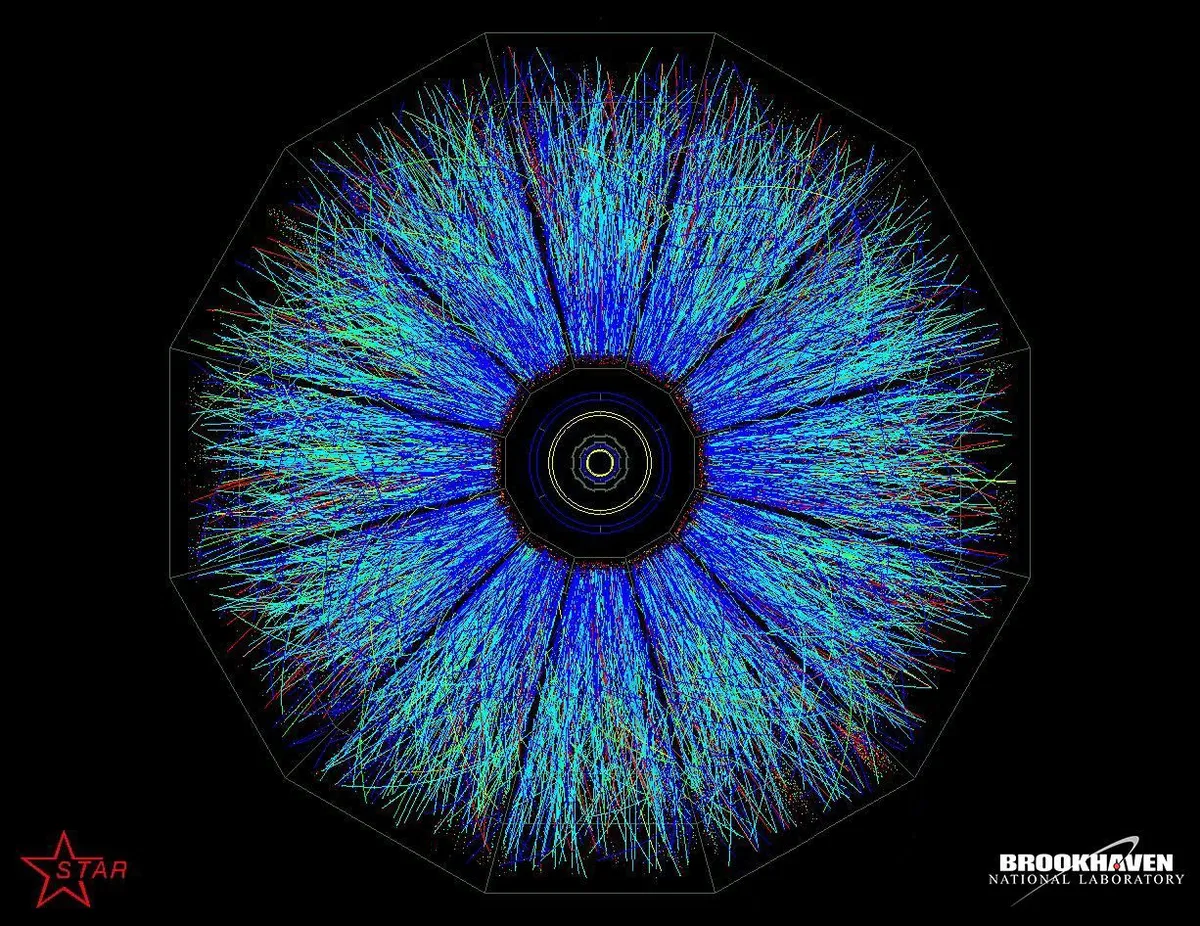
💥 An anomaly discovered in highly compressed gold - Techno-Science
Collisions between gold nuclei have revealed unexpected behavior in matter compressed to extreme densities. The experiment takes place at the RHIC collider in the United States. Gold nuclei are accelerated there and then projected at one another. For a fraction of a second, the collision creates matter far denser than that found in an ordinary atomic nucleus.
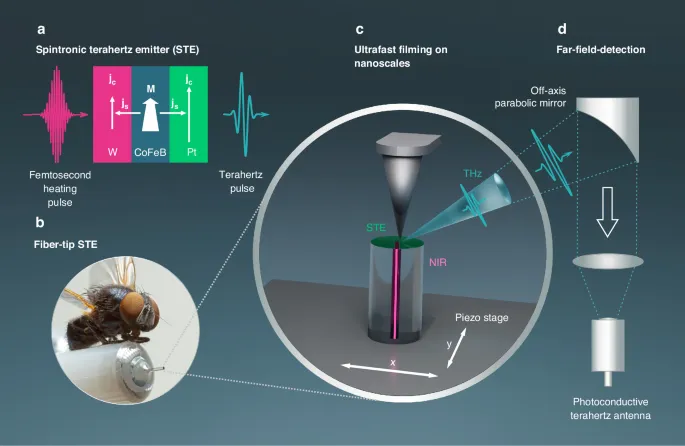
Spatiotemporal terahertz emission nanoscopy of spintronic photocurrent | Light: Science & Applications - Nature
IntroductionGaining a detailed understanding of ultrafast charge and spin currents is vital for the development of next-generation technologies, from highly efficient solar cells and optimized light-driven chemical reactions to terahertz (THz) data-processing devices1,2,3. In this context, the femtosecond (fs) time and nanometer (nm) length scales are of particular importance. These spatiotemporal scales not only match the dimensions of modern electronic and spin-orbitronic devices that are envisioned to operate at ultrafast THz rates but also coincide with the native ranges that govern the relaxation of electronic systems in terms of energy, as well as linear and angular momentum4. Despite this, experimental approaches that combine such resolutions are scarce5, often providing only indirect insights through experimentally demanding setups6,7,8. Consequently, there is an urgent need for probes capable of simultaneously capturing fs charge and spin transport at the nanoscale9. An established tool to measure ultrafast spin and charge photocurrents with fs time resolution is far-field THz-emission spectroscopy (TES)10.

'News reports tweaked the science to speak to contemporary anxieties': How Neanderthal extinction is a projection of our own, modern fears - Live Science
In this excerpt from "Neanderthals Among Us," author Peter Sahlins looks at the way Neanderthal extinction theories are often engrained with our own societal fears.

Simulations explore nuclear mitigation of asteroid threats - Phys.org
Lawrence Livermore National Laboratory researcher Isaiah Santistevan led the development of three-dimensional simulations exploring how a nuclear device could deflect or disrupt an asteroid threatening Earth. Credit: Blaise Douros/LLNL Lawrence Livermore National Laboratory (LLNL) researchers are developing three-dimensional simulations to examine how a nuclear device could be used to deflect or potentially disrupt an asteroid threatening Earth.
0 comments
No comments yet. Be the first to share your thoughts!