Multiplexed sensor arrays for high-spatiotemporal decoding of complex physiological networks - Nature
This story deserves to be shared
Send it to someone who'd care, or post it on your networks.
We’re sharing this article early to provide faster access to peer-reviewed, accepted research. It is citable and carries a permanent DOI. This version is subject to further edits and will be replaced automatically by the final Version of Record. All legal disclaimers apply.
AbstractMultiplexed sensor arrays expand biomedical interfaces by allowing independently recoverable sensing sources to share limited transmission, addressing, readout, acquisition, and computational resources. This Review compares time-, frequency-, spatial-, optical-, code-, and hybrid-multiplexing through a requirement–resource framework. We examine how signal integrity, front-end electronics, calibration, materials, mechanics, power, and data handling constrain source-specific recovery and outline architecture-selection principles for reliable physiological sensing and bidirectional biointerfaces.
This article is an excerpt. To read the full content, visit the original source. Nature
Related articles
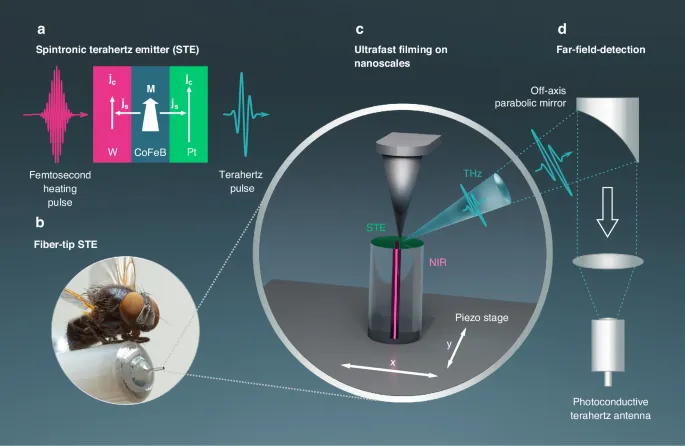
Spatiotemporal terahertz emission nanoscopy of spintronic photocurrent | Light: Science & Applications - Nature
IntroductionGaining a detailed understanding of ultrafast charge and spin currents is vital for the development of next-generation technologies, from highly efficient solar cells and optimized light-driven chemical reactions to terahertz (THz) data-processing devices1,2,3. In this context, the femtosecond (fs) time and nanometer (nm) length scales are of particular importance. These spatiotemporal scales not only match the dimensions of modern electronic and spin-orbitronic devices that are envisioned to operate at ultrafast THz rates but also coincide with the native ranges that govern the relaxation of electronic systems in terms of energy, as well as linear and angular momentum4. Despite this, experimental approaches that combine such resolutions are scarce5, often providing only indirect insights through experimentally demanding setups6,7,8. Consequently, there is an urgent need for probes capable of simultaneously capturing fs charge and spin transport at the nanoscale9. An established tool to measure ultrafast spin and charge photocurrents with fs time resolution is far-field THz-emission spectroscopy (TES)10.

Biomarkers Related to Sarcopenia and Physiological Reserve in Total Joint Arthroplasty and Other Clinical Populations - Cureus
Sarcopenia is increasingly recognized as a multidimensional syndrome reflecting impaired physiological reserve rather than isolated skeletal muscle loss. Although numerous circulating biomarkers have been associated with sarcopenia and adverse orthopaedic outcomes, their biological significance varies according to the underlying clinical context. This narrative review integrates current evidence on circulating biomarkers of sarcopenia and physiological reserve across elective total hip and knee arthroplasty, fragility hip fracture, community-dwelling older adults, and medically complex populations. The available evidence demonstrates that sarcopenic phenotypes differ substantially between these populations, with predominantly disuse-related muscle deterioration in elective arthroplasty, frailty-associated sarcopenia after hip fracture, and metabolically driven muscle loss in chronic systemic diseases. Nutritional (albumin, geriatric nutritional risk index), inflammatory (C-reactive protein (CRP), neutrophil-to-lymphocyte ratio, CRP-to-albumin ratio), metabolic (aspartate aminotransferase-to-alanine aminotransferase ratio, glucose-to-albumin ratio), endocrine (vitamin D, insulin-lik
0 comments
No comments yet. Be the first to share your thoughts!