Who was George Gabriel Stokes? The Irish mathematician whose 180-year-old puzzle has AI giants at war - The Irish Times
This story deserves to be shared
Send it to someone who'd care, or post it on your networks.
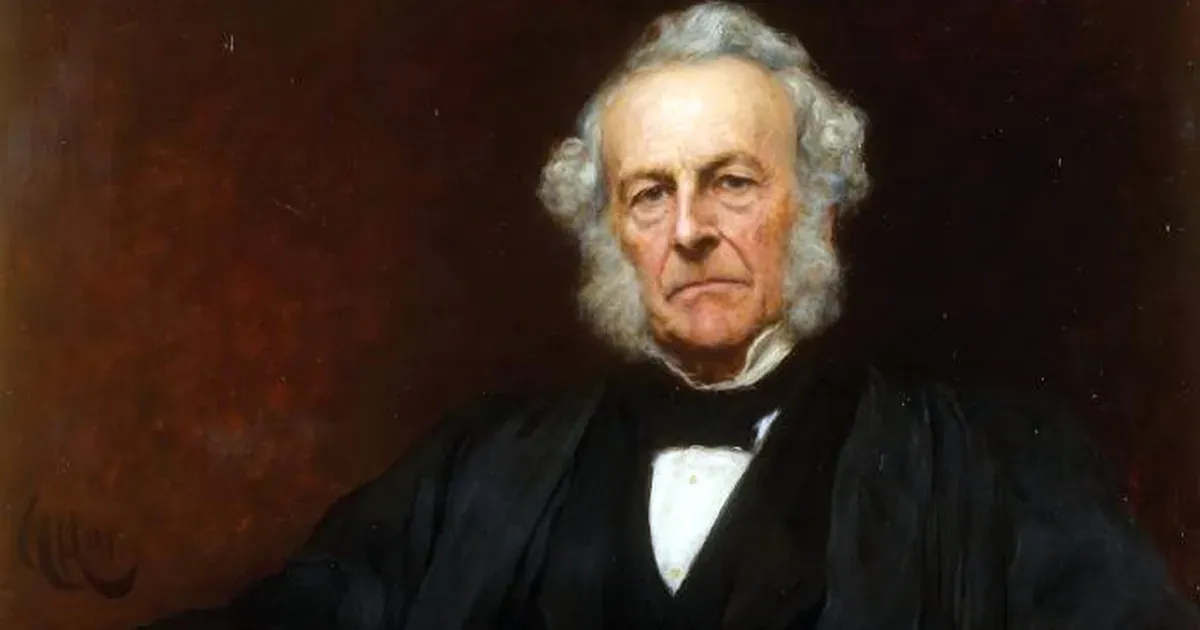
OpenAI claims to have found proof of Sligo scientist’s equations but tech rivals are less than impressedGeorge Gabriel Stokes made profound contributions to hydrodynamics and devised and performed many ingenious experiments in optical science. Portrait: The Royal Society Aoife KearinsMon Oct 19 2026 - 06:00 • 4 MIN READA mathematical problem is making big news, with AI companies clashing over claims by one tech giant to have found the solution to the Navier-Stokes equations. Regarded as one of trickiest puzzles of mathematics, it has Irish connection. Who was George Gabriel Stokes? George Gabriel Stokes was born in Skreen, Co Sligo, in August 1819, the son of the local Protestant minister. After schooling at home, in Dublin, and in Bristol, Stokes entered the University of Cambridge in 1837 to study mathematics. He held many of the most significant roles in 19th century science, including Lucasian Professor of Mathematics – a position previously held by Isaac Newton and later held by Stephen Hawking – and Member of Parliament for Cambridge University.
This article is an excerpt. To read the full content, visit the original source. The Irish Times
Related articles
A mathematical universe in a sandbox | ISTA mathematician secures computational support for AI-assisted research - EurekAlert!
image: The Project Numina Fellowship received by ISTA Professor Tamás Hausel supports scientists in accelerating their research with AI tools designed for mathematical reasoning. Artificial intelligence is reshaping mathematical research. Recent advances in AI for mathematics have drawn widespread attention from researchers and the public, prompting the renowned mathematician and Fields medalist Terence Tao to call for a “rapid rethink” of the entire research field.
'This is what happened with Claude and me': AI's failed attempt to crack the Riemann hypothesis led mathematician to a breakthrough - Live Science
An attempt by Anthropic's Claude failed to prove the Riemann hypothesis, but it did produce something genuinely useful: inspiration.
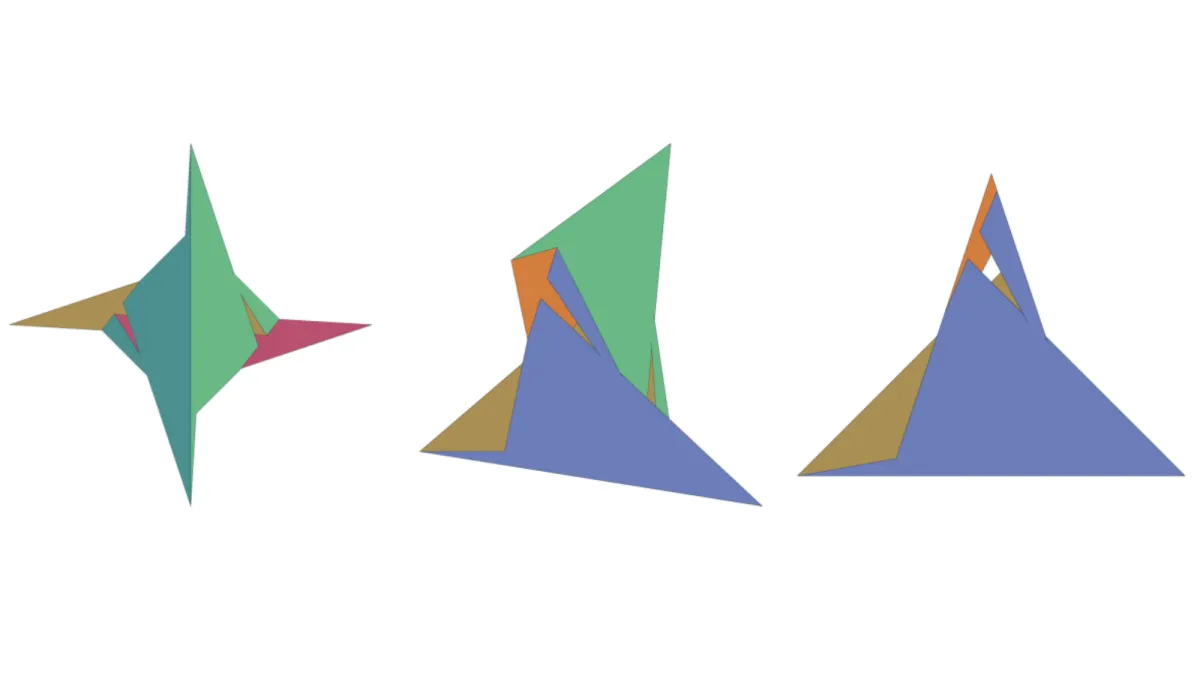
Mathematician creates new shape with 8 sides, 26 edges, and 3 holes - Popular Science
The genus-3 polyhedron is what's known as a toroidal polytope. It may be hard to believe, but mathematicians are still discovering shapes. The latest three-dimensional example is far stranger than your standard cube or pyramid. Dubbed the genus-3 polyhedron by Ruslan Mizhaev, the independent researcher’s newly identified shape features eight faces arranged so that every pair shares at least one edge. The end result is an oddity with 26 edges and 24 vertices, with 20 face pairs sharing a single edge while eight others share two faces. And as if the concept wasn’t headspinning enough, three faces meet at every vertex.
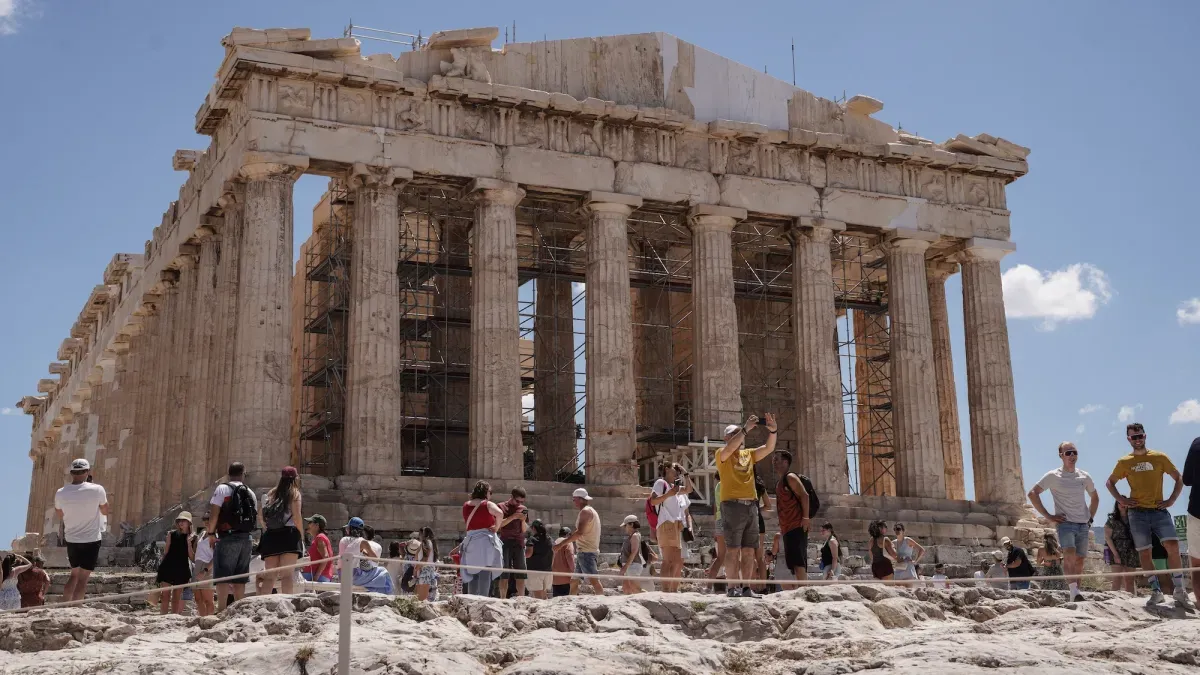
Mathematician debunks the Parthenon’s famous optical illusions - Popular Science
The Parthenon's elevated architectural status reignited during the Enlightenment. The Parthenon is undeniably one of history’s most renowned architectural feats,but one detail of its structural genius is a total hoax. For over 2,000 years, scholars and admirers have alleged that the ancient Greek building’s nearly imperceptible curves were specifically crafted to compensate for optical illusions that would otherwise ruin the structure’s clean lines.
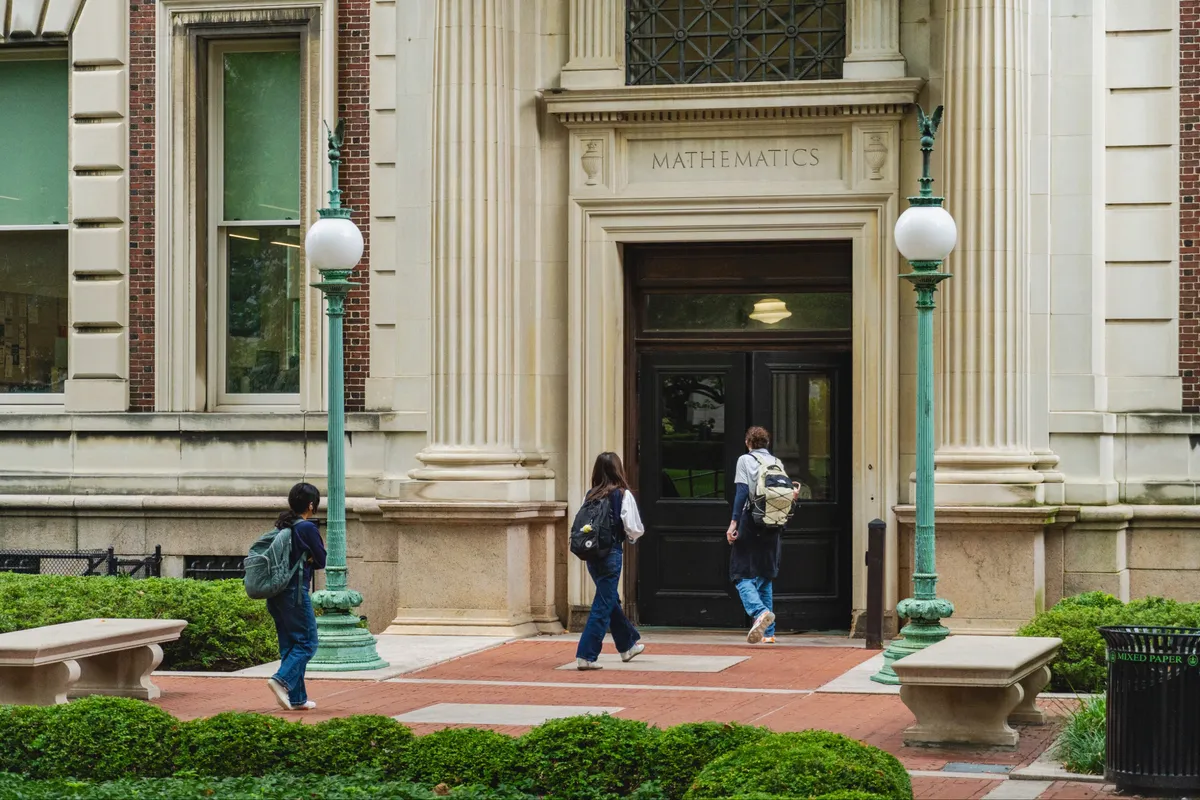
Tristan Buckmaster and faculty in math, physics, computer science discuss OpenAI’s Navier-Stokes proof at Columbia event - Columbia Daily Spectator
Tristan Buckmaster, professor of mathematics at New York University’s Courant Institute, and several mathematics, physics, and computer science professors discussed the impacts of AI on their fields at an Oct. 2 Columbia panel with over 100 students and faculty members in attendance.
0 comments
No comments yet. Be the first to share your thoughts!