Potential role of neutrophil extracellular traps in ovarian cancer-associated venous thrombosis - Nature
This story deserves to be shared
Send it to someone who'd care, or post it on your networks.
Gaku Yamamoto1,2, Mahiru Kawano1, Mina Sakata1, Michiko Bun1,3, Aasa Shimizu1, Erika Nakatsuka1, Yasuto Kinose1,2, Shuang Zhang4, Ryota Nakashima4, Kenjiro Sawada1,5 & … Michiko Kodama1
We’re sharing this article early to provide faster access to peer-reviewed, accepted research. It is citable and carries a permanent DOI. This version is subject to further edits and will be replaced automatically by the final Version of Record. All legal disclaimers apply.
This article is an excerpt. To read the full content, visit the original source. Nature
Related articles
Postpartum “Hypercoagulable Storm” With Extensive Iliocaval Thrombosis and Pulmonary Embolism in a Patient With Heterozygous Factor V Leiden - Cureus
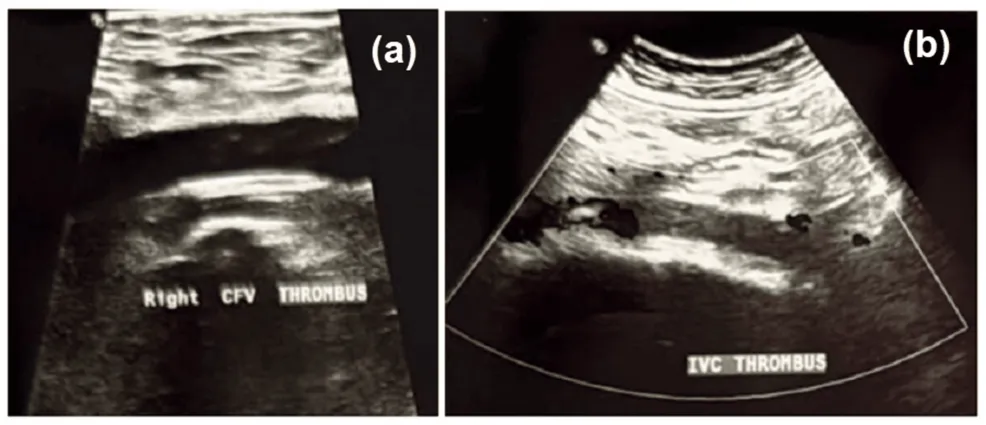
A 26-year-old woman presented to the emergency department four weeks after a lower segment cesarean section with a four-day history of progressive dyspnea, bilateral lower limb swelling, and leg pain. At presentation to the emergency department, she was tachycardic (150 beats/min), hypotensive (88/60 mmHg), and tachypneic (38/min), with an oxygen saturation of 93% on room air. Venous Doppler ultrasonography demonstrated extensive bilateral deep vein thrombosis (DVT) involving the iliac veins, right external iliac vein, infrarenal inferior vena cava (IVC), and right popliteal vein, with left popliteal involvement. Computed tomography (CT) pulmonary angiography demonstrated acute pulmonary embolism (PE) involving the right pulmonary artery and multiple segmental branches, with right lower lobe pulmonary infarction. Thrombophilia evaluation identified heterozygous Factor V Leiden, with negative antiphospholipid antibodies and lupus anticoagulant and normal protein C, protein S, and antithrombin III levels. The initial presentation raised concern for high-risk acute pulmonary embolism physiology, with hypotension (88/60 mmHg), marked tachycardia, and respiratory compromise requiring hi
Safer treatment for venous thrombosis - McGill University Health Centre
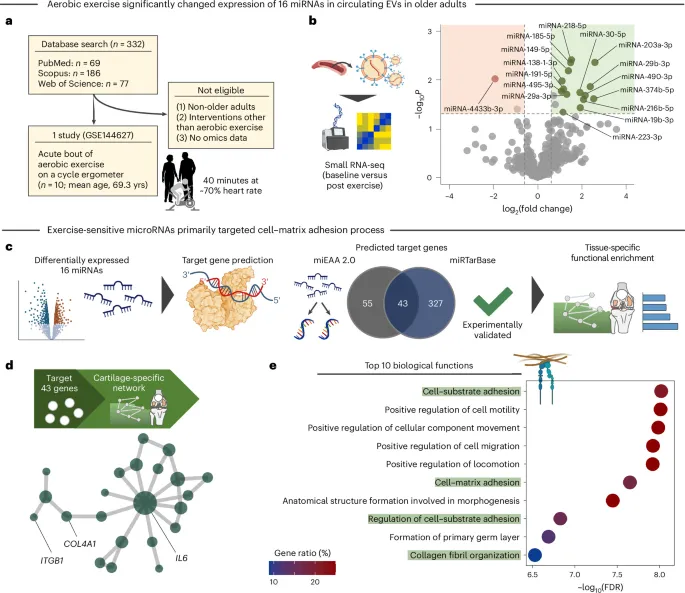
Exercise enhances aged chondrocyte health through microRNA-29-enriched extracellular vesicles - Nature
Denham, J. & Spencer, S. J. Emerging roles of extracellular vesicles in the intercellular communication for exercise-induced adaptations. Am. J. Physiol. Endocrinol. Metab. 319, E320–E329 (2020). Article Zaborowski, M. P., Balaj, L., Breakefield, X. O. & Lai, C. P. Extracellular vesicles: composition, biological relevance, and methods of study. Bioscience 65, 783–797 (2015). Article
0 comments
No comments yet. Be the first to share your thoughts!