Near-infrared-responsive thia-hexaphyrin-based covalent organic frameworks for cancer phototherapy - Nature
This story deserves to be shared
Send it to someone who'd care, or post it on your networks.
We’re sharing this article early to provide faster access to peer-reviewed, accepted research. It is citable and carries a permanent DOI. This version is subject to further edits and will be replaced automatically by the final Version of Record. All legal disclaimers apply.
AbstractCovalent organic frameworks (COF) have emerged as promising phototherapeutic platforms for tumor therapy, where the columnar π-arrayed metal-free photosensitizers serve as both a cooperative light-harvesting antenna and a semiconducting scaffold for efficient charge-carrier separation and transport. However, the phototherapeutic agents based on COFs are usually activated with ultraviolet and visible light, resulting in the limitation of deep-tissue phototherapy. Herein, we develop near-infrared-responsive COFs through elaborate design and synthesis of a thia-hexaphyrin building block, which feature well-aligned conjugation skeletons for the generation of reactive oxygen species (ROS) and photothermal effect upon 808 nm laser irradiation, outperforming conventional porphyrin-based COFs.
This article is an excerpt. To read the full content, visit the original source. Nature
Related articles
Integrating hippopotamus optimization algorithm into machine learning frameworks for predicting suspended sediment concentrations - Nature
ORCID: orcid.org/0000-0001-8061-88361, Yaser Mehri2, Ali Abdolrazaq Sabbar3, Mohammad Javad Nahvinia3 & … Mohammad Hosein Omid2 We’re sharing this article early to provide faster access to peer-reviewed, accepted research. It is citable and carries a permanent DOI. This version is subject to further edits and will be replaced automatically by the final Version of Record. All legal disclaimers apply.
Science that matters: Master’s student is developing a bacteria-responsive coating for food to protect against foodborne illness - University of Waterloo
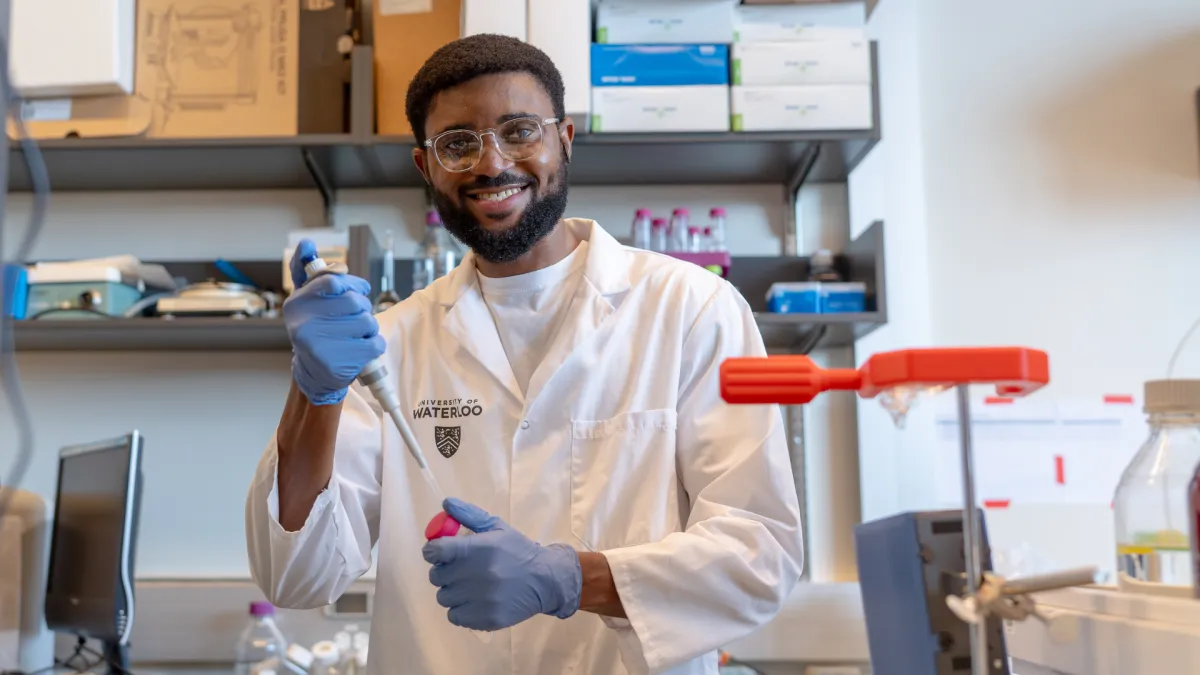
Recent Listeria outbreaks have many Canadians paying closer attention to food recalls while grocery shopping. Fresh produce, cheeses and deli meat are high-risk foods often contaminated by harmful bacteria. According to the World Health Organization, unsafe food causes 866 million illnesses and 1.5 million deaths annually, highlighting the need for innovative approaches to improve food safety. Henry Abanum, a Master of Science in Pharmacy student, aims to address this challenge by developing a bacteria-responsive coating for food contact materials that integrates toxin detection with on-demand antimicrobial delivery. Henry Abanum (he/him), Master of Science in Pharmacy student
Photometric and Spectroscopic Observations of Comet 2P/Encke's Nucleus in the Mid-Infrared Wavelength Region - Astrobiology Web
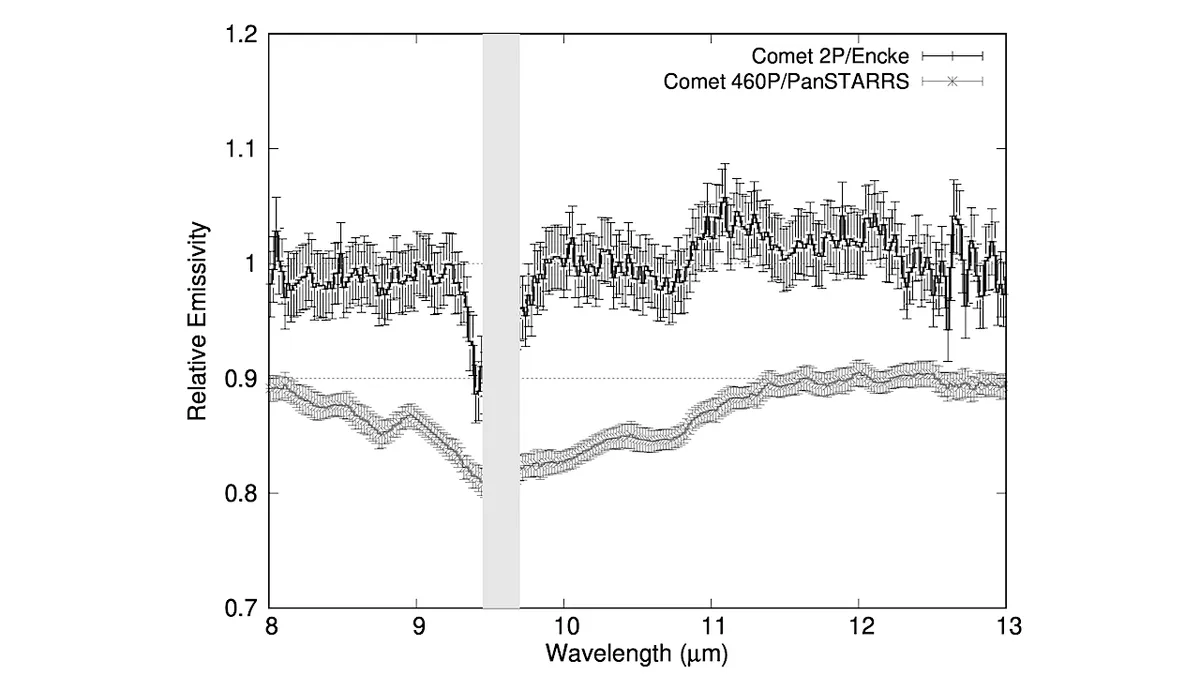
Relative emissivity spectrum of 2P/Encke’s nucleus obtained by the COMICS observations, in comparison with that of 460P/PanSTARRS (T. Ootsubo et al. 2021). The spectrum of 460P/PanSTARRS (in grey) is shifted by 0.1 for the readability. The grey hatched area is the wavelength region influenced by the telluric ozone absorption. -- [astro-ph. EP] [astro-ph. EP] We observed comet 2P/Encke with the Cooled Mid-Infrared Camera and Spectrometer (COMICS) on the Subaru telescope on UT 2003 November 12.3, when the comet was at heliocentric and geocentric distances of 1.09 and 0.27 au, respectively.

PRIMA far-infrared survey mission: French expertise serving world science - Centre national d'études spatiales (CNES)
While space-based astronomy is bringing new insights into our universe every day, there are still places that remain shrouded in mystery. Among these are the very cold objects visible in the far-infrared portion of the spectrum, like newly forming planets or the interstellar medium, but invisible to the naked eye. It is precisely to better understand how these systems evolve that NASA has selected PRIMA (PRobe far-Infrared Mission for Astrophysics). The mission’s European partners, coordinated from CNES by Olivier La Marle, Head of Universe Sciences, and Florent Canourgues, Project Lead for phase A of the French contribution and PRIMAger Project Manager, are supplying two complementary instruments, one of which is PRIMAger, an innovative cooled thermal camera.
0 comments
No comments yet. Be the first to share your thoughts!