Intracellular Formation of Synthetic Peptide Nanostructures Causes Mitochondrial Disruption and Cell Death in Tumor Spheroids - Wiley & Sons
This story deserves to be shared
Send it to someone who'd care, or post it on your networks.
This article is an excerpt. To read the full content, visit the original source. Wiley & Sons
Related articles

Single X-ray pulse reveals plasma nanostructures across scales with one camera - Phys.org
Schematic of an observational experiment using an X-ray free-electron laser to study the plasma formation dynamics of a microscale rod assembly target under a high-intensity femtosecond laser. Credit: National Institute for Fusion Science Understanding instabilities and turbulence in plasmas is one of the key challenges across a wide range of plasma research fields, including nuclear fusion, astrophysics and laser-plasma physics. In plasmas, slight disturbances can grow due to instabilities, and energy is transferred between structures of various sizes due to turbulence. These phenomena give rise to structures ranging from very small to large, which significantly influence the overall motion and energy flow of the plasma.

Newly discovered protein controls the space between mitochondrial membranes - News-Medical
Mitochondria are the tiny powerpacks that supply most of the energy our cells need. Their ability to generate this energy relies on a distinctive architecture: two membranes, one tucked inside the other, separated by a narrow gap called the intermembrane space (IMS). This tiny space helps sustain the chemistry of energy production, making its organization critical to how these cellular powerpacks function. Now, a new study led by a University of Ottawa Faculty of Medicine investigator reports a potentially transformative discovery: the volume of the IMS is genetically controlled and adjustable. By controlling where this space expands or narrows within each mitochondrion, cells can actively shape the internal architecture of their powerpacks and tune how they function.
Researchers use mitochondrial uncouplers to target breast cancer metastasis - News-Medical
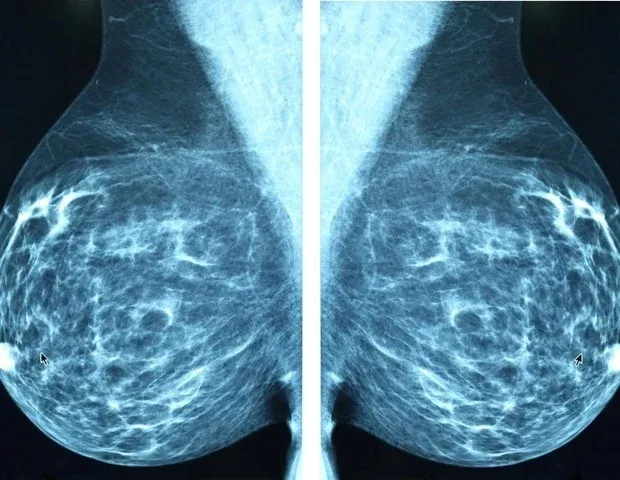
Mitochondrial serine catabolic pathway (MSCP), also called serine, glycine, and one-carbon metabolism, is essential for cancer cells to produce amino acids, one-carbon units, and reducing equivalents. The pathway is frequently upregulated in tumors: serine hydroxymethyltransferase 2 (SHMT2) and methylenetetrahydrofolate dehydrogenase 2 (MTHFD2) are among the most overexpressed metabolic enzymes in human cancers, and their activity supports cancer cell proliferation, redox balance, and metastasis. Cancer cells rely on MSCP when the electron transport chain (ETC) is impaired, yet no effective therapy selectively targets this pathway. Fat mass and obesity-associated protein (FTO), an m⁶A demethylase, can be inhibited by 2-hydroxyglutarate (2-HG). FTO expression is associated with favorable prognosis and is downregulated in breast cancer, yet there is currently no effective way to reactivate FTO in cancer. Given these challenges, there is a need for in-depth research on therapies that safely reactivate respiration and target MSCP in metastatic breast cancer. Researchers at Stanford University School of Medicine, with collaborators at The Second Hospital of Jilin University and
0 comments
No comments yet. Be the first to share your thoughts!