Single X-ray pulse reveals plasma nanostructures across scales with one camera - Phys.org
This story deserves to be shared
Send it to someone who'd care, or post it on your networks.

Schematic of an observational experiment using an X-ray free-electron laser to study the plasma formation dynamics of a microscale rod assembly target under a high-intensity femtosecond laser. Credit: National Institute for Fusion Science
Understanding instabilities and turbulence in plasmas is one of the key challenges across a wide range of plasma research fields, including nuclear fusion, astrophysics and laser-plasma physics. In plasmas, slight disturbances can grow due to instabilities, and energy is transferred between structures of various sizes due to turbulence. These phenomena give rise to structures ranging from very small to large, which significantly influence the overall motion and energy flow of the plasma.
This article is an excerpt. To read the full content, visit the original source. Phys.org
Related articles
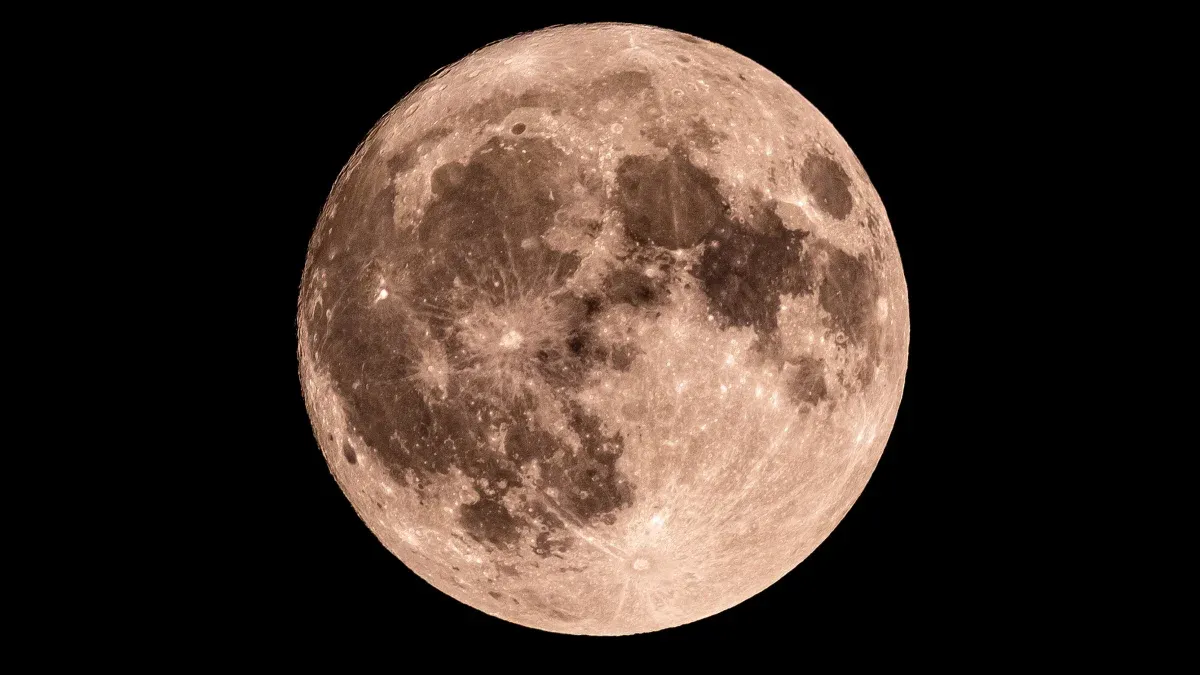
Moon phase today explained: What the Moon will look like on October 25, 2026 - Mashable
It's the Full Moon tomorrow (or tonight, depending on your timezone), which means the Moon looks big and bright in the tonight. Hoping to do some Moon gazing? Here's what you should be able to see. What is today's Moon phase? As of Sunday, Oct. 25, NASA's Daily Moon Guide tracker tells us the Moon is in the Waxing Gibbous phase, with 99% of its surface visible. Tonight, without the use of visual aids you should be able to spot the Copernicus Crater, Tycho Crater, and the Mare Crisium. If you have binoculars you'll also see the Endymion Crater, the Alphonsus Crater, and the Mare Nectaris. Finally, if you have a telescope, you'll also see the Apollo 16 and 17 landing spots, and the Schiller Crater. When is the next Full Moon? The next Full Moon will take place on October 25 or 26, depending on your timezone. What are Moon phases? The Moon takes around 29.5 days to travel around Earth, and its appearance changes throughout the month. As it moves around our planet, we see different amounts of its sunlit side, from a slim crescent to the quarter phases and eventually a Full Moon. It then begins the cycle again.

Scientists discover a hidden flaw that challenges 40 years of superconductor science - Science Daily
Scientists at the University of Warwick have uncovered a surprising secret inside a superconductor that researchers have studied for 40 years. Long believed to have a uniform crystal structure, the material actually contains a complex patchwork of different atomic arrangements. Using an advanced 3D imaging technique, the team was able to see deep inside the crystal for the first time, revealing hidden features that challenge decades of scientific assumptions. High-temperature superconductivity ranks among the most important scientific breakthroughs of the past four decades. Superconductors can carry electrical current without any resistance, eliminating the energy losses that normally occur as electricity travels through conventional materials. They also have the potential to support extraordinarily powerful magnets, making them promising for future power grids, medical scanners, and quantum computers.

Scientists May Have Discovered Why Men's Prostates Enlarge With Age - ScienceAlert
Scientists have discovered a distinct subtype of cell in the prostate, and it could help solve the mystery of why the gland enlarges with age. This natural phenomenon is called benign prostatic hyperplasia (BPH), and it tends to occur in just one region of the prostate. But scientists still don't understand why. Now, researchers at Johns Hopkins University have found a possible culprit hiding around the urethra. Using single-cell RNA sequencing, the team has identified a population of prostate cells that are particularly abundant in this region, especially in cases of BPH. The findings are published in The Journal of Pathology. "Although BPH affects millions of men worldwide, scientists still do not fully understand why it develops primarily in a region of the prostate known as the transition zone, while other regions of the gland remain relatively unaffected," explains senior author Vasan Yegnasubramanian. The transition zone is the part of the prostate that surrounds the urethra. If this area enlarges with age, it can constrict the passage, making urination slower and more sporadic.
0 comments
No comments yet. Be the first to share your thoughts!