Human organoids reveal how to reverse “irreversible” nerve damage - Science Daily
This story deserves to be shared
Send it to someone who'd care, or post it on your networks.
This article is an excerpt. To read the full content, visit the original source. Science Daily
Related articles
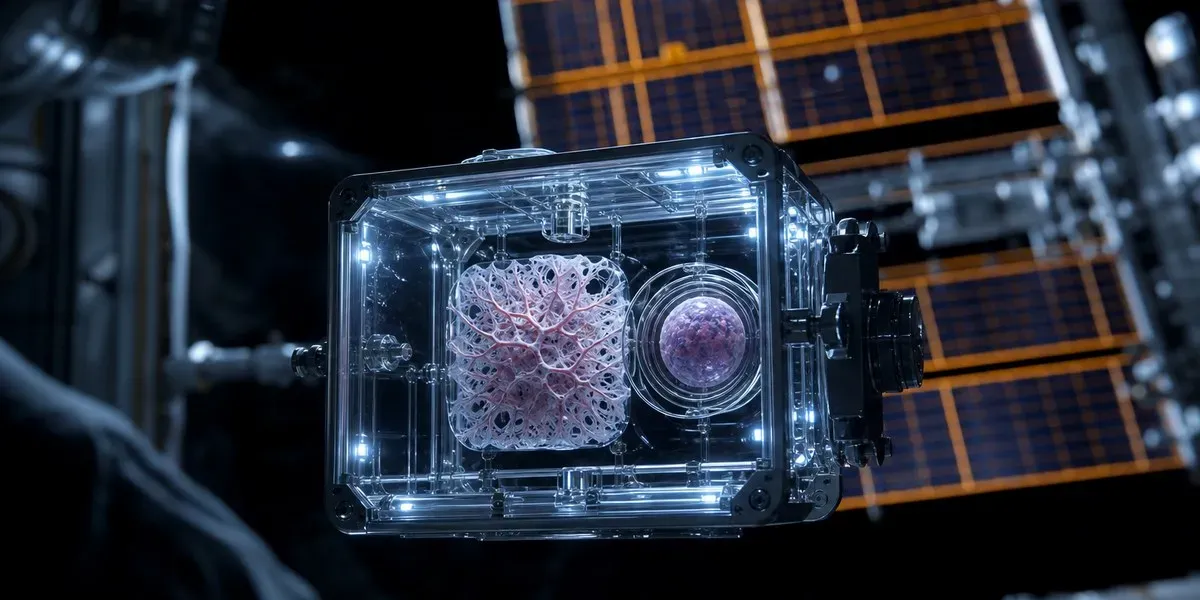
Dragon delivers organoids and equipment for artificial retinas to the ISS — ScienceDaily - UA.NEWS
SpaceX's Dragon spacecraft docked with the International Space Station on October 15 and delivered more than 6,300 pounds of food, essential supplies and scientific equipment to the crew of Expedition 75. The cargo included equipment for manufacturing artificial retinas in microgravity, brain organoids, three-dimensional models of heart tissue and materials for studying a new type of glass. As ScienceDaily reports, Dragon docked with the space-facing port of the Harmony module at 10:27 a.m. Eastern Time. This is SpaceX's 35th commercial ISS resupply mission under a NASA contract. Research for medicineThe equipment for manufacturing artificial retinas is intended to help study the possibility of creating such structures in microgravity. Scientists hope these technologies may be useful for restoring vision on Earth in the future.3D models of heart tissue that reproduce important properties of the human heart were also sent to the station. They are planned to be used to improve methods for testing large numbers of potential medicines during future space missions. More current news is available on the UA. News Telegram channel Telegram.
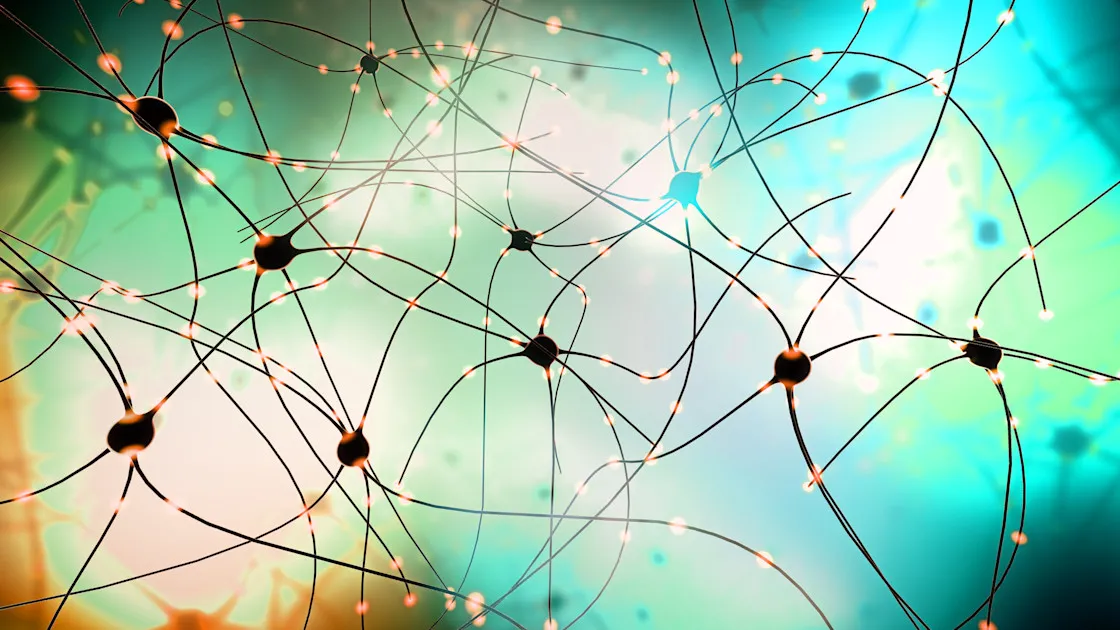
Mini brain organoids ‘reading’ Braille marks key step towards biohybrid computing - Frontiers
A 3-D illustration of transmitting synapsesA group of scientists have shown that brain organoids can pass on signals that correspond to Braille letters, an essential step towards developing the energy-efficient biohybrid computers of the future. The brain organoids, remotely connected to a sensor that recorded tactile signals from different Braille letters, produced signals that were different for each letter, allowing a decoder to distinguish between the different letters the organoids had been given. Although individual brain organoids provided accurately decodable signals 61% of the time, a team of three performed significantly better, producing an accurate signal 83% of the time. The team of three was also better at distinguishing the signals from artificial noise than the decoder working directly on the obscured signals, without the organoids’ involvement. Could computers include tiny brain organoids one day? The human brain is an incredibly energy-efficient computer, and silicon processors that try to imitate it achieve huge energy savings over traditional processors.
Rhythmic communication between cells in intestinal organoids (VIDEO) - EurekAlert!
Left: Movie showing rhythmic communication between cells in intestinal organoids, mini-guts grown in the lab. Right: Graphs showing that the amount of the chemical signal Hes1 oscillates at different rhythms in different intestinal cells. Hiromune Eto. Copyright: Hubrecht Institute.
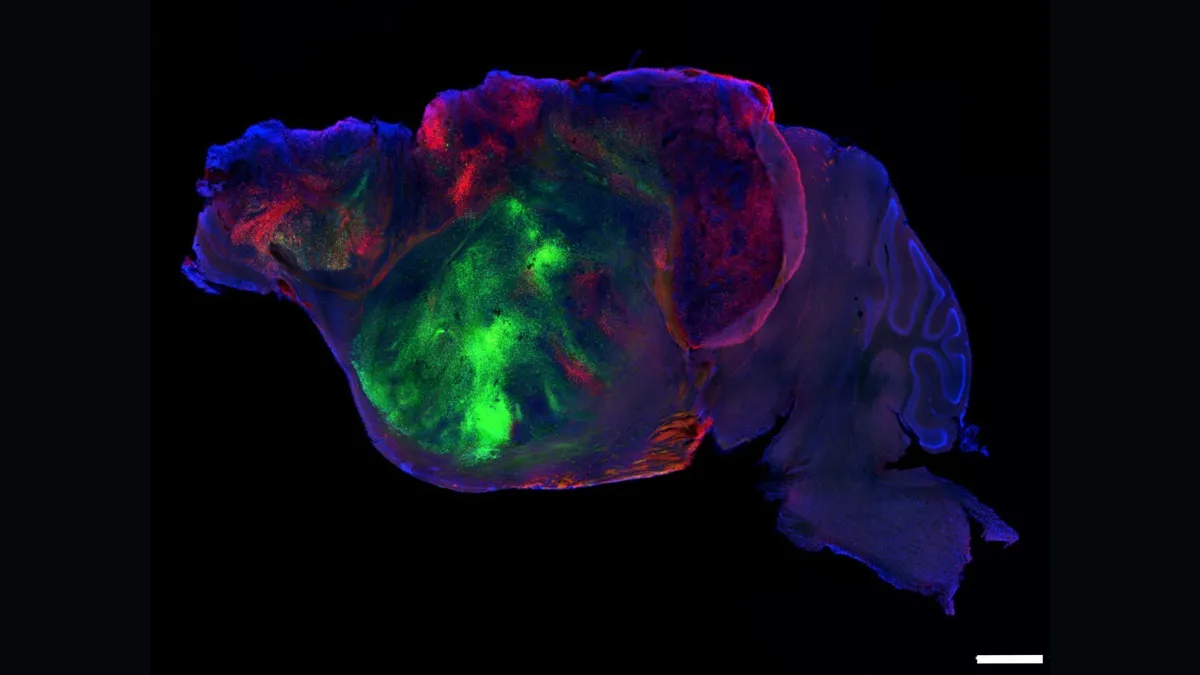
Scientists shrank mice's brains and replaced the missing tissue with human 'organoids' - Live Science
Scientists have devised a new way to incorporate human brain tissue into living mice, opening the door to new research.
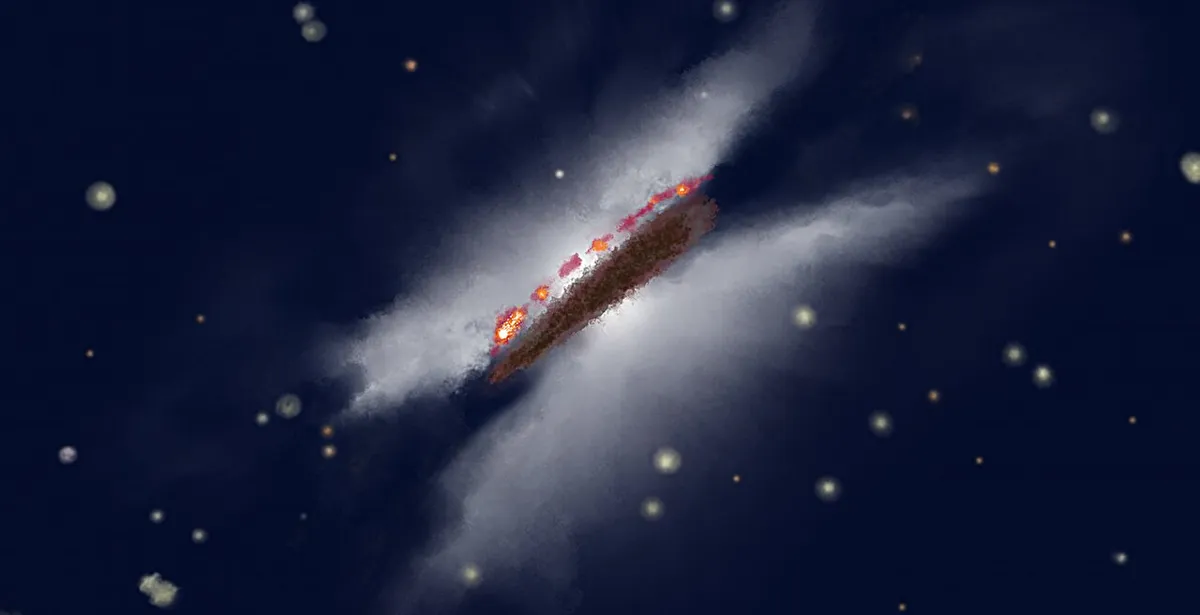
Cosmic 'hamburger' offers rare edge-on view of where giant planets may take shape - Phys.org
Gomez's Hamburger System. This artist's impression of the Gomez's Hamburger system shows the stacked layers of gas and dust as they rotate around a young star. ALMA observations reveal a direct view of its vertical structure at millimeter wavelengths, allowing astronomers to map the location of the millimeter-sized dust grains and several different gas-phase molecules, which have arranged themselves into distinct levels. Credit: NSF/AUI/NSF NRAO/P. Vosteen. Astronomers using the Atacama Large Millimeter/submillimeter Array (ALMA) were surprised to discover the earliest phases of giant planet formation between the dense layers of gas and dust in the "Gomez's Hamburger" system, referred to as GoHam.
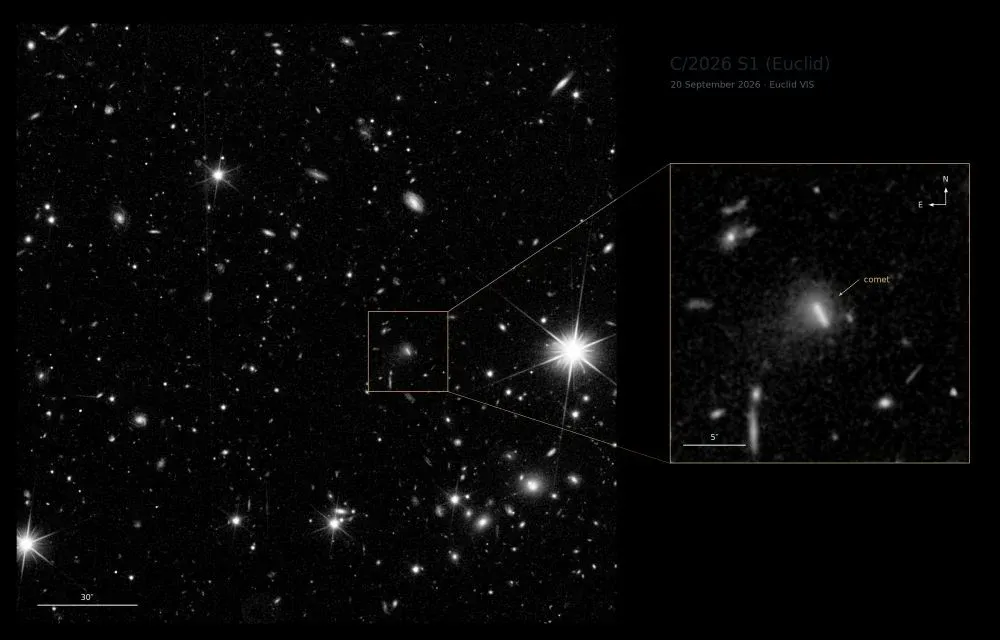
The ESA's Euclid Space Telescope Has Discovered A New Comet - Universe Today
The ESA's Euclid Space Telescope has discovered its first comet, a result that's not part of its primary mission. The telescope was launched at the beginning of July, 2023, and its mission is to observe about 1.5 billion galaxies out to redshift z=2, which corresponds to seeing around 10 billion years into the past. The goal is to measure the redshift of a massive amount of galaxies, to shed light on the expansion history of the Universe and the force that drives it, dark energy. The space telescope has observed other comets, but this is the first time it's discovered one. The comet was found in multiple images captured between September 16th and 24th, 2026. For a telescope built to take deep images of distant galaxies, discovering a rapidly moving comet in the Milky Way is a surprising bonus.
0 comments
No comments yet. Be the first to share your thoughts!