Scientists shrank mice's brains and replaced the missing tissue with human 'organoids' - Live Science
This story deserves to be shared
Send it to someone who'd care, or post it on your networks.
This article is an excerpt. To read the full content, visit the original source. Live Science
Related articles
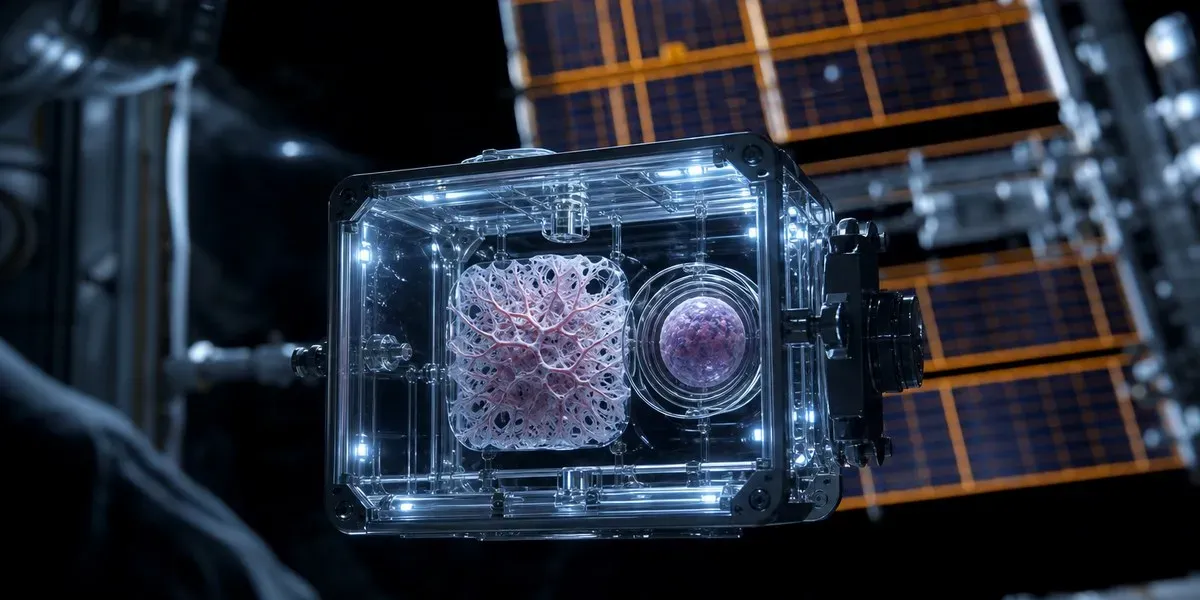
Dragon delivers organoids and equipment for artificial retinas to the ISS — ScienceDaily - UA.NEWS
SpaceX's Dragon spacecraft docked with the International Space Station on October 15 and delivered more than 6,300 pounds of food, essential supplies and scientific equipment to the crew of Expedition 75. The cargo included equipment for manufacturing artificial retinas in microgravity, brain organoids, three-dimensional models of heart tissue and materials for studying a new type of glass. As ScienceDaily reports, Dragon docked with the space-facing port of the Harmony module at 10:27 a.m. Eastern Time. This is SpaceX's 35th commercial ISS resupply mission under a NASA contract. Research for medicineThe equipment for manufacturing artificial retinas is intended to help study the possibility of creating such structures in microgravity. Scientists hope these technologies may be useful for restoring vision on Earth in the future.3D models of heart tissue that reproduce important properties of the human heart were also sent to the station. They are planned to be used to improve methods for testing large numbers of potential medicines during future space missions. More current news is available on the UA. News Telegram channel Telegram.
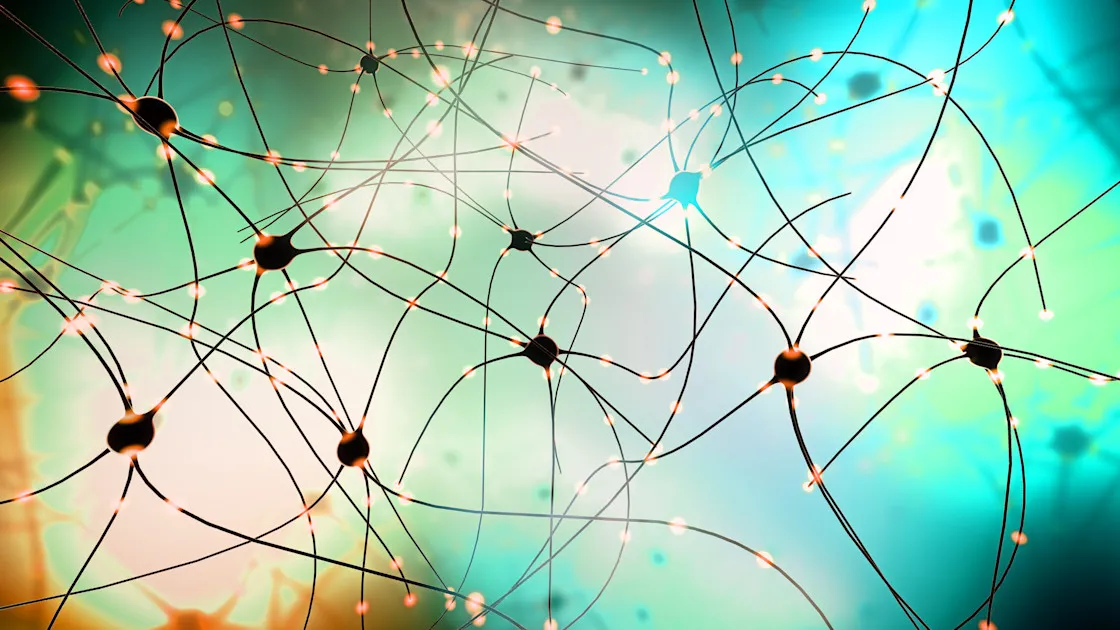
Mini brain organoids ‘reading’ Braille marks key step towards biohybrid computing - Frontiers
A 3-D illustration of transmitting synapsesA group of scientists have shown that brain organoids can pass on signals that correspond to Braille letters, an essential step towards developing the energy-efficient biohybrid computers of the future. The brain organoids, remotely connected to a sensor that recorded tactile signals from different Braille letters, produced signals that were different for each letter, allowing a decoder to distinguish between the different letters the organoids had been given. Although individual brain organoids provided accurately decodable signals 61% of the time, a team of three performed significantly better, producing an accurate signal 83% of the time. The team of three was also better at distinguishing the signals from artificial noise than the decoder working directly on the obscured signals, without the organoids’ involvement. Could computers include tiny brain organoids one day? The human brain is an incredibly energy-efficient computer, and silicon processors that try to imitate it achieve huge energy savings over traditional processors.
Rhythmic communication between cells in intestinal organoids (VIDEO) - EurekAlert!
Left: Movie showing rhythmic communication between cells in intestinal organoids, mini-guts grown in the lab. Right: Graphs showing that the amount of the chemical signal Hes1 oscillates at different rhythms in different intestinal cells. Hiromune Eto. Copyright: Hubrecht Institute.
Japan to launch historic round-trip mission to Mars moon - Yahoo News Singapore

SpaceX Sent 6,300 Pounds to the Space Station. The Strangest Cargo Was Grown in a Lab - Inc.com
The spacecraft delivered materials and equipment for new research studies to the station.
Integrating hippopotamus optimization algorithm into machine learning frameworks for predicting suspended sediment concentrations - Nature
ORCID: orcid.org/0000-0001-8061-88361, Yaser Mehri2, Ali Abdolrazaq Sabbar3, Mohammad Javad Nahvinia3 & … Mohammad Hosein Omid2 We’re sharing this article early to provide faster access to peer-reviewed, accepted research. It is citable and carries a permanent DOI. This version is subject to further edits and will be replaced automatically by the final Version of Record. All legal disclaimers apply.
0 comments
No comments yet. Be the first to share your thoughts!