Dragon delivers organoids and equipment for artificial retinas to the ISS — ScienceDaily - UA.NEWS
This story deserves to be shared
Send it to someone who'd care, or post it on your networks.
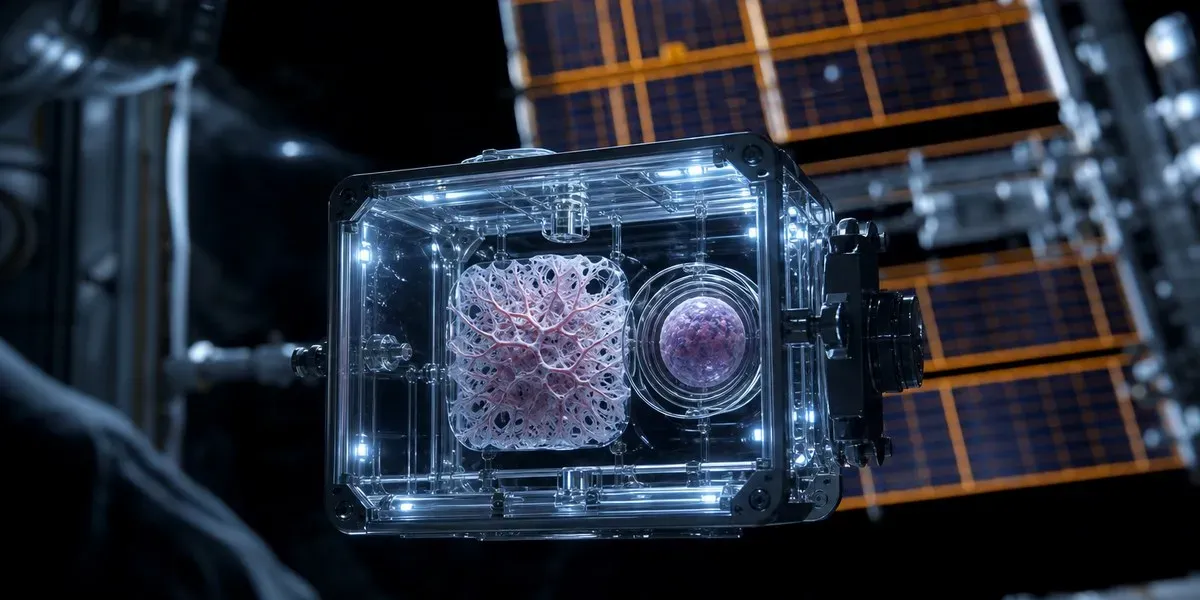
SpaceX's Dragon spacecraft docked with the International Space Station on October 15 and delivered more than 6,300 pounds of food, essential supplies and scientific equipment to the crew of Expedition 75. The cargo included equipment for manufacturing artificial retinas in microgravity, brain organoids, three-dimensional models of heart tissue and materials for studying a new type of glass. As ScienceDaily reports, Dragon docked with the space-facing port of the Harmony module at 10:27 a.m. Eastern Time. This is SpaceX's 35th commercial ISS resupply mission under a NASA contract. Research for medicineThe equipment for manufacturing artificial retinas is intended to help study the possibility of creating such structures in microgravity. Scientists hope these technologies may be useful for restoring vision on Earth in the future.3D models of heart tissue that reproduce important properties of the human heart were also sent to the station. They are planned to be used to improve methods for testing large numbers of potential medicines during future space missions. More current news is available on the UA. News Telegram channel Telegram.
This article is an excerpt. To read the full content, visit the original source. UA.NEWS
Related articles

Astronomers identify 2% threshold for delayed black hole jets — ScienceDaily - UA.NEWS
Astronomers have found that supermassive black holes can launch delayed jets of matter when their rate of matter accretion falls to about 2% of the Eddington limit. The same relative threshold was previously associated with jet formation in much smaller black holes in the Milky Way, ScienceDaily reports. The study’s results were published in Nature Astronomy. The work was led by astrophysicist Adele Goodwin of the Curtin University node of the International Centre for Radio Astronomy Research, together with Andrew Mummery of the Institute for Advanced Study in Princeton. The scientists studied why, after a star is destroyed by a supermassive black hole, a radio jet sometimes appears almost immediately and sometimes only months or years later. Data on stellar disruptionsThe researchers analyzed 20 tidal disruption events — phenomena in which a star passes too close to a supermassive black hole and is torn apart by its gravity. Part of the stellar debris falls into the black hole, temporarily increasing its feeding rate. More current news is available on the UA. News Telegram channel Telegram.

Mini brain organoids ‘reading’ Braille marks key step towards biohybrid computing - Frontiers
A 3-D illustration of transmitting synapsesA group of scientists have shown that brain organoids can pass on signals that correspond to Braille letters, an essential step towards developing the energy-efficient biohybrid computers of the future. The brain organoids, remotely connected to a sensor that recorded tactile signals from different Braille letters, produced signals that were different for each letter, allowing a decoder to distinguish between the different letters the organoids had been given. Although individual brain organoids provided accurately decodable signals 61% of the time, a team of three performed significantly better, producing an accurate signal 83% of the time. The team of three was also better at distinguishing the signals from artificial noise than the decoder working directly on the obscured signals, without the organoids’ involvement. Could computers include tiny brain organoids one day? The human brain is an incredibly energy-efficient computer, and silicon processors that try to imitate it achieve huge energy savings over traditional processors.
Rhythmic communication between cells in intestinal organoids (VIDEO) - EurekAlert!
Left: Movie showing rhythmic communication between cells in intestinal organoids, mini-guts grown in the lab. Right: Graphs showing that the amount of the chemical signal Hes1 oscillates at different rhythms in different intestinal cells. Hiromune Eto. Copyright: Hubrecht Institute.
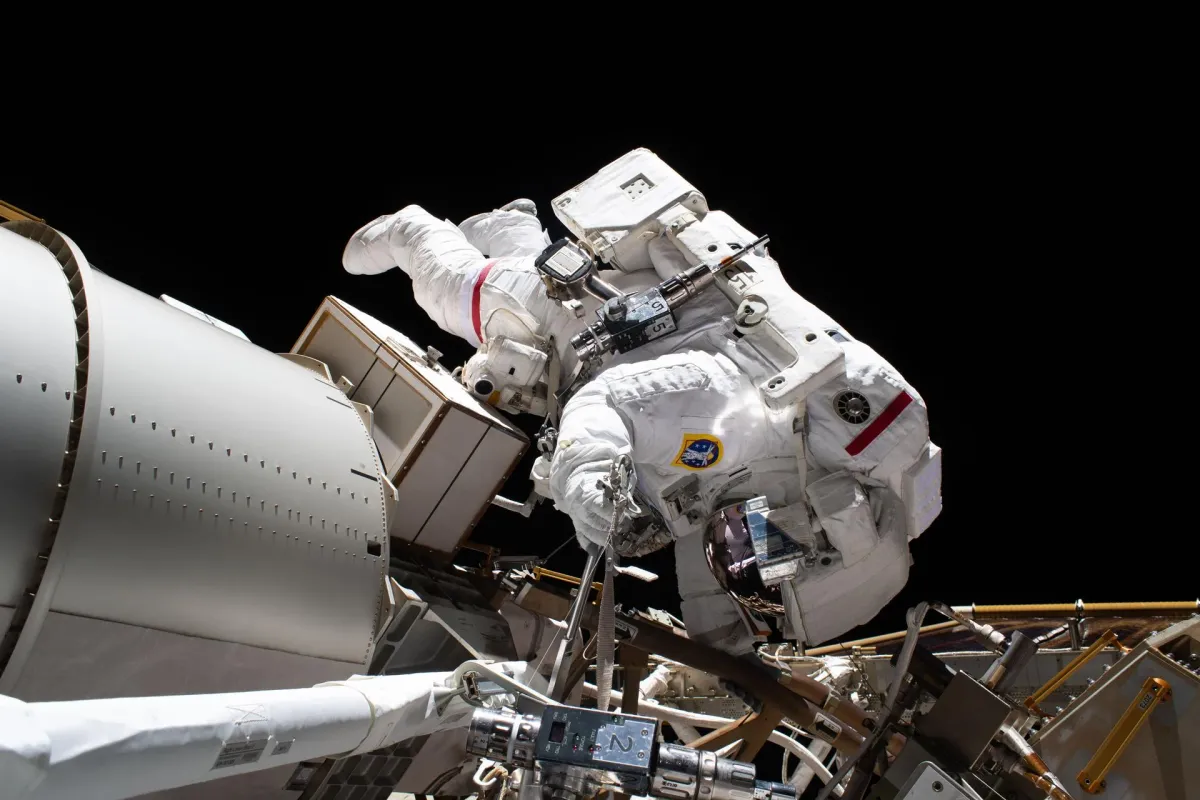
NASA’s ISS Crew-12 Reflects On Their Lengthy ISS Mission - Aviation Week
HOUSTON—As the International Space Station (ISS) prepares to mark 26 years of continuous occupancy by astronauts and cosmonauts on Nov. 2, its latest returnees offered perspective about life onboard the orbital lab. The facility is counting down to a planned safe deorbit by the end of 2030 after... Mark CarreauMark is based in Houston, where he has written on aerospace for more than 25 years. While at the Houston Chronicle, he was recognized by the Rotary National Award for Space Achievement Foundation in 2006 for his professional contributions to the public understanding of America's space program through news reporting.
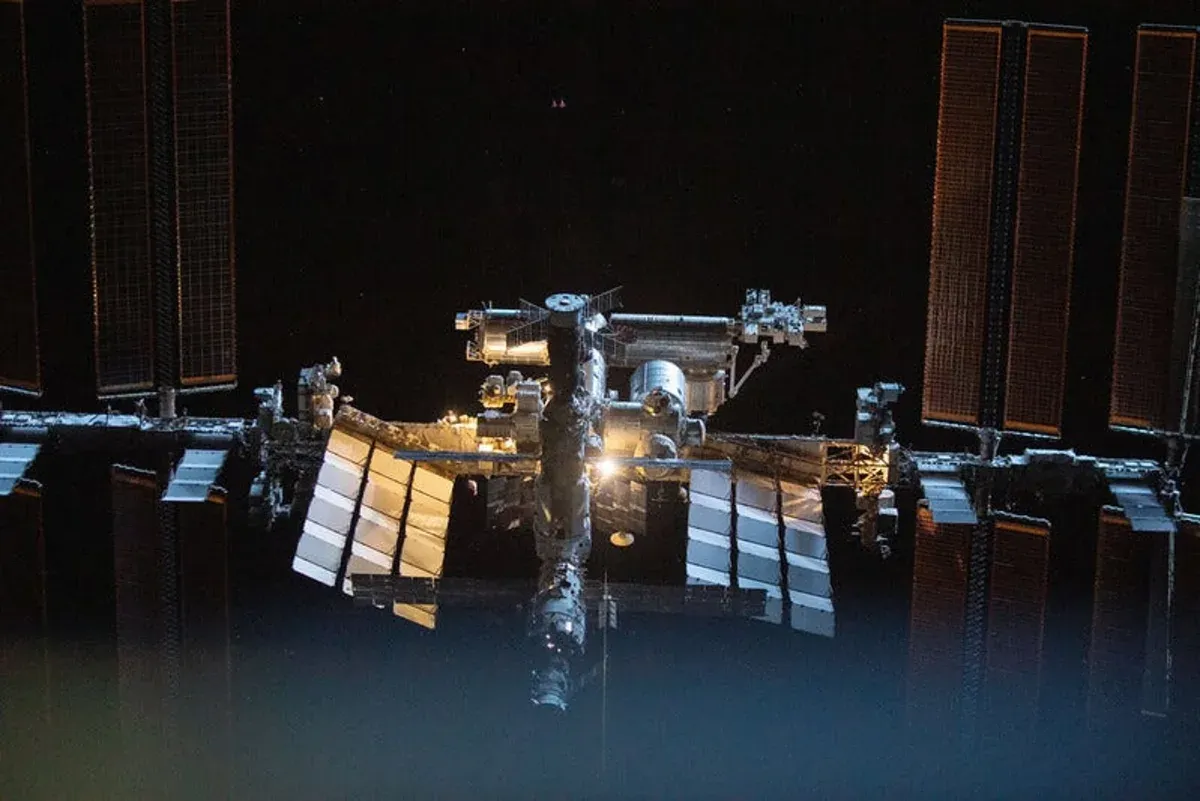
NASA seeks private space stations to replace the aging ISS by 2030 - Yahoo News Canada
The International Space Station may be an iconic feature in Earth's orbit, but it's also getting old. For years, plans have been underway to retire and deorbit the aging space station, which has increasingly been marred by air leaks and other issues. That means by the end of 2030, the ISS – where the world's astronauts have lived, worked and gazed upon the cosmos for more than two decades – could be no more. But that hardly means NASA is abandoning its legacy of ensuring humans have a home to live and work long-term in space. Even now, the U. S. space agency is laying the groundwork to ensure that government astronauts will have access to any number of private commercial space stations that could park themselves in low-Earth orbit in the years ahead. And recently, NASA announced it is seeking proposals from aerospace companies interested in partnering with the agency to host government astronauts on its future stations. "NASA is committed to maintaining a sustained American presence in low-Earth orbit long after the International Space Station retires," NASA Administrator Jared Isaacman said in a statement.
0 comments
No comments yet. Be the first to share your thoughts!