FIGNL1 inhibits homologous recombination in BRCA2 deficient cells by dissociating RAD51 filaments - Science | AAAS
This story deserves to be shared
Send it to someone who'd care, or post it on your networks.
This article is an excerpt. To read the full content, visit the original source. Science | AAAS
Related articles
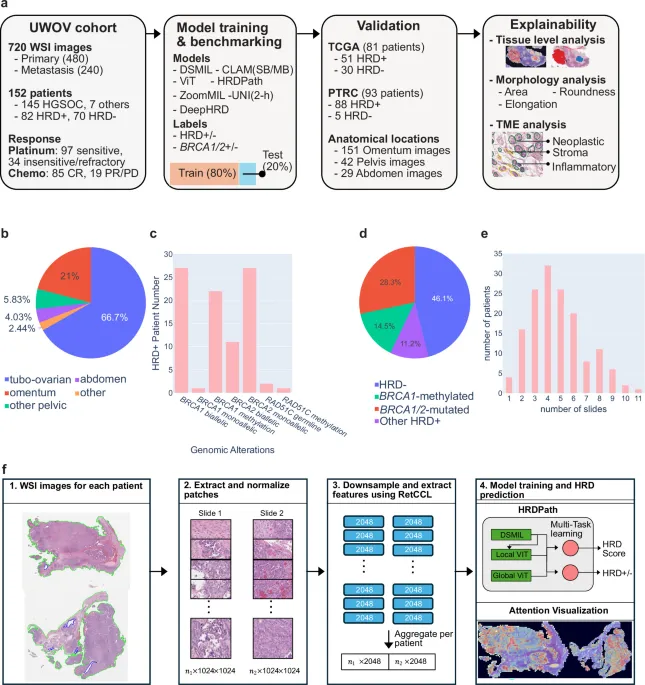
HRDPath: an explainable multi-model deep learning architecture for predicting homologous recombination deficiency from histopathology images - Nature
IntroductionHigh-grade serous tubo-ovarian carcinoma (HGSOC) is a highly aggressive malignancy with a paucity of available biomarkers for therapeutic intervention. HGSOC exhibiting homologous recombination deficiency (HRD) demonstrates marked sensitivity to targeted treatments such as platinum-based chemotherapy and Poly ADP-Ribose polymerase (PARP) inhibitors1,2,3. Specifically, PARP inhibitors demonstrate synthetic lethality in HRD-positive cancers by inhibiting the repair of damaged DNA, significantly extending progression-free survival and improving long-term outcomes in patients with HRD-positive ovarian cancer4,5,6. Given the significant relationship between HRD status and patient treatment outcomes, the identification of HRD is crucial for precision therapy. Existing HRD tests analyze both mutations in DNA repair genes, such as BRCA1/2, and genomic instability.

Asteroid Impact Unleashed 330-Foot North Sea Tsunami - Mirage News
A massive asteroid slammed into the North Sea roughly 43 to 46 million years ago, triggering a tsunami more than 100 meters (330 feet) high. Now, after more than two decades of scientific disagreement, researchers have uncovered compelling evidence confirming the ancient collision. The impact created what is now known as the Silverpit Crater, a massive structure buried deep beneath the seafloor. Although scientists first discovered it in 2002, its origins remained fiercely debated, with some researchers arguing that geological processes, rather than an object from space, were responsible. A research team led by Dr. Uisdean Nicholson of Heriot-Watt University in Edinburgh has now provided the strongest evidence yet that Silverpit was formed by an asteroid or comet. By combining advanced seismic imaging, microscopic examination of rock samples, and computer simulations, the scientists have reconstructed the violent event and identified minerals that could only have formed under extraordinary pressure. The findings, published in Nature Communications, establish Silverpit as one of the relatively few confirmed impact craters on Earth.
Astronomers uncover the engine behind the most powerful stellar flares in the Kepler field - Phys.org
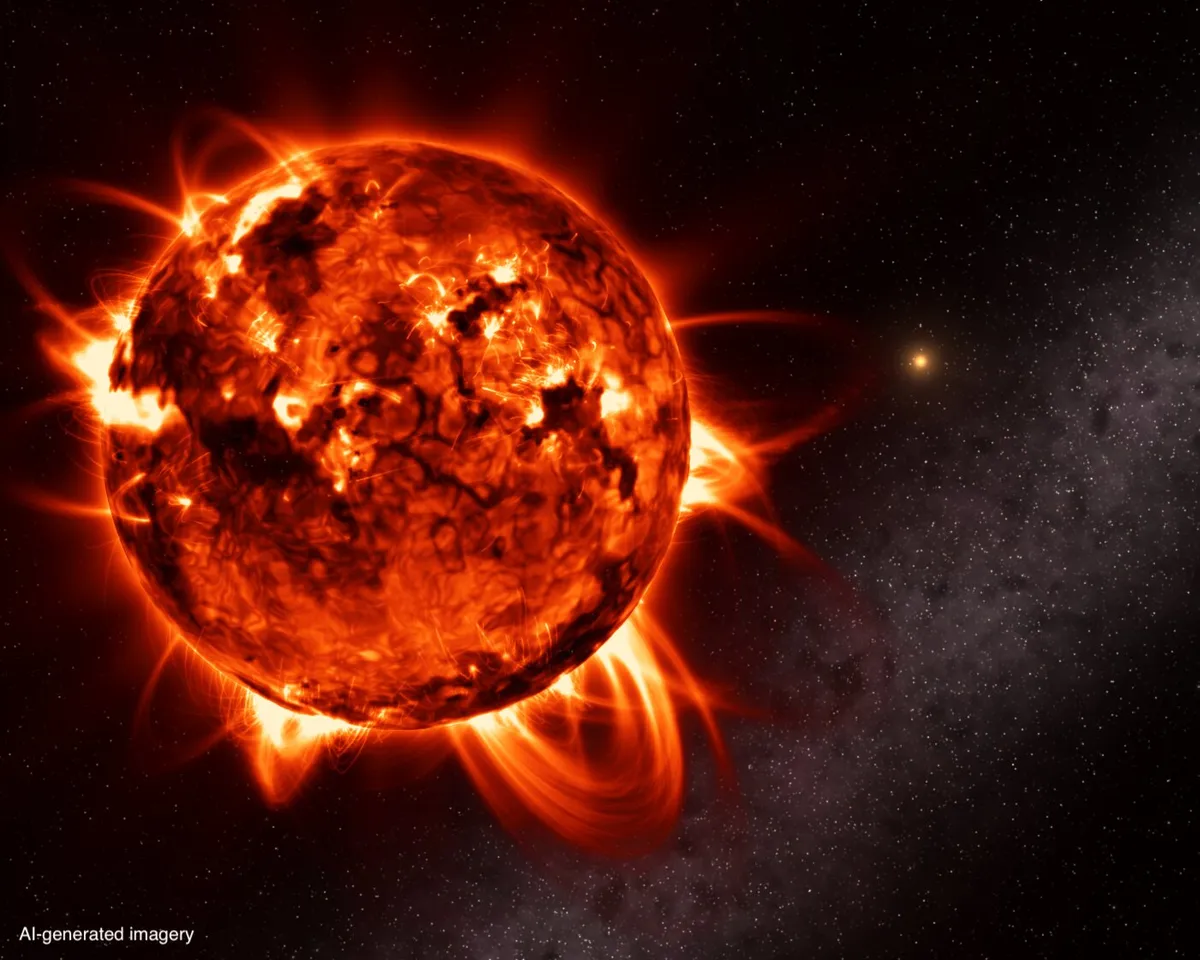
Artistic impression of the red giant KIC 2852961 and its intense coronal loops above the surface, with the dwarf star companion behind it. Credit: Zsolt Kővári A new study led by researchers at the Konkoly Observatory of the HUN-REN Research Centre for Astronomy and Earth Sciences (HUN-REN CSFK) in Budapest has revealed what makes a distant red giant star the most explosively active in the entire Kepler field—and the answer lies in a surprisingly subtle interplay between a close stellar companion, vast dark starspots and a highly efficient internal magnetic dynamo.
InSight into Seismology on the Red Planet - Eos
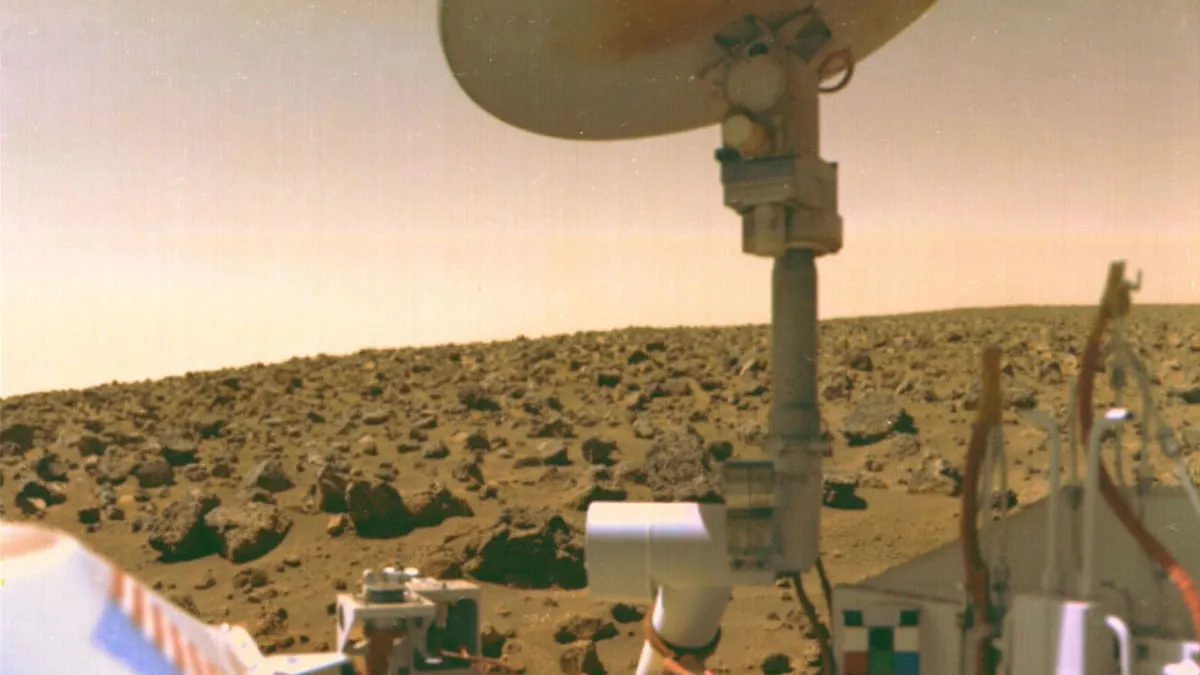
The Viking 2 lander taking a self-portrait on the surface of Mars. Credit: NASA/JPL-Caltech Earthquakes and the seismic waves they generate provide some of the best clues to Earth’s interior. To extend that success to other worlds, scientists placed seismometers on the Apollo missions to the Moon and on the Viking Mars landers, which reached Mars in 1976. Though the Apollo detectors proved a resounding success, Viking’s results on Mars were less clear: Viking 1’s seismometer failed to deploy properly, and Viking 2 recorded only two ambiguous events.
0 comments
No comments yet. Be the first to share your thoughts!