InSight into Seismology on the Red Planet - Eos
This story deserves to be shared
Send it to someone who'd care, or post it on your networks.
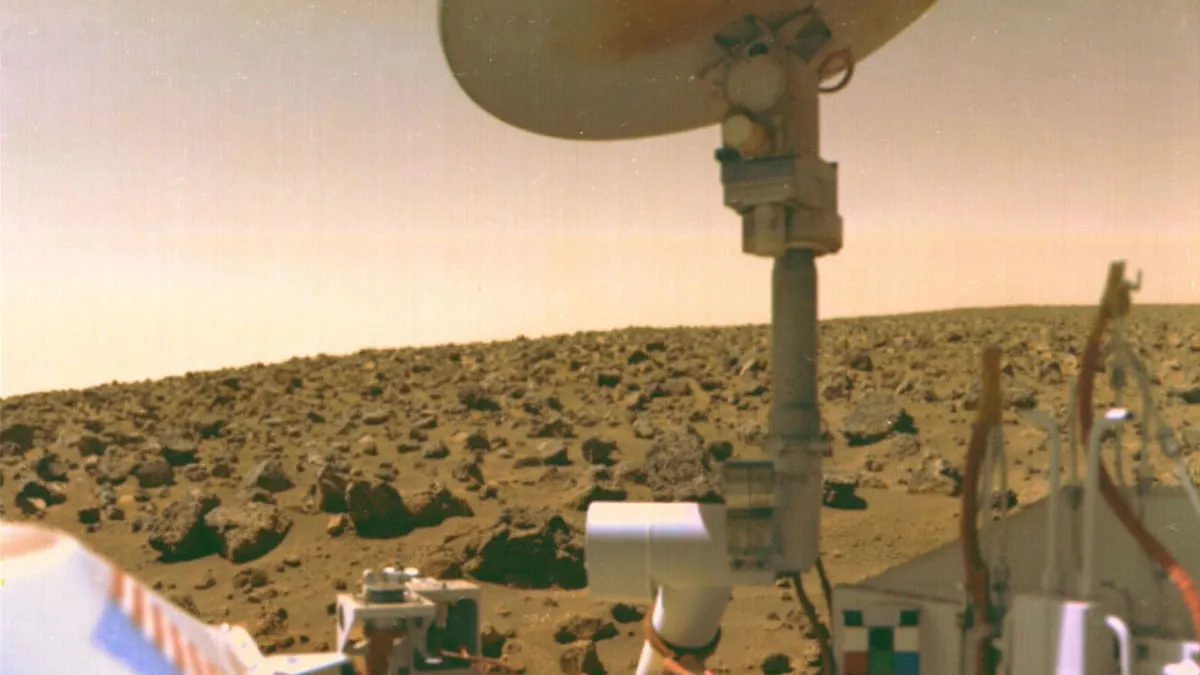
The Viking 2 lander taking a self-portrait on the surface of Mars. Credit: NASA/JPL-Caltech
Earthquakes and the seismic waves they generate provide some of the best clues to Earth’s interior. To extend that success to other worlds, scientists placed seismometers on the Apollo missions to the Moon and on the Viking Mars landers, which reached Mars in 1976. Though the Apollo detectors proved a resounding success, Viking’s results on Mars were less clear: Viking 1’s seismometer failed to deploy properly, and Viking 2 recorded only two ambiguous events.
This article is an excerpt. To read the full content, visit the original source. Eos
Related articles
Experiments in Sports Seismology for the World Cup - Pacific Northwest Seismic Network

Bering Sea heat wave linked to a surprising boom in the number of hybrid crabs - Phys.org
Snow–Tanner hybrid crab collected during the 2026 eastern Bering Sea bottom trawl survey. Credit: Jon Richar Marine heat waves are usually seen as destructive events that can disrupt entire ocean ecosystems and trigger massive environmental damage. In 2018 and 2019, an extreme heat wave hit the Bering Sea, causing spring sea ice levels to plummet.
Giant Jurassic fossil sheds light on the evolution of a six-legged predator - Phys.org
Insects belong to a broader group of six-legged animals called hexapods. This group also includes other less well-known, small animals, including diplurans or two-pronged bristletails, wingless relatives of insects with two rear projections called cerci that resemble feelers or pincers.
0 comments
No comments yet. Be the first to share your thoughts!