Giant Jurassic fossil sheds light on the evolution of a six-legged predator - Phys.org
This story deserves to be shared
Send it to someone who'd care, or post it on your networks.
Insects belong to a broader group of six-legged animals called hexapods. This group also includes other less well-known, small animals, including diplurans or two-pronged bristletails, wingless relatives of insects with two rear projections called cerci that resemble feelers or pincers.
This article is an excerpt. To read the full content, visit the original source. Phys.org
Related articles
Bizarre Fossil Turns Out to Be a 24-Legged Insect Science Somehow Missed - ScienceAlert
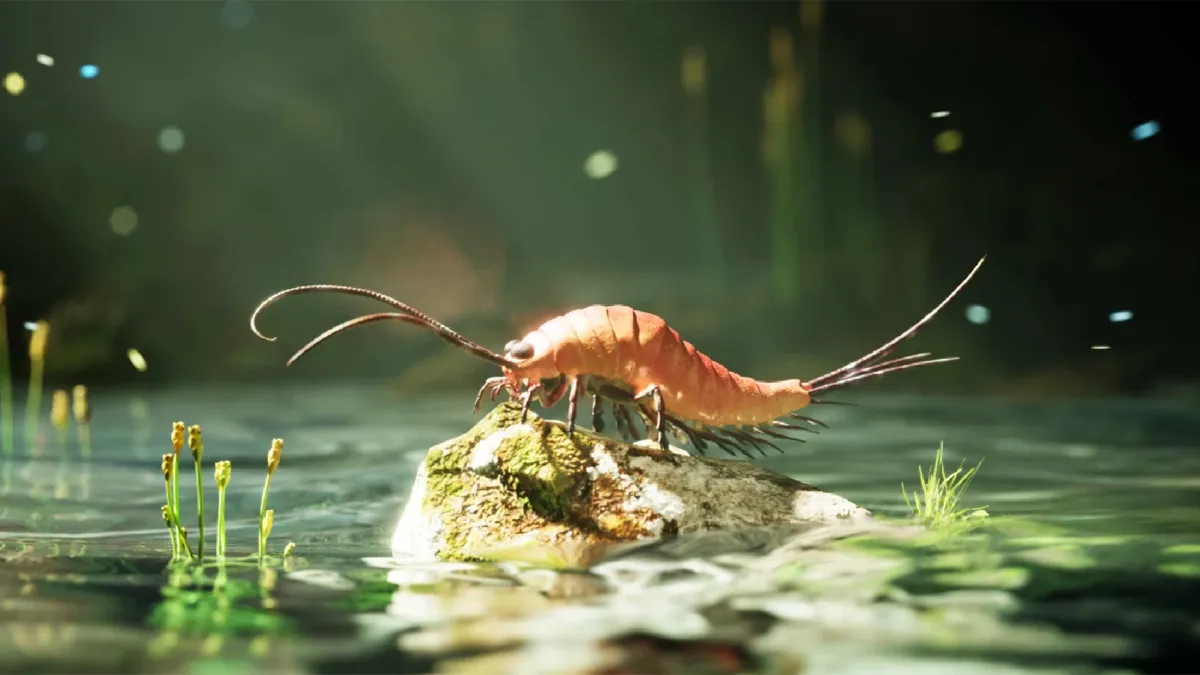
As strange cases of mistaken identity go, this story is a difficult one to beat. A fossil dating back some 324 million years has turned out to be a completely new species of insect, rather than a juvenile crustacean, as was assumed for decades. The story starts in 1985, when fossils of an ancient creature in a rock formation in western Texas were discovered for the first time. Within a few years, experts had classified the specimen as a young example of Tesnusocaris goldichi, a many-segmented aquatic creature related to shrimps and crabs. Fast forward to 2026, and a new study published in Nature. In the study, a team of international scientists identified the fossil as an entirely new insect species, a distinctive 24-legged creature that they're calling Chosha praecursor. The C. praecursor fossil under cross-polarized light. (Tihelka et al., Nature, 2026)Not only does the reclassification correctly identify this ancient organism as part of the hexapod clade, but it also provides some clues towards solving a long-standing biological mystery around how insect evolution carried these species from the sea to land hundreds of millions of years ago. What C.

Six-Armed, Two-Legged Spider Princess Tale ‘Migali’ Unpacked by Its Director Ahead of MipJunior World Premiere - Variety
At MIPJunior, it’s not often that a little creeper gets put out on center-stage. But on Oct. 10, as “Migali” makes its world premiere in front of buyers from all across the globe, a tiny spider princess seems to be set on weaving webs of laughter and fun at the unmissable Cannes children’s TV market. Produced by Adelaïde Terme (Easy Peasy Entertainment, the production/licensing arm of French Auzou Publishing Group) along with Bardaf! Productions in co-production with RTBF, Ketnet, RTS and TF1, “Migali” is a 52x11minute series centered on six-year-old Migali, a spider princess determined to become queen.
Yellow-Legged Hornet | Animal and Plant Health Inspection Service - Animal and Plant Health Inspection Service (.gov)
Physical Review Research - Accepted Paper: Atomic density optimization of quasi-one-dimensional diffuse laser cooling under a two-dimensional magnetic-field gradient - APS Journals
Diffuse laser cooling (DLC) provides a compact, robust, and scalable approach to generating cold-atom ensembles, offering significant potential for ground-based and spaceborne microwave atomic clocks. However, the performance of DLC systems remains limited by the weak atom-light interaction arising from their relatively low atomic density. This limitation is characterized by the optical density (OD), which quantifies the effective interaction strength between the atomic ensemble and the probe light and strongly influences the achievable signal-to-noise ratio (SNR). Although quasi-one-dimensional (quasi-1D) DLC extends the probe interaction length and improves atomic utilization, increasing the local atomic density within the interrogation region remains challenging. Here, we demonstrate a magnetically enhanced quasi-1D DLC system that simultaneously maintains the extended interaction length and increases the atomic density through a two-dimensional magnetic-field gradient.

At critter capacity - Prince Albert Daily Herald
Cathy Bendle in a columnist for the Daily Herald, who finds humor in the quirks of everyday life, from training teachers to dodging housework. When not writing, she’s either laughing at her pets, frantically Googling for her work assignments, or playing on her iPad. Her column appears every other Wednesday. Swept from the corners of my mind… I’ve always had pets. Reptiles, fish, llamas, dogs, birds, you name it. Even while living in a college dorm, I had an aquatic frog. Life is better surrounded by animals. These days, however, I am at capacity. I live in a small house with a large, young German Shepherd, an affable but hyperactive English Setter (hereafter referred to as Tigger-On-Crack), an extremely vocal Rat Terrier, cats, and birds in cages so large they reduce the living space for the rest of us. There are horses behind the house and cattle just over the fence. Assorted wildlife wanders through the yard, leaving scents and spines for my hapless crew. It all makes me happy. But there comes a point where adding another heartbeat means there isn’t enough time, space, or energy to properly care for the ones already present. People have strange ideas about farm life.
Solar Orbiter Traces Giant Magnetic Switchbacks Directly Back to the Sun - Universe Today
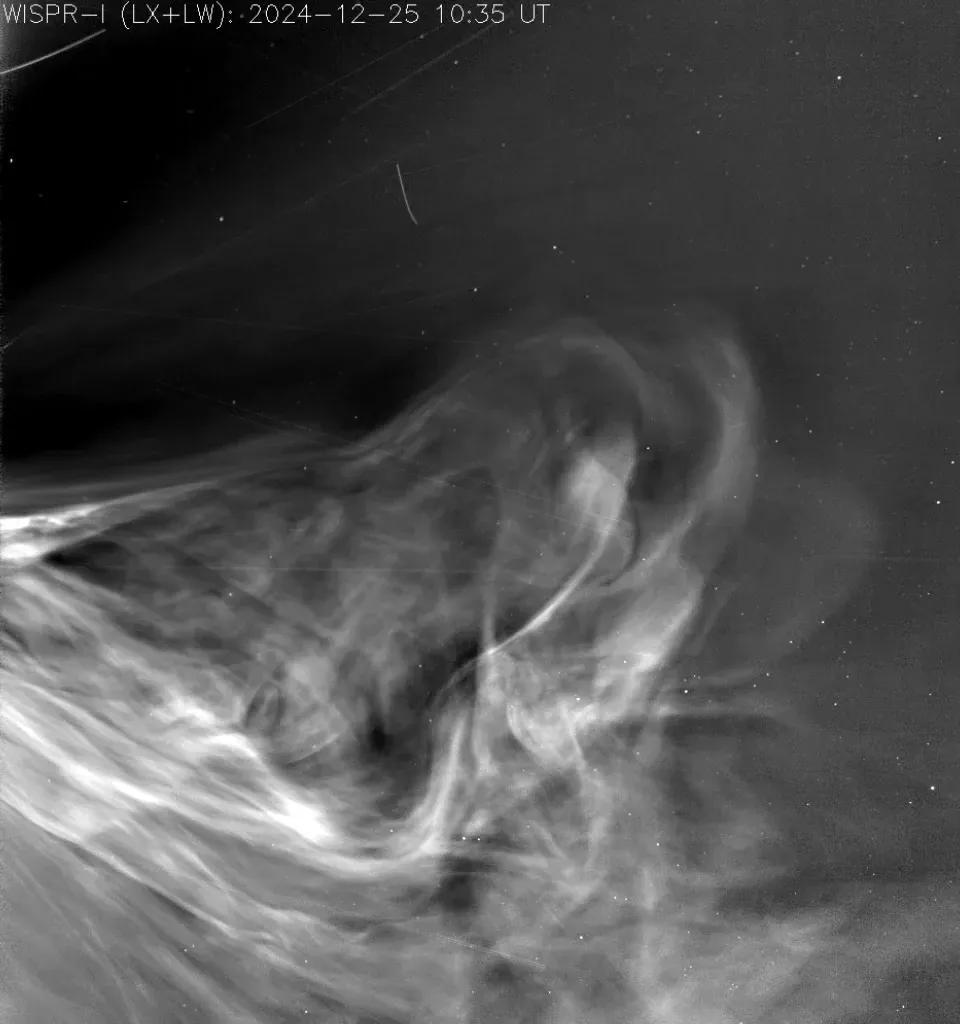
There has been a torrent of solar physics data lately, largely thanks to new spacecraft that have begun actively observing the Sun. One of those spacecraft, Solar Orbiter, happened to have a serendipitous encounter with a type of solar physics phenomenon known as a “switchback”. A new paper, available in Nature Astronomy from researcher Jesse T. Coburn and their co-authors, describes how that serendipitous encounter allowed them to track the switchback back to its birthplace in the solar corona for the first time. Switchbacks are important in our understanding of solar physics because of how they tie into the solar wind - the supersonic stream of charged particles that consistently blows from the surface of the Sun out into space. Modern spacecraft have shown that violent kinks in the Sun’s magnetic field, which they called “switchbacks”, directly affect the flow of these particles, and therefore, the exposure the wider solar system gets to the solar wind more generally.
0 comments
No comments yet. Be the first to share your thoughts!