Earned Income Tax Credit expansion negatively affected child development outcomes - News-Medical
This story deserves to be shared
Send it to someone who'd care, or post it on your networks.

As part of US welfare reforms in the 1990s to provide adequate financial support to low-income families while avoiding disincentivizing work, policymakers expanded the Earned Income Tax Credit (EITC). This change encouraged people to work more by giving greater benefits with greater earned income, and single mothers faced stronger incentives to enter the workforce than married mothers. An analysis in Contemporary Economic Policy indicates that the EITC expansion may have had unintended negative effects on the development of single mothers' children.
Based on mother–child survey data from 1990–1996, the study found that following the EITC expansion, children of single mothers experienced a decline of 0.14 standard deviations in combined math and reading test scores relative to children of married mothers, as well as a decline of 0.68 standard deviations in early motor and social development among young children, although this latter estimate is based on a smaller sample and should be interpreted with caution.
This article is an excerpt. To read the full content, visit the original source. News-Medical
Related articles
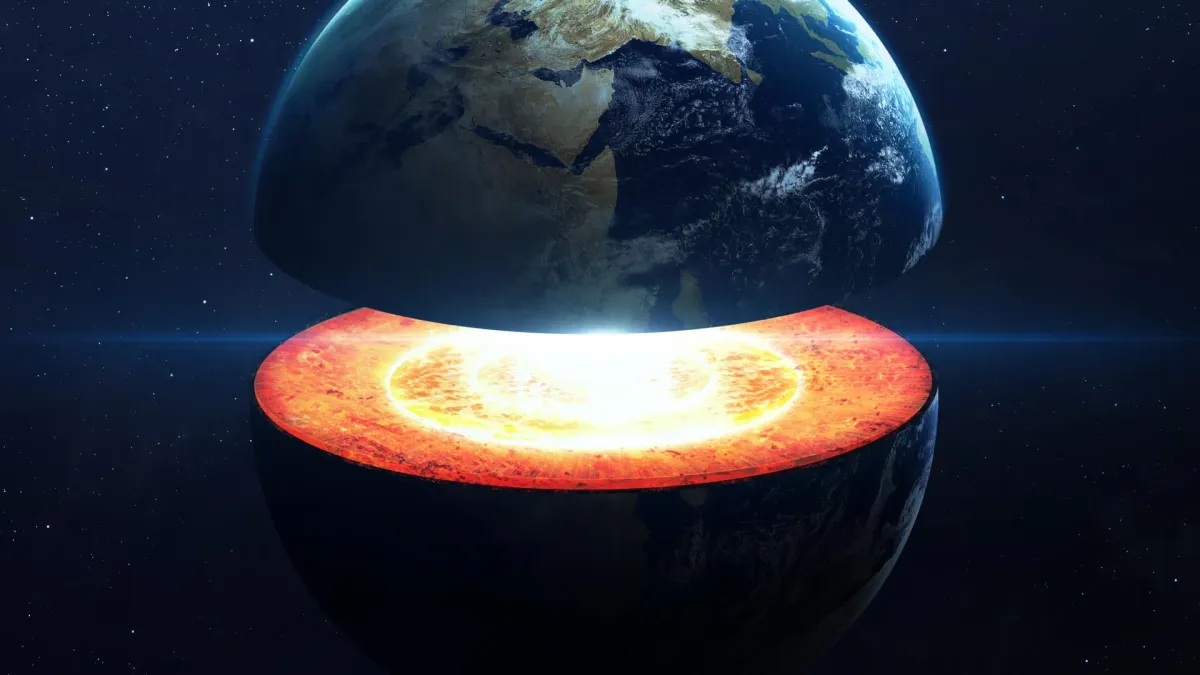
A rock plunged 90 kilometers into Earth and revealed something unexpected - Science Daily
A remarkable rock discovered in Papua New Guinea has revealed an unexpected temperature pattern deep beneath Earth's surface, challenging scientists' understanding of how tectonic plates move into the planet's interior. An international research team led by Göttingen University found that the rock traveled more than 90 kilometers (56 miles) underground about four million years ago. Along the way, it experienced unusually high temperatures at shallower depths before entering conditions associated with a relatively cooler type of subduction.
Prognostic significance and clinicopathologic prediction of tumor deposits in non-metastatic colon mucinous adenocarcinoma - Nature
ORCID: orcid.org/0000-0002-3625-04371,2,5 We’re sharing this article early to provide faster access to peer-reviewed, accepted research. It is citable and carries a permanent DOI. This version is subject to further edits and will be replaced automatically by the final Version of Record. All legal disclaimers apply.
Prioritizing heat stress indices for cognitive performance assessment using a Fuzzy Delphi–FAHP framework - Nature
We’re sharing this article early to provide faster access to peer-reviewed, accepted research. It is citable and carries a permanent DOI. This version is subject to further edits and will be replaced automatically by the final Version of Record. All legal disclaimers apply. AbstractOccupational heat exposure induces physiological strain and can impair cognitive performance, exacerbating occupational error and accident risks. Although numerous heat stress indices exist, their theoretical and practical suitability for cognitive-related assessments remains ambiguous. This study established a structured multicriteria decision-making framework integrating the Fuzzy Delphi Method (FDM) and Fuzzy Analytic Hierarchy Process (FAHP) to prioritize candidate heat stress indices for occupational cognitive risk evaluation. Candidate indices and screening criteria identified via literature review and expert consensus (\(n=25\)) were evaluated using FDM, followed by FAHP with Chang’s extent analysis to derive criteria weights and overall index priorities. A one-at-a-time \(+10\%\) sensitivity analysis was performed to verify model stability.
Risk assessment of insulator contamination in thermal power plants by integrating dynamic physical priors and spatiotemporal heterogeneous graphs - Nature
We’re sharing this article early to provide faster access to peer-reviewed, accepted research. It is citable and carries a permanent DOI. This version is subject to further edits and will be replaced automatically by the final Version of Record. All legal disclaimers apply. AbstractTo address the problem of predicting insulator fouling risks at thermal power plants resulting from the combined effects of various source-side facilities and meteorological conditions, we propose the Causal-STHGN model. This spatiotemporal heterogeneous graph model integrates dynamic physical priors. This paper first constructs a semantic graph of power plant entities. Source-side facility nodes are mapped to insulator monitoring points as heterogeneous nodes. Then, by integrating spatial geometric relationships, wind field directionality, source-side state characteristics, and moisture condition modulation, the model calculates dynamic physical causal priors and edge-weight priors. Furthermore, it constrains spatial dependency learning through a prior-bias graph attention mechanism. A parallel temporal structure is employed to jointly model short-term disturbances and long-term evolutionary trends.
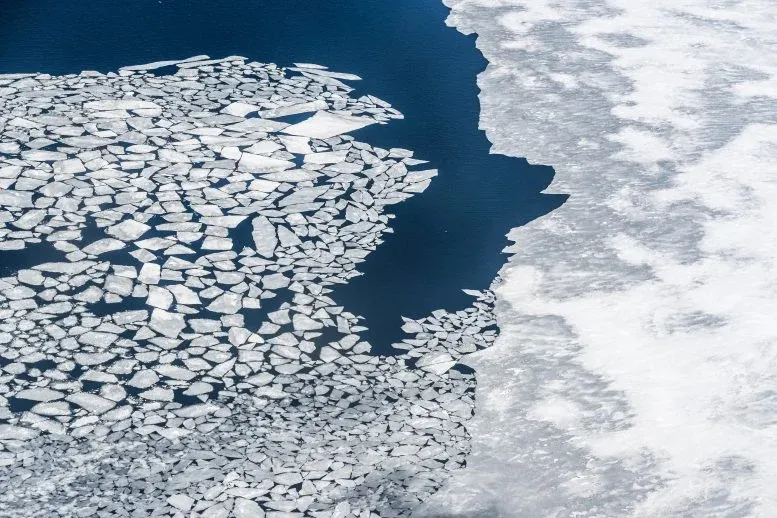
Study Finds the Arctic Could Lose Far More Sea Ice Than Scientists Previously Predicted - SciTechDaily
Ancient evidence from a warmer Arctic is challenging scientists’ predictions about the region’s future sea ice. Credit: Sarah DasClues from a warmer Arctic 6,000 years ago suggest the region could lose a million square kilometers more winter sea ice than scientists previously expected. The loss of Arctic sea ice has been linked to colder winters and heavier snowfall in the UK, the rest of northern Europe, and North America. The ice regulates how much heat and moisture the ocean releases into the atmosphere, so changes in its cover can influence weather far beyond the polar region. Climate models disagree most about how much ice will cover the Arctic in winter, making its future particularly difficult to predict. Using evidence from a warmer Arctic 6,000 years ago, researchers have now revised those projections downward by about one million square kilometers, or roughly 386,000 square miles. The findings, published in Nature Geoscience, come after the Arctic recorded its lowest maximum sea ice extent since modern measurements began in March 2025, a record tied again this year.
0 comments
No comments yet. Be the first to share your thoughts!