Study Finds the Arctic Could Lose Far More Sea Ice Than Scientists Previously Predicted - SciTechDaily
This story deserves to be shared
Send it to someone who'd care, or post it on your networks.
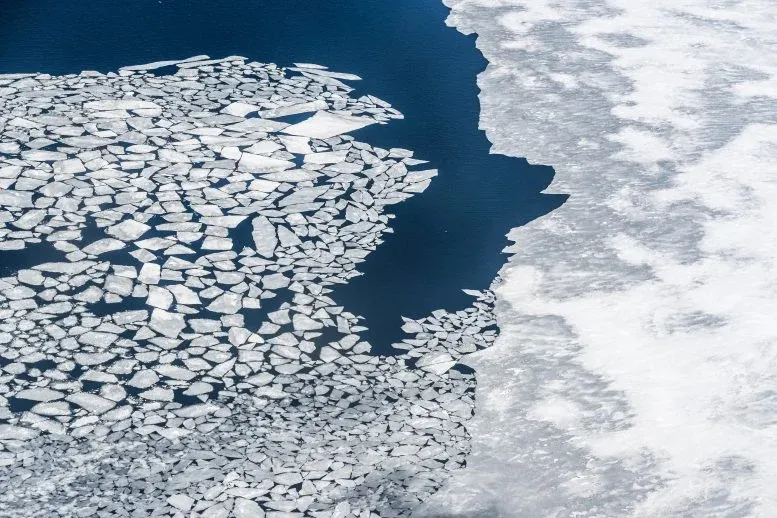
Ancient evidence from a warmer Arctic is challenging scientists’ predictions about the region’s future sea ice. Credit: Sarah DasClues from a warmer Arctic 6,000 years ago suggest the region could lose a million square kilometers more winter sea ice than scientists previously expected. The loss of Arctic sea ice has been linked to colder winters and heavier snowfall in the UK, the rest of northern Europe, and North America. The ice regulates how much heat and moisture the ocean releases into the atmosphere, so changes in its cover can influence weather far beyond the polar region. Climate models disagree most about how much ice will cover the Arctic in winter, making its future particularly difficult to predict. Using evidence from a warmer Arctic 6,000 years ago, researchers have now revised those projections downward by about one million square kilometers, or roughly 386,000 square miles. The findings, published in Nature Geoscience, come after the Arctic recorded its lowest maximum sea ice extent since modern measurements began in March 2025, a record tied again this year.
This article is an excerpt. To read the full content, visit the original source. SciTechDaily
Related articles

Highlighting the ‘missing elements’ in chemistry curricula - Chemistry World
How staff and students from a trio of universities in London, UK are working together to produce resources that showcase minoritised chemists ‘We often learn about the same well-known scientists,’ says Anisah Hussain, a fourth-year student at Imperial College London, UK. ‘I was really interested in the opportunity to shed light on some scientists who have equally as important contributions to chemistry but have perhaps been overlooked.’

Moon phase today explained: What the Moon will look like on October 23, 2026 - Mashable
The Moon is getting closer to its full phase, with more of its surface visible as the days go by. Here's what you can look for when you look up at the sky tonight. What is today's Moon phase? As of Friday, Oct. 23, NASA's Daily Moon Guide tracker tells us the Moon is in the Waxing Gibbous phase, with 90% of its surface visible. Tonight, without the use of visual aids you should be able to spot the Copernicus Crater, the Mare Serenitatis, and Mare Fecunditatis. If you have binoculars you'll also see the Endymion Crater, the Alphonsus Crater, and the Clavius Crater. Plus, if you have a telescope, you'll also see the Linne Crater, Rima Ariadaeus, and the Apollo 17 landing spot. When is the next Full Moon? The next Full Moon will take place on October 25 or 26, depending on your timezone. What are Moon phases? The Moon takes around 29.5 days to travel around Earth, and its appearance changes throughout the month. As it moves around our planet, we see different amounts of its sunlit side, from a slim crescent to the quarter phases and eventually a Full Moon. It then begins the cycle again.
Just 3% of the world's glaciers account for over half of glacier ice loss - Phys.org
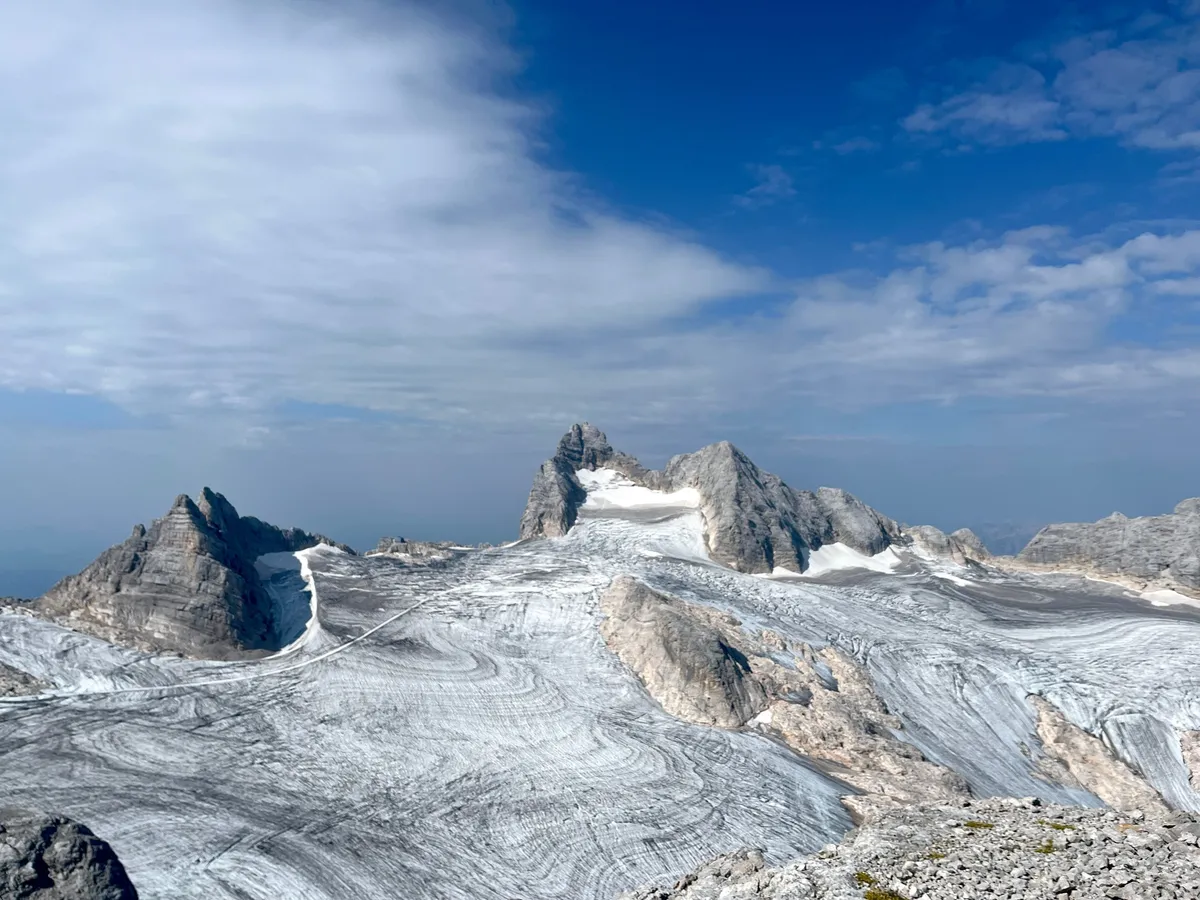
Glaciers ending in lakes, oceans or ice shelves make up 3.2% of the world's glaciers, but lost 134 billion metric tons (148 billion tons) of ice each year between 2000 and 2019, accounting for more than half of all glacier ice loss, a new study shows. The team of environmental scientists found that these glaciers tend to be much larger than those ending on land, together covering more than half of the world's glacier area. But for glaciers ending in lakes, size isn't the whole story.
The ‘Exotic Physics’ Behind a Mysterious 1,000-Mile Cloud on Mars - WIRED
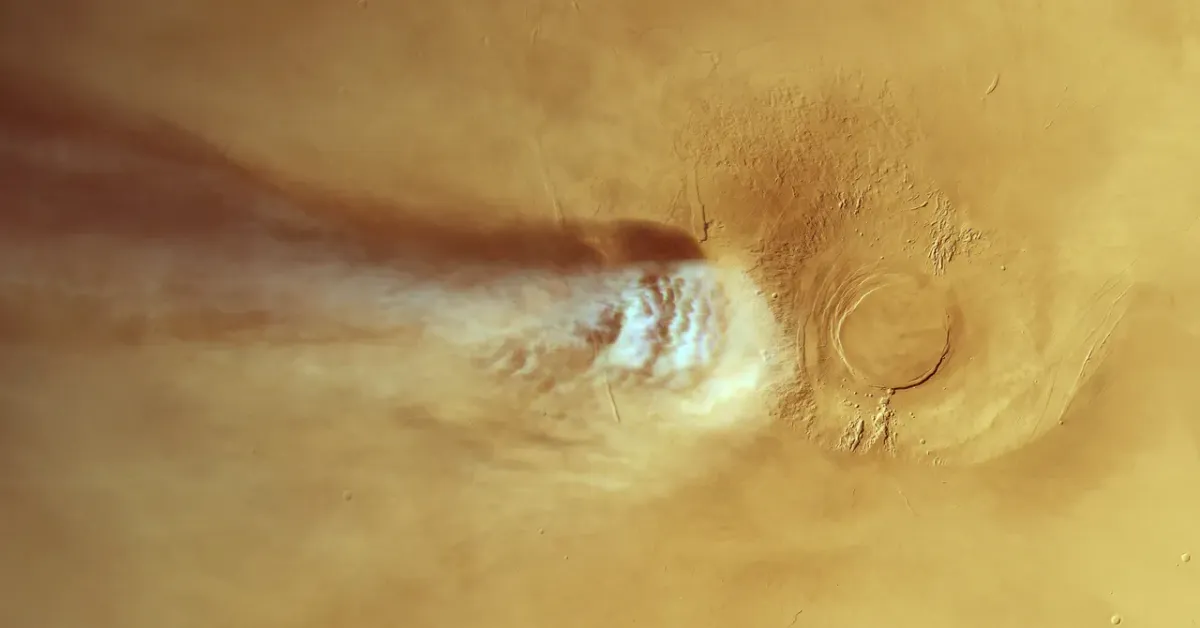
Every morning during the Martian spring and summer, a thin and extremely long cloud emerges, only to disappear again. The wispy formation appears near the volcano Arsia Mons and gradually elongates until it reaches over 1,000 miles—about the distance from New York to Kansas City as the crow flies—before dissipating. This cycle then repeats for several months. Since it was first recorded by a probe in 2018, scientists have been unable to find a plausible explanation for the existence of this cloud, often referred to as the Arsia Mons Elongated Cloud (AMEC). Until now. Recently, researchers successfully modeled the cloud’s formation for the first time, their results suggesting that it may be driven by a physical process that has never been directly observed in any planet's atmosphere. "We found that we needed to include some exotic physics … physics that, while included in textbooks, is treated as theoretical and usually thought not to happen in nature. It certainly hasn’t been seen in action before," Jorge Hernández-Bernal, a planetary scientist at Paris’ Sorbonne Université and lead author of the study, said in a press release.
0 comments
No comments yet. Be the first to share your thoughts!