ConnectWise Cloud Backup Supply-Chain Attack: Analysis of Microsoft 365 Tenant Compromise and Mitigation Strategies - Rescana
This story deserves to be shared
Send it to someone who'd care, or post it on your networks.
Executive SummaryOn October 15, 2026, unauthorized access to application identities within the ConnectWise Cloud Backup (formerly SkyKick Cloud Backup) environment enabled attackers to compromise at least 162 Microsoft 365 tenants. The breach was executed via a supply-chain attack, leveraging a stolen application credential to authenticate as a trusted service principal in customer environments. This allowed the attacker to inherit all permissions previously granted to the application, including broad access to emails, files, and directory data. The attack was confirmed by multiple independent sources, including Microsoft, Huntress, and ConnectWise. The incident led to the suspension of ConnectWise Cloud Backup and related services, with ongoing investigations and remediation efforts. There is currently no evidence that backup archives were accessed or exfiltrated, but the full scope of tenant impact remains under review. The attack bypassed multi-factor authentication (MFA) due to its use of application credentials rather than user logins.
This article is an excerpt. To read the full content, visit the original source. Rescana
Related articles
ConnectWise Credential Compromise Enables Unauthorized Access to 173 Microsoft 365 Tenants: Cybersecurity Incident Analysis - Rescana
Executive SummaryOn October 13, 2026, unauthorized access was detected across 173 Microsoft 365 tenants via a compromised ConnectWise service account credential. The attackers exploited delegated admin privileges, enabling broad access to sensitive data including mailboxes, OneDrive, SharePoint, Teams, and directory information. The incident did not involve a software vulnerability in ConnectWise but rather the theft or exposure of a legitimate credential. Affected organizations span managed service providers (MSPs), law firms, national security and trade entities, and critical infrastructure sectors. The attack leveraged only legitimate credentials and native Microsoft 365 administration tools, making detection challenging. Immediate remediation steps included disabling the compromised credential and revoking admin privileges. No malware was identified, and no specific threat actor attribution has been made. All findings are based on evidence from The Hacker News (Oct 17, 2026), Huntress (Oct 16-17, 2026), and the official ConnectWise Trust Center advisory (Oct 16-18, 2026).
OpenAI’s “compromise” with the Pentagon is what Anthropic feared - MIT Technology Review

Error Mitigation Cuts Sampling Overhead For Quantum Circuits - Quantum Zeitgeist
Researchers at Google Quantum AI and Cornell University have demonstrated a new error mitigation technique that surpasses existing methods by operating entirely in classical post-processing. Their work introduces virtual error cancellation, a method that reduces sampling overhead by using only syndrome records from quantum circuits, bypassing the need for prior noise characterization and modified circuits. Numerical simulations using a distance-7 rotated surface code show the full-stack dual-decoder algorithm achieves more than three orders of magnitude of suppression in error rate compared to standard decoding. This approach operates entirely through classical post-processing, offering a streamlined pathway to more reliable computation. The core of this advancement lies in the ability to avoid the typical requirements of noise learning and circuit alterations, both of which add complexity and overhead to quantum error mitigation.
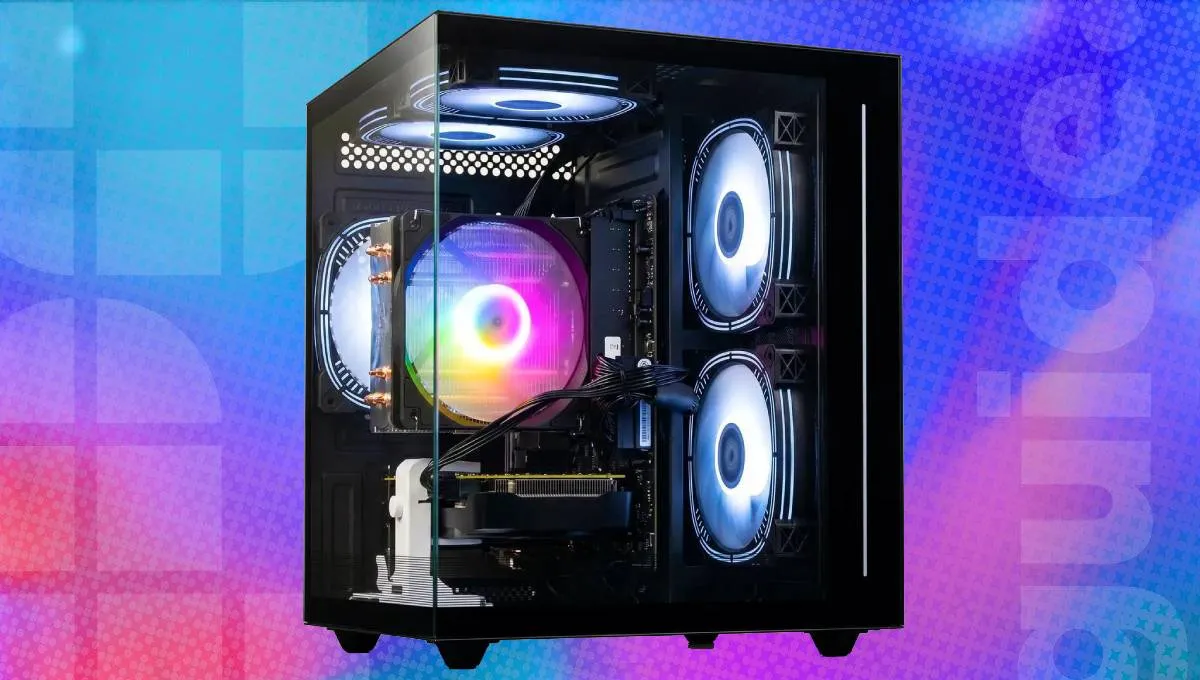
RTX 5060, Ryzen 7 5700X gaming PC drops to competitive price with Newegg deal — its lowest in 30 days - PC Guide
There's extra savings to be had on top of the deal, too PC Guide is reader-supported. When you buy through links on our site, we may earn an affiliate commission. Read More

Combination nucleic acid therapies: towards personalized cancer treatment - Advanced Science News
Combination strategies enable simultaneous activation and silencing of key target genes to correct molecular pathways in pancreatic cancer. For the first time, scientists have designed combination therapies of small nucleic acid therapeutics based on the specific molecular characteristics of a tumor. These novel therapies work in an opposite but complementary way to regulate gene expression. This innovative approach, tested in pre-clinical models of pancreatic ductal adenocarcinoma (PDAC), shows superior anti-cancer effects compared to single nucleic acid therapies, offering the potential of flexible, precise, and personalized cancer treatments.
0 comments
No comments yet. Be the first to share your thoughts!