Combination nucleic acid therapies: towards personalized cancer treatment - Advanced Science News
This story deserves to be shared
Send it to someone who'd care, or post it on your networks.
Combination strategies enable simultaneous activation and silencing of key target genes to correct molecular pathways in pancreatic cancer.
For the first time, scientists have designed combination therapies of small nucleic acid therapeutics based on the specific molecular characteristics of a tumor. These novel therapies work in an opposite but complementary way to regulate gene expression. This innovative approach, tested in pre-clinical models of pancreatic ductal adenocarcinoma (PDAC), shows superior anti-cancer effects compared to single nucleic acid therapies, offering the potential of flexible, precise, and personalized cancer treatments.
This article is an excerpt. To read the full content, visit the original source. Advanced Science News
Related articles
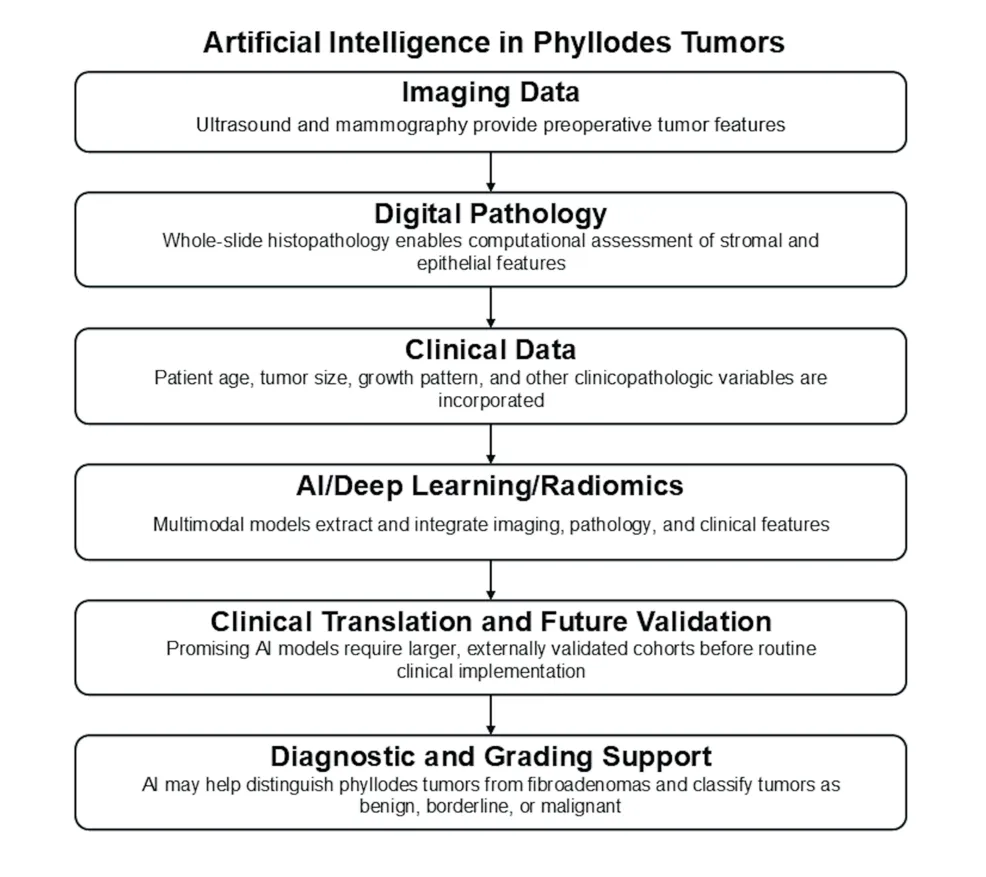
Phyllodes Tumors of the Breast in 2026: A Contemporary Narrative Review of Diagnosis, Surgical Margins, Prognosis, and Emerging Therapies - Cureus
Phyllodes tumors of the breast are rare fibroepithelial neoplasms characterized by significant heterogeneity regarding morphology, biological behavior, and clinical outcome. This review summarizes current developments in the diagnosis, histopathological and molecular classification, therapeutic management, and emerging technologies associated with phyllodes tumors of the breast. A literature search was conducted across PubMed/MEDLINE, Scopus, Embase, and Google Scholar, focusing on publications from the 2000-2026 period. The literature search covered publications from January 1, 2000, to September 30, 2026, and was last updated on September 30, 2026. Mammography, ultrasound, and magnetic resonance imaging contribute to preoperative assessment, although significant diagnostic overlap with fibroadenomas persists. Core needle biopsy is a key diagnostic tool, yet lesion heterogeneity can limit the accuracy of histological classification. Advances in molecular pathology have identified mutations and pathways associated with the progression and aggressiveness of phyllodes tumors, though these have not yet replaced morphological assessment. Surgical excision with negative margins remains
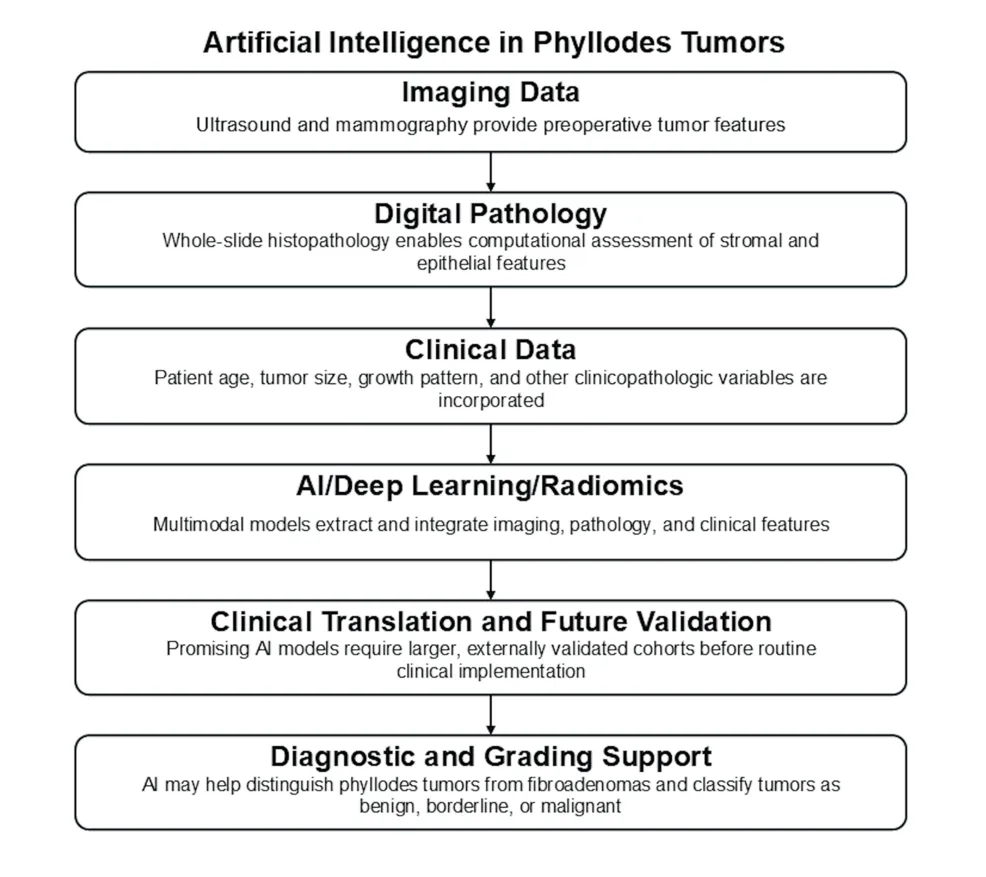
Phyllodes Tumors of the Breast in 2026: A Contemporary Narrative Review of Diagnosis, Surgical Margins, Prognosis, and Emerging Therapies - Cureus
Phyllodes tumors of the breast are rare fibroepithelial neoplasms characterized by significant heterogeneity regarding morphology, biological behavior, and clinical outcome. This review summarizes current developments in the diagnosis, histopathological and molecular classification, therapeutic management, and emerging technologies associated with phyllodes tumors of the breast. A literature search was conducted across PubMed/MEDLINE, Scopus, Embase, and Google Scholar, focusing on publications from the 2000-2026 period. The literature search covered publications from January 1, 2000, to September 30, 2026, and was last updated on September 30, 2026. Mammography, ultrasound, and magnetic resonance imaging contribute to preoperative assessment, although significant diagnostic overlap with fibroadenomas persists. Core needle biopsy is a key diagnostic tool, yet lesion heterogeneity can limit the accuracy of histological classification. Advances in molecular pathology have identified mutations and pathways associated with the progression and aggressiveness of phyllodes tumors, though these have not yet replaced morphological assessment. Surgical excision with negative margins remains

3D printing-inspired technology can improve dosing accuracy for personalized medicines - News-Medical
Technology inspired by 3D printing is already being introduced in hospitals and specialized pharmacies to produce personalized medicines tailored to individual patients. In her doctoral thesis at Åbo Akademi University, Mahsa Bahman investigated how the approach can improve dosing accuracy and make customized treatments more widely available. Many medicines today are produced in standard doses, even though patients often have very different treatment needs. In her doctoral thesis in drug development at Åbo Akademi University, Mahsa Bahman investigated a technology that could make it easier to produce medicines tailored to individual patients, helping improve dose accuracy and access to treatment.

Can companies harness biology, behavior and technology to develop better personalized nutrition apps? - NutraIngredients.com
According to Joshua Anthony, founder and CEO of Nlumn, a personalized nutrition consultancy, apps do not account for consumer behavior when creating personalized nutrition regimens. This often leads to individuals abandoning the apps several months after buying programs or to app-jumping, leaping from one personalized nutrition app to the next to try to find success. What can be done about lack of long-term adoption? Anthony discusses the app landscape and why accounting for consumer behavior is the missing piece for most companies. NutraIngredients (NI): In the last year or two, what have you felt were the most noteworthy accomplishments in the personalized nutrition space? Joshua Anthony (JA): I’m seeing more companies focusing on, or at least asking, specific goals of people. That’s important because I think any successful consumer innovation really begins with the problem that you’re trying to solve. A good personalized intervention probably isn’t going to be a company based off of solving everybody’s problems but going deeper in one or more specific areas. I think one of the things that’s really driving that is GLP-1 medication.
0 comments
No comments yet. Be the first to share your thoughts!