Phyllodes Tumors of the Breast in 2026: A Contemporary Narrative Review of Diagnosis, Surgical Margins, Prognosis, and Emerging Therapies - Cureus
This story deserves to be shared
Send it to someone who'd care, or post it on your networks.
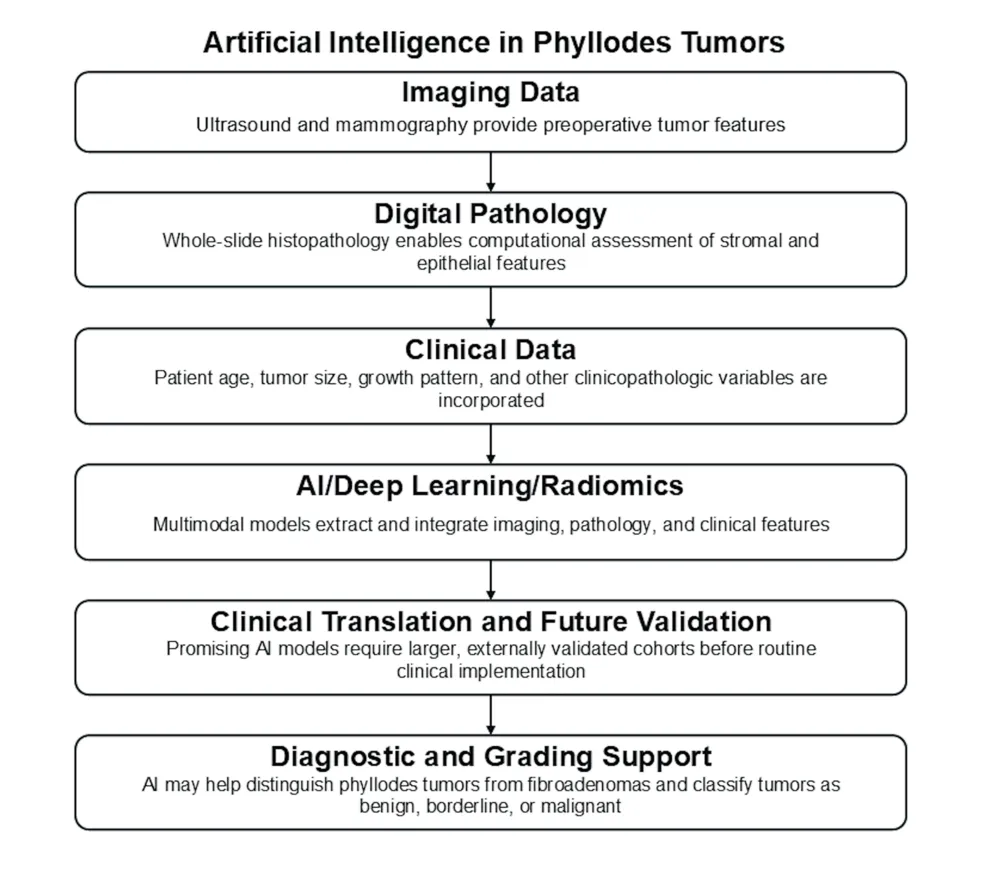
Phyllodes tumors of the breast are rare fibroepithelial neoplasms characterized by significant heterogeneity regarding morphology, biological behavior, and clinical outcome. This review summarizes current developments in the diagnosis, histopathological and molecular classification, therapeutic management, and emerging technologies associated with phyllodes tumors of the breast. A literature search was conducted across PubMed/MEDLINE, Scopus, Embase, and Google Scholar, focusing on publications from the 2000-2026 period. The literature search covered publications from January 1, 2000, to September 30, 2026, and was last updated on September 30, 2026. Mammography, ultrasound, and magnetic resonance imaging contribute to preoperative assessment, although significant diagnostic overlap with fibroadenomas persists. Core needle biopsy is a key diagnostic tool, yet lesion heterogeneity can limit the accuracy of histological classification. Advances in molecular pathology have identified mutations and pathways associated with the progression and aggressiveness of phyllodes tumors, though these have not yet replaced morphological assessment. Surgical excision with negative margins remains
This article is an excerpt. To read the full content, visit the original source. Cureus
Related articles
Single‑cell and bulk RNA sequencing identifies T cell marker genes to predict the prognosis of ovarian cancer - Nature
We’re sharing this article early to provide faster access to peer-reviewed, accepted research. It is citable and carries a permanent DOI. This version is subject to further edits and will be replaced automatically by the final Version of Record. All legal disclaimers apply. AbstractOvarian cancer, with high mortality and often late diagnosis, shows high recurrence despite treatment. The variable effectiveness of immunotherapy highlights the urgent need for personalized, advanced therapeutic strategies. To investigate T-cell marker genes, single-cell RNA-sequencing (scRNA-seq) data were sourced from the Gene Expression Omnibus (GEO) database. Additionally, bulk RNA-sequencing data along with clinical information from ovarian cancer patients were retrieved from the Cancer Genome Atlas (TCGA) database to establish a prognostic signature. This study involved survival analysis to evaluate associations between different risk groups, and explored cellular communication and relevant pathway analyses, including metabolic pathways.

Today's Hurdle hints and answers for October 18, 2026 - Mashable
If you like playing daily word games like Wordle, then Hurdle is a great game to add to your routine. There are five rounds to the game. The first round sees you trying to guess the word, with correct, misplaced, and incorrect letters shown in each guess. If you guess the correct answer, it'll take you to the next hurdle, providing the answer to the last hurdle as your first guess. This can give you several clues or none, depending on the words. For the final hurdle, every correct answer from previous hurdles is shown, with correct and misplaced letters clearly shown. An important note is that the number of times a letter is highlighted from previous guesses does necessarily indicate the number of times that letter appears in the final hurdle. Want more tech and digital culture news delivered to your inbox daily or sent straight to your device? Sign up for Mashable's Top Stories newsletter or get Mashable push alerts today. If you find yourself stuck at any step of today's Hurdle, don't worry! We have you covered.
0 comments
No comments yet. Be the first to share your thoughts!