Clocks made from an atomic nucleus just ticked on for the first time - Science News
This story deserves to be shared
Send it to someone who'd care, or post it on your networks.
This article is an excerpt. To read the full content, visit the original source. Science News
Related articles
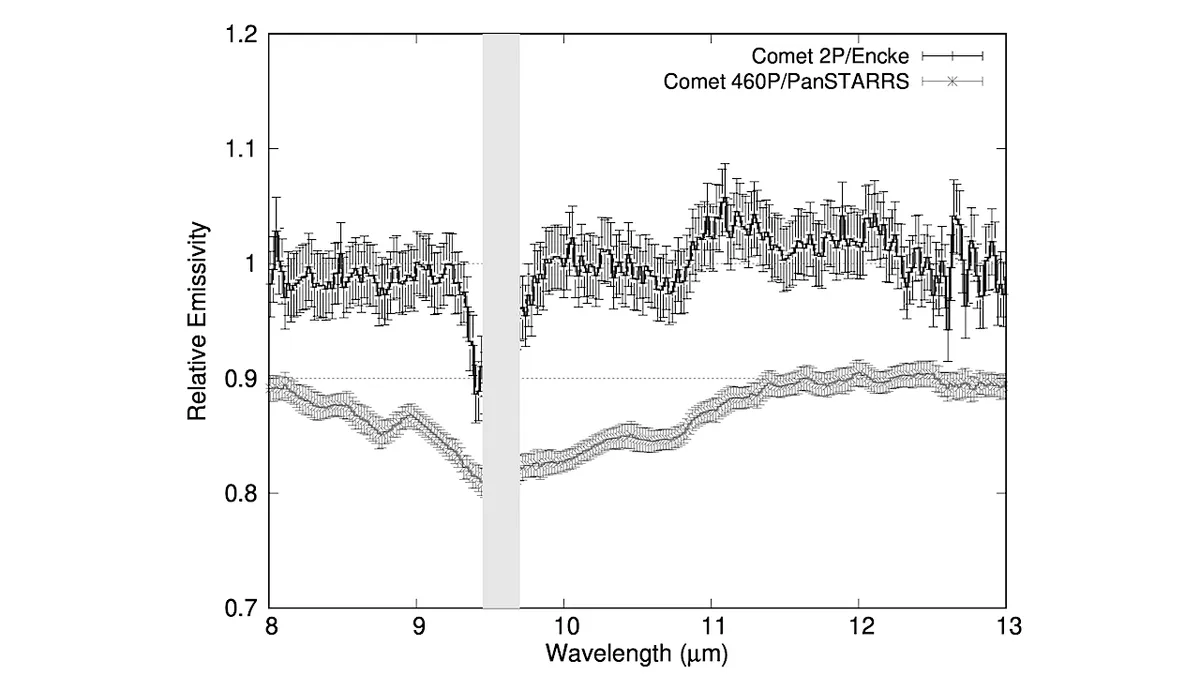
Photometric and Spectroscopic Observations of Comet 2P/Encke's Nucleus in the Mid-Infrared Wavelength Region - Astrobiology Web
Relative emissivity spectrum of 2P/Encke’s nucleus obtained by the COMICS observations, in comparison with that of 460P/PanSTARRS (T. Ootsubo et al. 2021). The spectrum of 460P/PanSTARRS (in grey) is shifted by 0.1 for the readability. The grey hatched area is the wavelength region influenced by the telluric ozone absorption. -- [astro-ph. EP] [astro-ph. EP] We observed comet 2P/Encke with the Cooled Mid-Infrared Camera and Spectrometer (COMICS) on the Subaru telescope on UT 2003 November 12.3, when the comet was at heliocentric and geocentric distances of 1.09 and 0.27 au, respectively.

Scientists build a nuclear clock that could make atomic clocks obsolete - Science Daily
Scientists have reached a major milestone in the quest to build an entirely new kind of clock. After decades of research, a team in Vienna has developed the world's first self-stabilizing nuclear clock, a device that could eventually measure time with far greater precision than today's most advanced atomic clocks. Unlike earlier prototypes, the new nuclear clock can maintain its own stability without depending on a conventional atomic clock. Researchers have demonstrated that it can operate steadily for more than 24 hours without intervention.
Physicists unveil the most accurate atomic clock ever — and it could literally redefine the second - Live Science
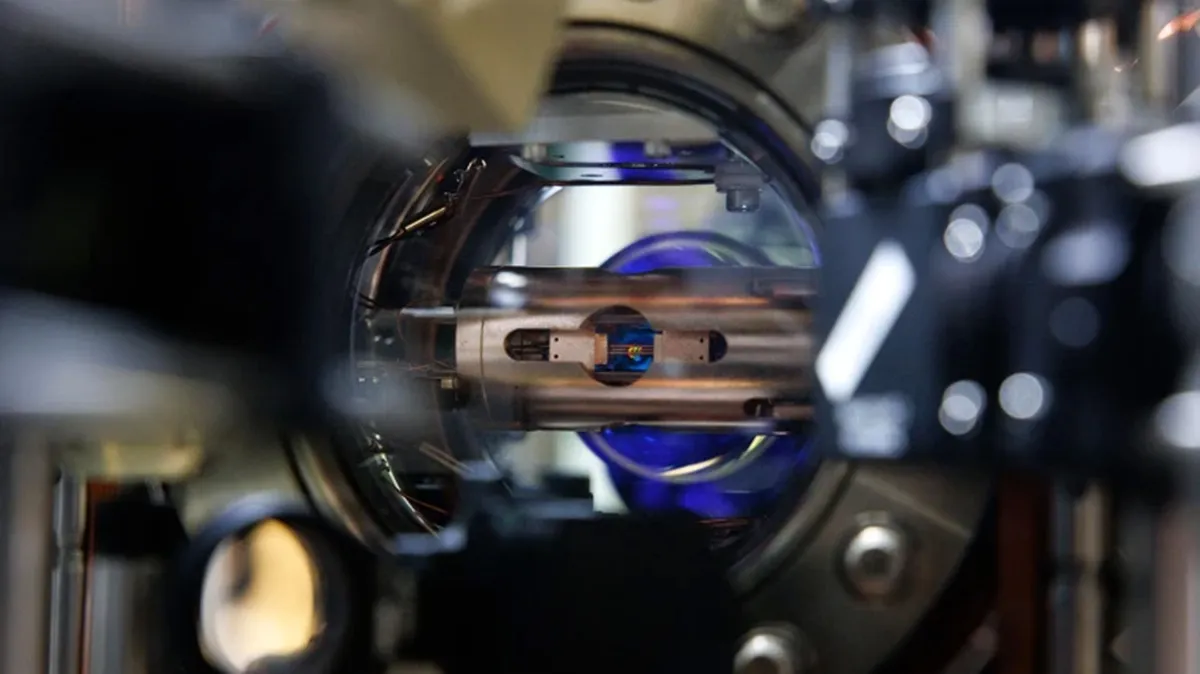
Physicists have used radioactive lutetium to create what they say is the most accurate atomic clock ever, keeping time perfectly up to 19 decimal places.
0 comments
No comments yet. Be the first to share your thoughts!